




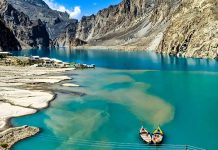













The deep blue paradise that dominated everyone’s social media feeds for a decade is undergoing a massive crisis. Attabad Lake, the crown jewel of Hunza Valley, is rapidly changing. In fact, large parts of it are already gone. Recent viral footage and local reports reveal a shocking truth. The vibrant turquoise water is shrinking. In its place, muddy banks and dry land are surfacing.
Key Takeaways
- A massive landslide in January 2010 blocked the Hunza River, accidentally creating the 21-kilometre-long Attabad Lake.
- The lake is an unstable reservoir held back by a natural mud-and-rock dam, meaning it was never meant to be permanent.
- Heavy flooding and debris frequently turn the iconic turquoise water into a muddy brown colour.
- Over-commercialisation and pollution accelerate the damage, threatening the livelihoods of local businesses that rely on the lake.
A Birth Built on Disaster
To understand why the lake is disappearing, one must look at how it started. Attabad Lake was never a natural, permanent body of water. Instead, a massive tragedy created it.

- The 2010 Landslide: In January 2010, a monstrous landslide buried Attabad village. The disaster tragically killed twenty people and displaced thousands.
- The Accidental Dam: Tons of rock and debris completely blocked the Hunza River.
- The Reservoir: The river backflow created a massive, 21-kilometre-long reservoir.
Essentially, tourists fell in love with a giant puddle created by a natural disaster. Because a loose mud-and-rock dam holds the water back, the structure was always temporary. Nature is now simply taking its water back.
The Science Behind the Shrink
Geography lessons usually feel boring, but this climate shift directly impacts travel plans. Two major factors are currently draining the life out of Attabad Lake.
1. Sediment Buildup
Every year, melting glaciers carry mud, sand, and debris down the mountains. This material settles at the bottom of the lake. Consequently, the lake bed rises, and the water gets pushed out.
2. Erosion of Natural Dam Water
Dam water continuously finds ways to escape. As the Hunza River carves out its original path, the reservoir naturally empties. Large patches of dry land now sit where deep boats used to cruise.
The New Look
The loss of water volume is only half the problem. The legendary beauty of the lake is also fading fast.

- The Missing Glow: The famous sapphire and turquoise hues come from glacial flour. These are fine rock particles suspended in the water.
- The Muddy Reality: Due to erratic weather and heavy flooding, massive amounts of debris now mix into the water.
Recent visitors on TripAdvisor complain that the lake frequently looks like a muddy city canal rather than an exotic paradise. Overcrowded jet skis and plastic waste from lakeside cafes further ruin the aesthetic. The pristine, untouched vibe is officially dead.
What Happens Next?
The transformation of Attabad Lake is a wake-up call for the tourism industry. Local businesses, luxury resorts, and boat operators face massive economic uncertainty as the water levels fluctuate. This shift proves that nature always wins in the end.
While the lake might not completely vanish by tomorrow morning, the clock is ticking. Travellers must appreciate the fragile beauty of the northern areas while they still can. More importantly, visitors must practice sustainable tourism to protect the remaining wonders of the Hunza Valley before another paradise slips away.
FAQS
1. What happened at Attabad Lake?
Attabad Lake in Pakistan’s Hunza Valley was formed on January 4, 2010, when a massive landslide struck the region, killing 20 people and entirely blocking the flow of the Hunza River.
2. Where is Attabad Lake situated?
Attabad Lake is situated in the Gojal region of the Hunza Valley in Gilgit-Baltistan, Pakistan.
3. Is Attabad Lake dry now?
Attabad Lake is not completely dry, but it is experiencing a dramatic drop in water levels. Large sections of its once-iconic deep blue waters have receded, leaving behind wide sandy patches and exposing parts of the original shoreline.
4. Can we swim in Attabad Lake?
Yes, you can swim in Attabad Lake, but it is not recommended for casual swimmers or tourists due to extreme freezing temperatures.
Stay tuned to Brandsynario for latest news and updates.