
















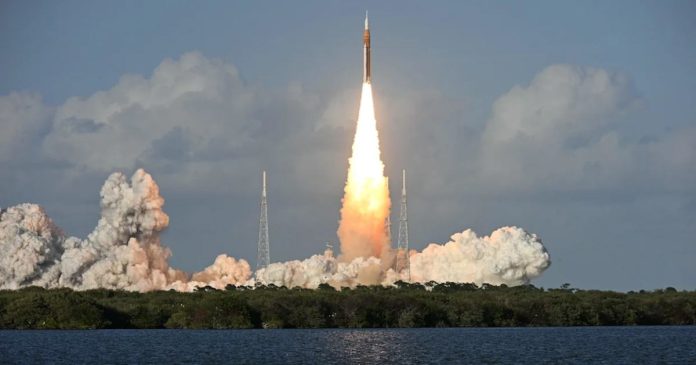

After more than five decades, humanity is finally returning to the Moon. NASA has successfully launched Artemis II, and four astronauts are now on a historic 10-day journey that signals a powerful return to deep space exploration.
The mission is the first time in over 50 years that humans are travelling beyond low-Earth orbit. This rekindles ambitions of lunar landings and long-term presence in space.
A Historic Launch
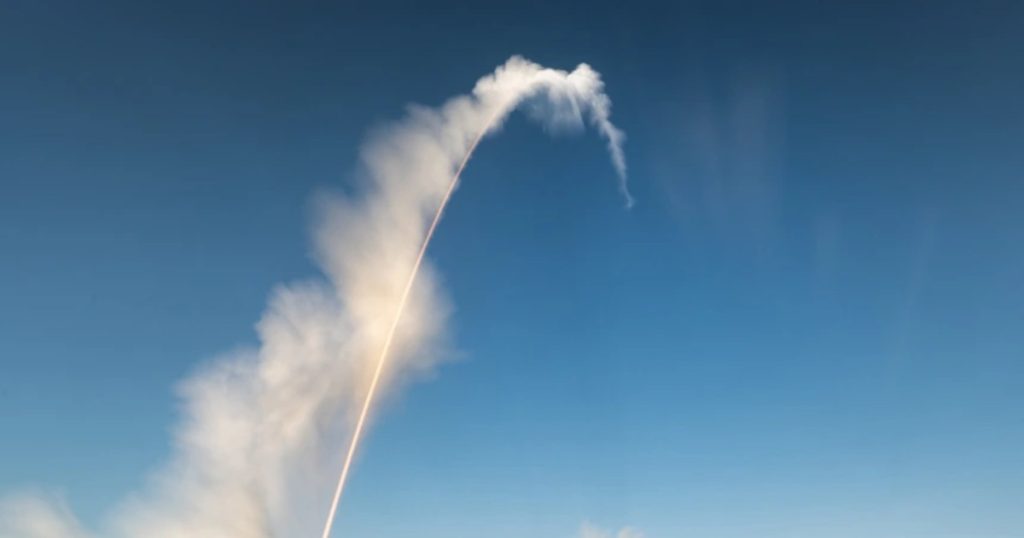
The Artemis II crew, Reid Wiseman, Christina Koch, Victor Glover, and Jeremy Hansen lifted off aboard NASA’s Space Launch System rocket from Cape Canaveral in Florida. The historic event garnered a crowd of more than 250,000. The rocket carved a bright path through the evening sky, leaving everyone in awe.
View this post on Instagram
This mission is the first time NASA’s Orion spacecraft has carried humans into orbit. It is a step toward a planned Moon landing in 2028. The mission also carries inclusivity as Glover is the first person of colour to travel beyond Earth orbit, Koch the first woman, and Hansen the first non-American.

What Happens During the Artemis II Mission?
The crew has little time to relax. Once in space, they began testing critical onboard systems.
During the first phase of the mission, the astronauts will be focusing on:
- Life-support systems, such as air quality and water supply
- Onboard sanitation and waste management
- Communication and navigation systems
- A simulated docking manoeuvre using the rocket’s upper stage
These are essential operations as future missions will rely on precise docking with lunar landers before descending to the Moon’s surface.
The Point of No Return
Around 24 hours into the mission comes the most crucial step, the trans-lunar injection burn. This powerful engine will propel the Orion spacecraft out of Earth’s orbit and hurtle toward the moon. At this point, there will be no turning back.
The journey will take around three days. During this time, the astronauts will travel past Earth’s protective shield. NASA will be studying how humans and spacecraft fare when they are put in harsh cosmic conditions.
Also Read: Your Name Could Orbit the Moon with NASA’s Artemis II Mission
Your Name Could Orbit the Moon with NASA’s Artemis II Mission: Here’s How
A Flyby That Makes History
The defining moment of Artemis II mission is its lunar flyby, where the spacecraft will sweep around the far side of the Moon.
The spacecraft will then pass within 4,000 to 6,000 miles of the Moon’s surface. During this, the moon will appear markedly close. The astronauts will be able to observe regions never seen directly by humans.
What Comes Next
After the flyby is wrapped up, the astronauts will begin the three-day journey back to Earth. The journey will conclude with a splashdown in the Pacific Ocean near San Diego.
Artemis II mission is the beginning of NASA’s extensive roadmap. After this, they plan to launch Artemis III, which will test lunar landers developed by SpaceX and Blue Origin. In 2028, the highly anticipated Artemis IV moon landing is planned.
In the long-term, NASA plans to establish a sustained human presence on the Moon. Artemis II is the first chapter in humanity’s plans to make the Moon a place to stay.
Stay tuned to Brandsynario Top Stories for latest news and updates



 Join a Channel
 Brandsynario
 Veryfilmi