













In air-conditioned boardrooms, economic stability is a game of abstract numbers, fiscal consolidation charts, and carefully managed press releases. But step outside onto the streets and the vocabulary changes entirely.
For the average citizen, economic stability isn’t measured by a stabilising foreign exchange reserve or a marginal dip in headline inflation; it is measured by the price of a loaf of bread, the monthly electricity bill, and the sheer impossibility of finding a job.
There is a stark, widening chasm between the macroeconomic victories claimed by the state and the microeconomic survival strategies of the masses. As the government attempts to balance its books to satisfy global lenders, the structural realities of Pakistan’s economy are pushing a historic number of its people into absolute deprivation.
Unemployment and the Redefined Poverty Line
To understand the scale of the current crisis, one must look at the devastating data that emerged from last year’s digital census metrics. Pakistan’s unemployment rate surged to its highest level in recent memory, with an astounding 22% of the country’s labour force left out of work by 2025.
In real terms, this means more than 2 crore (20 million) people who are willing and able to work have been completely excluded from the economic engine. When one considers that a single earning member typically supports an entire extended household, this unemployment peak represents a collapse of domestic financial stability that ripples into the present day.
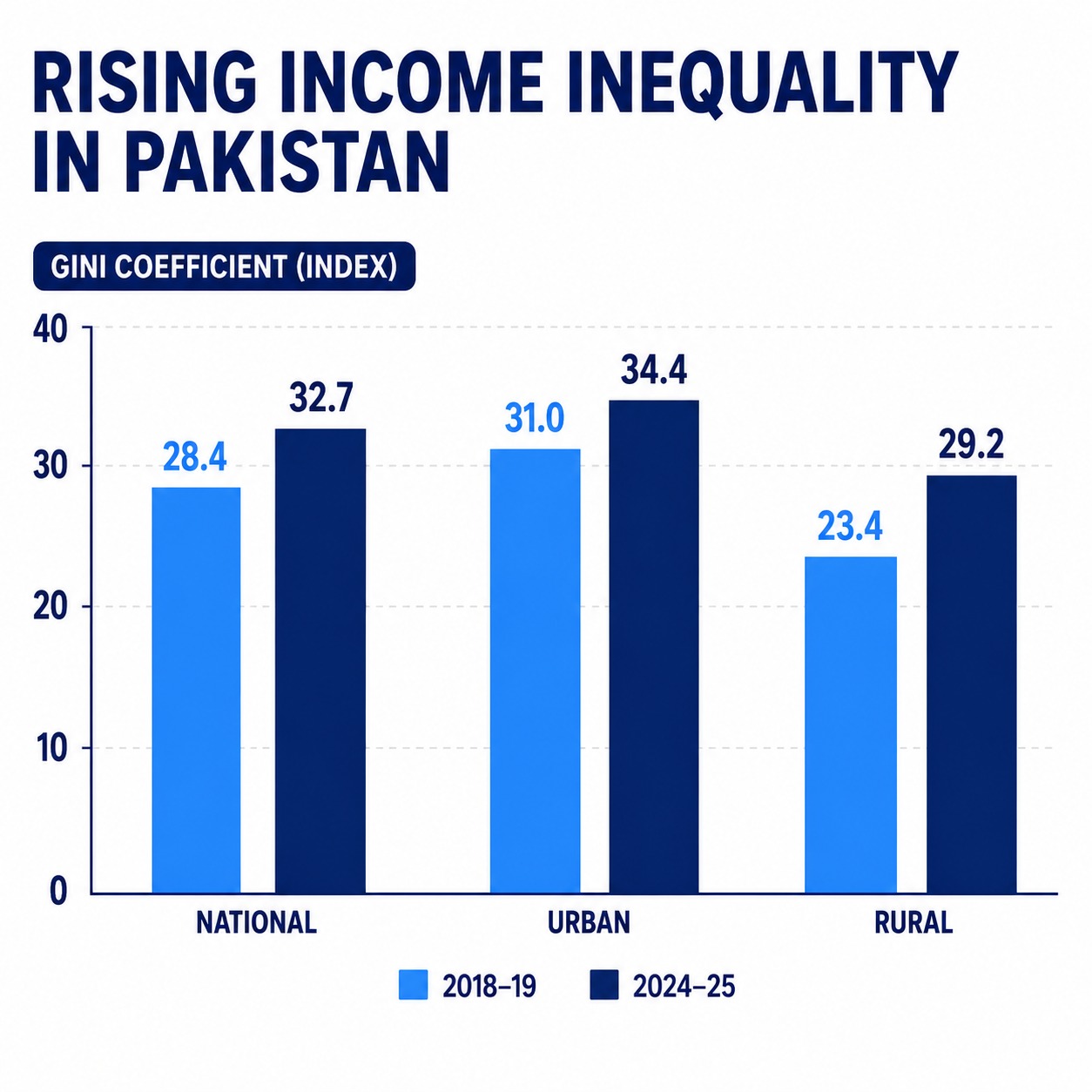
This employment vacuum directly feeds into the country’s terrifying poverty metrics. According to the World Bank, approximately 42% of Pakistan’s population stands below the poverty line. Originally measured at the $3.65-a-day metric, this figure was updated to $4.20, using Purchasing Power Parity (PPP) data to reflect international poverty thresholds for lower-middle-income countries. According to this update, 44.7% of Pakistan’s population now falls below this lower-middle-income poverty line.
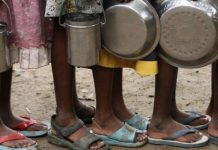
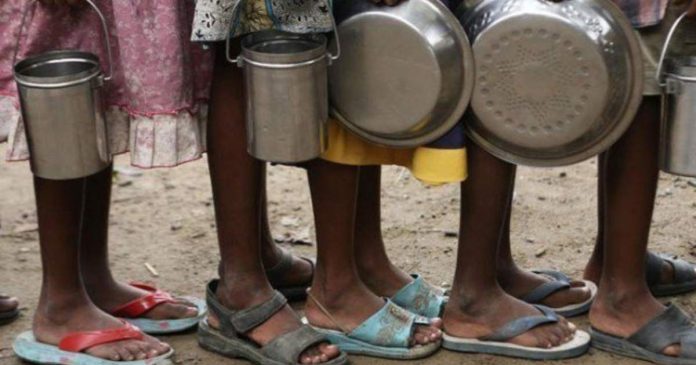
The result of this statistical recalibration is a human tragedy: 104 million Pakistanis are currently living in poverty. The country has not witnessed deprivation on this scale in decades.
The World Bank defines the absolute baseline for low-income countries at $3 a day, a threshold that millions of Pakistanis struggle to meet. When this is compared to the living costs and typical entry-level corporate salaries, these baseline earnings fail to cover even the most fundamental human needs, making basic survival an ongoing challenge.
The IMF Trap
How did Pakistan find itself back in this position? The answer is the vicious cycle of debt dependency. Pakistan has run out of global benefactors willing to provide unconditional bilateral loans, and the International Monetary Fund (IMF) has become the country’s lender of last resort.
However, IMF loans are never free. They come bound with aggressive, non-negotiable structural adjustment demands: severe subsidy cuts, steep hikes in utility tariffs, and massive revenue generation targets.
Driven entirely by these external commitments, the state budget of 2026-27 aims to squeeze 17.1 trillion PKR in revenue through aggressive tax hikes.
Renowned economist Saqib Sherani notes that the IMF often functions as an instrument of Western policy that props up the domestic ruling elite. While the international community secures its repayments and the Pakistani elite celebrates short-term fiscal bailouts that keep the status quo intact, the poor bear the brunt of the macroeconomic adjustment.
A Broken Taxation Model
The core failure of Pakistan’s fiscal policy lies not just in how much it taxes, but in who it taxes. The country’s Tax-to-GDP ratio remains embarrassingly low, primarily because the state relies heavily on indirect and regressive taxation rather than direct income taxes on high earners.
- Indirect Taxes: Taxes on basic goods, fuel, milk, electricity, and telecommunications. These taxes are unjust because a labourer earning 25,000 PKR a day pays the same sales tax on a litre of milk as a billionaire corporate tycoon.
- Direct Taxes: Taxes directly on personal income, corporate wealth, and accumulated assets. In Pakistan, this sector is disproportionately skewed to penalise the salaried middle class.
While the salaried class faces automatic payroll deductions and increasing tax brackets, the wealthiest sectors of the economy enjoy institutional immunity.
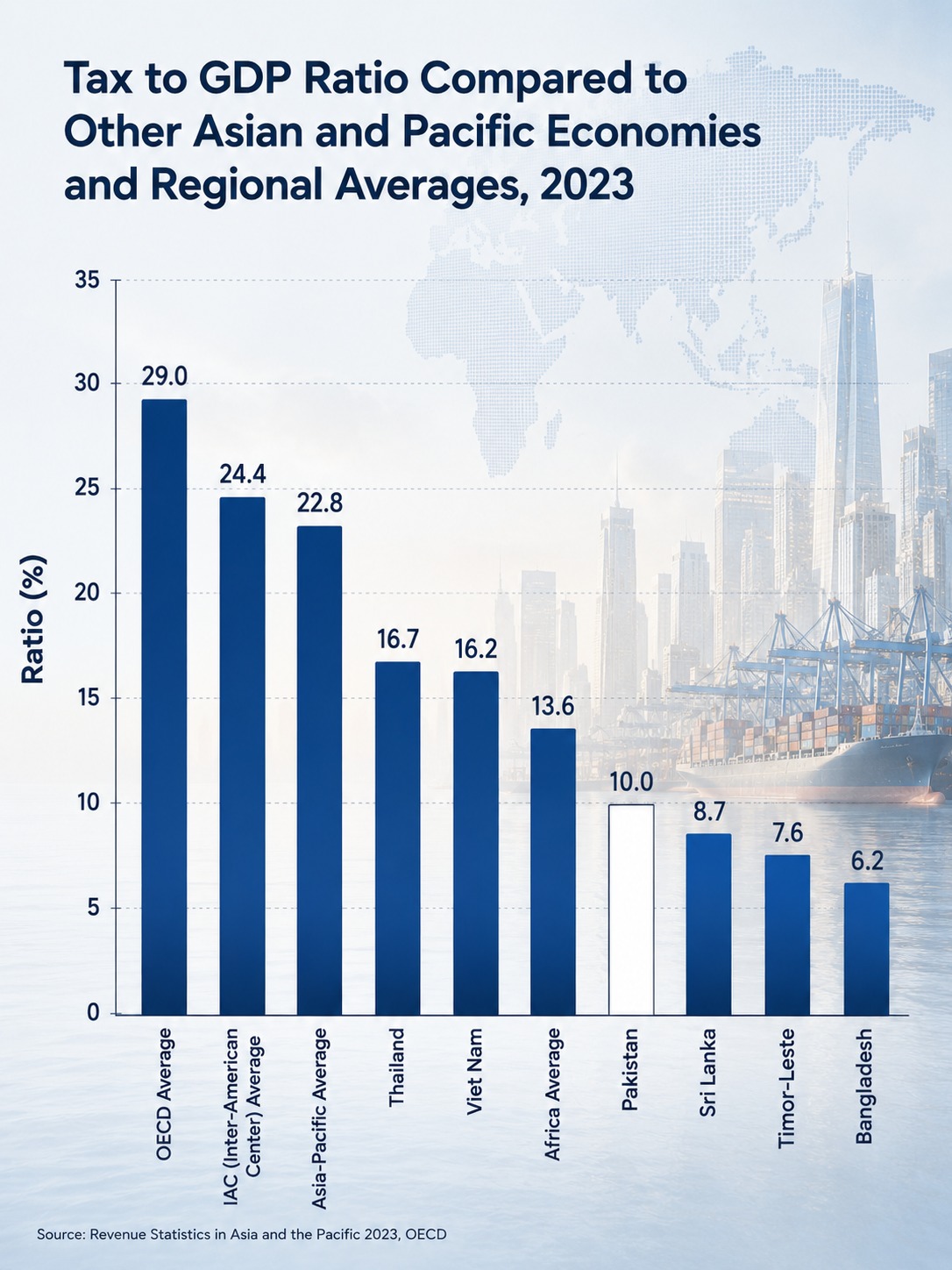
According to insights shared by Saqib Sherani, nearly one-fourth of the total potential tax revenue currently slipping through the state’s fingers could be easily recovered if the government chose to tax politically connected, illicit industries. An example is the illicit cigarette manufacturing sector, which evades billions in taxes annually.
By allowing these illicit companies to operate, the state destroys its social contract with the public. The working class is left to fund a system that offers them zero protection in return.
Where Do the Billions Go?
The structural injustice of Pakistan’s economic index becomes even more apparent when analysing public spending. If the billions generated from regressive taxation were being spent on public healthcare, subsidised education, or social security networks, the public might swallow the bitter pill.
Instead, the federal budgets reveal a painful truth: the revenue extracted from the masses is actively being spent to sustain the luxurious lifestyles of the ruling class.
While the common citizen is told to sacrifice for the motherland, budgets consistently approve massive salary hikes, special allowances, and post-retirement perks for political leaders, bureaucrats, and members of the judiciary. It is a paradox:
A country dependent on foreign charity to survive boasts politicians who carry luxury designer bags worth millions and wear clothes that cost more than a family’s annual income.
The Way Forward
Pakistan cannot tax its way out of a poverty crisis by continuously bleeding the same taxpayers. The solution requires an immediate shift away from crisis management.
- Real Documentation of the Shadow Economy: Instead of penalising the salaried class, the Federal Board of Revenue (FBR) must aggressively document the retail, wholesale, and real estate sectors.
- Taxation on Agricultural Income: Large agricultural landholdings must be brought into the direct tax net, ending the feudal exemptions that have drained state coffers for decades.
- Digitalisation Compliance: Transparent, digital transactions must replace the cash-heavy informal economy, supported by simple filing procedures that eliminate bureaucratic extortion.
A budget is more than a balance sheet; it is a moral document. In today’s Pakistan, where inflation has permanently erased household purchasing power and left 104 million people stranded below the poverty line, economic management must move past mere survival tactics.
True national stability cannot be built on the backs of a starving population. If Pakistan is to survive its current economic condition, its policies must shift from protecting elite privileges to restoring the economic dignity and stability of its people.
Stay tuned to Brandsynario for latest news and updates