













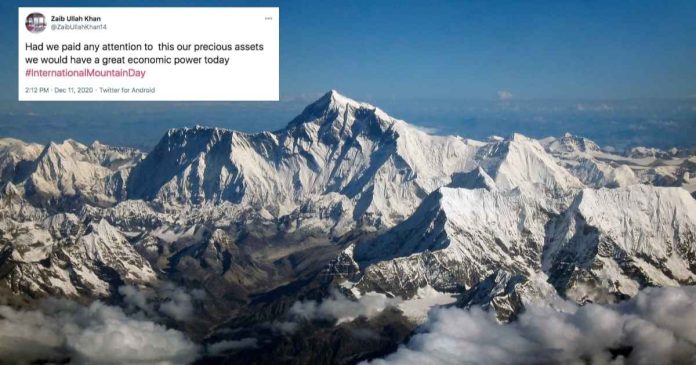

Every year on 11 December, the world observes International Mountain Day to highlight the importance of mountain ecosystems and the communities that live in them.
Pakistan is one of the most important mountain countries on the planet, and it rarely gets the attention it deserves.
The country holds 5 of the world’s 14 eight-thousand-metre peaks, along with over 100 peaks above 7,000 metres. Its ranges include the Karakoram, the western Himalaya and the Hindu Kush.
For trekkers and mountain travellers, this is one of the most concentrated “high altitude” regions in the world.
Unreal Peaks in Pakistan
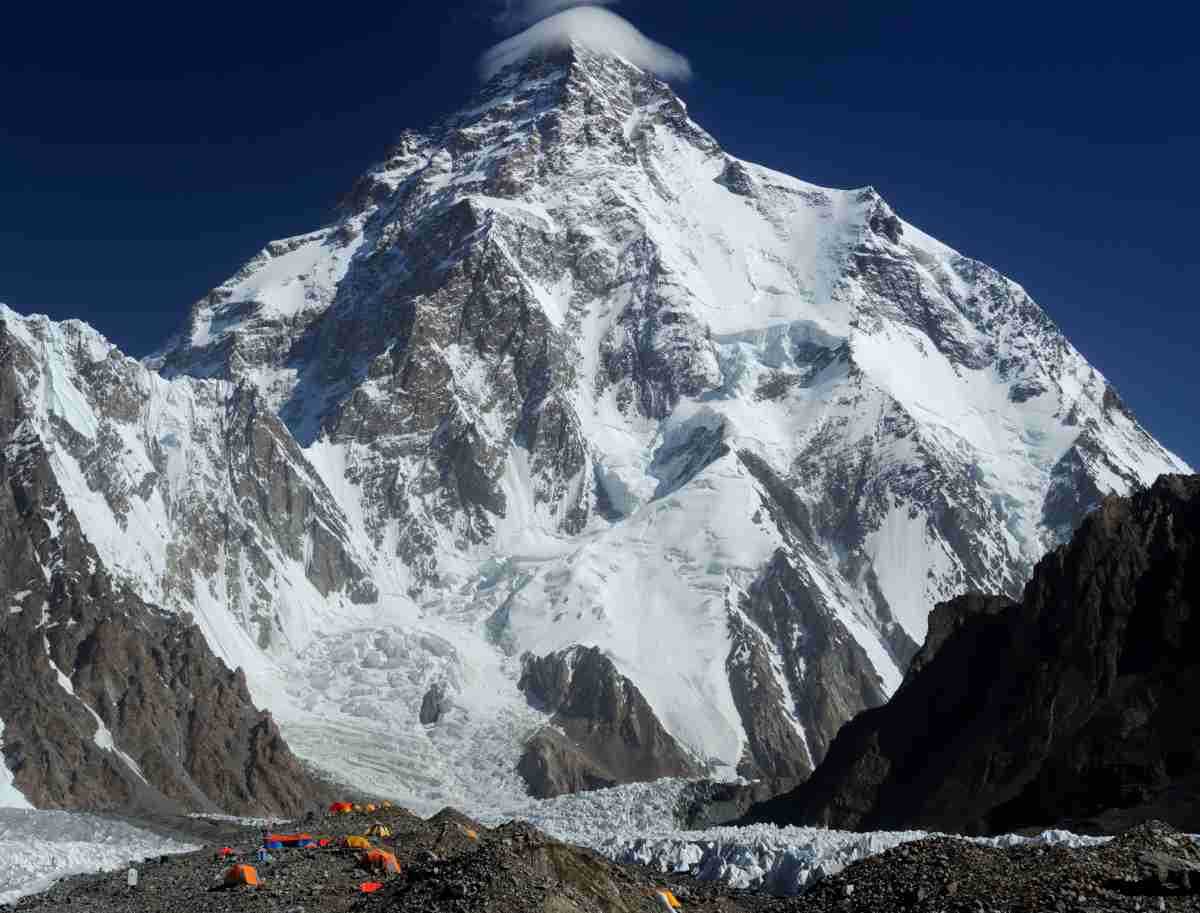
K2
The second-highest mountain in the world is at 8,611 metres. It stands in the Karakoram on the Pakistan-China border. It is known for its technical difficulty and high fatality rate. For elite climbers, it is a lifetime goal.
Nanga Parbat
The ninth-highest mountain in the world and the second-highest in Pakistan. It anchors the western end of the Himalaya. The south face rises about 4,000 metres above base camp and is one of the largest mountain faces on Earth.

Gasherbrum I and II, Broad Peak
These three eight-thousanders lie along the Baltoro Glacier in Baltistan. They form part of one of the most dramatic mountain skylines on the planet, together with K2 and nearby giants like Gasherbrum IV.

Rakaposhi
At 7,788 metres, Rakaposhi towers directly above the Karakoram Highway near Hunza and Nagar. It has almost 6,000 metres of vertical relief from summit to valley, which makes it visually striking even for non-climbers.

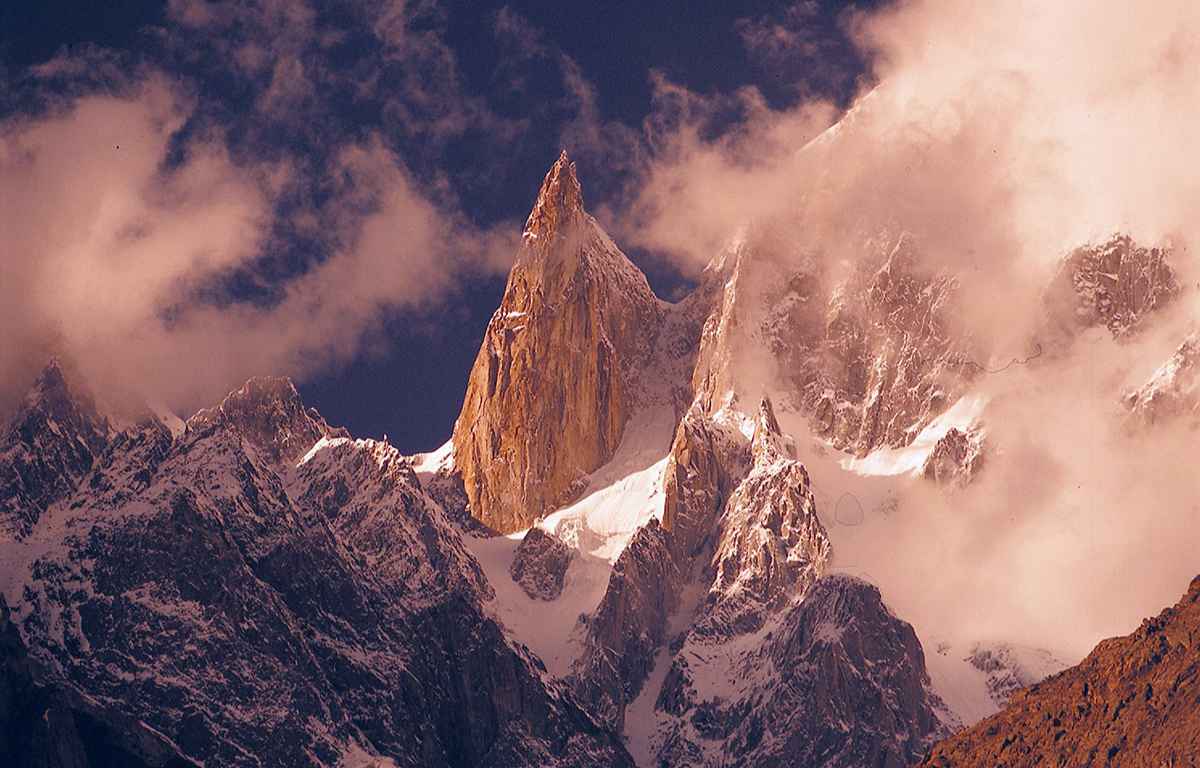
Passu Cones and Ladyfinger Peak
Near Passu in Upper Hunza, a line of sharp rock towers forms one of the most photographed skylines in Pakistan. These peaks are visible from the Karakoram Highway and from short walks around the village.
Miter Peak
Around 6,010 metres, Miter Peak stands near the Baltoro and Concordia area. It is surrounded by much higher peaks, but its shape makes it stand out in photographs.

Link Sar
A 7,041 metre peak in the Masherbrum sub-range of the Karakoram. It was long considered one of the toughest unclimbed objectives and remains remote and serious even today.
Tirich Mir
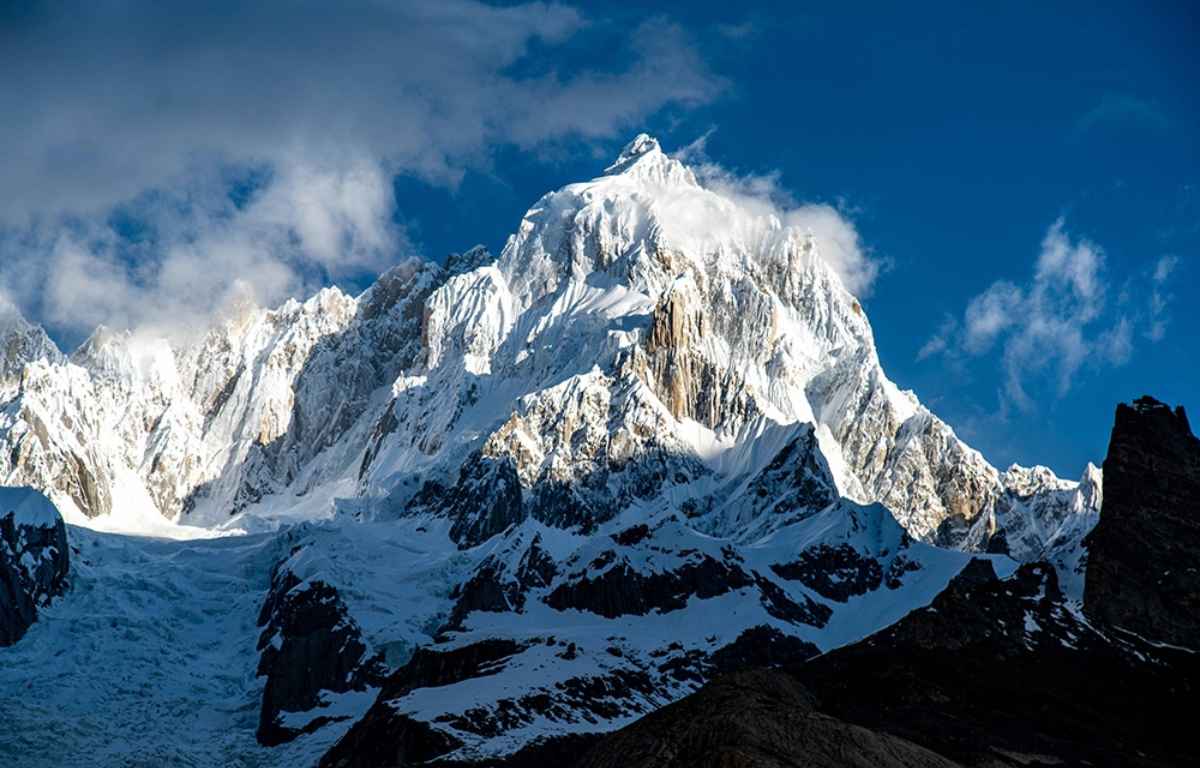
The highest peak in the Hindu Kush is at 7,708 metres. It rises above Chitral and Khyber Pakhtunkhwa and is the most prominent summit in that region.

Where To Go: Regions That Every Mountain Lover Should Know
You do not have to be a climber to fall in love with Pakistan’s peaks. Much of the magic is in the valleys.
Hunza Valley
Hunza is often the first love of international travellers. Here you get prime views of Rakaposhi, the Passu Cones, and the mighty KKH winding between them.
Villages like Karimabad, Passu and Gulmit offer a mix of traditional stone houses, apricot orchards and rooftop views that stretch all the way to ice and rock. It is a place where you can sip chai on a terrace and watch clouds wrap around 7,000 metre summits.
Skardu and Baltistan
Skardu is the launch pad for some of the most serious treks on Earth. Names like Baltoro, Concordia, K2 Base Camp and Nangma Valley are legendary in climbing circles.
Yet, you do not need to trek for weeks to feel the scale of the Karakoram. Even shorter walks to lakes like Satpara or Shigar, or drives along the Indus, give you a sense that the mountains here are in charge and humans are guests.
Naltar, Neelum and Kalam
Beyond the famous high altitude deserts of Gilgit Baltistan, Pakistan also has softer, greener mountain landscapes.
- Naltar Valley offers forests, alpine meadows and jewel toned lakes, framed by peaks like Shani.
- Neelum Valley in Azad Kashmir is a lush corridor of rivers, wildflowers and terraced villages.
- Kalam and the Swat region in Khyber Pakhtunkhwa give you forested slopes, rivers and easy day hikes that families can enjoy.
These places show a gentler side of the mountains, where you can move from pine forest to snow line in a single day.
Pakistan’s Mountains Are More than Just Scenery
It is easy to think of mountains as empty, lonely spaces. In reality, they are alive.
Pakistan’s mountain regions sit inside some of the world’s key biodiversity hotspots. Snow leopards, ibex, markhor, rare birds and thousands of plant species depend on these heights.
Glaciers here feed major rivers like the Indus, which in turn support millions of people downstream.
Then there is culture. From the Balti communities of Skardu to the people of Hunza, Chitral and the Kalash valleys, mountain life has its own rhythm, language and stories.
Hospitality is not a performance. It is simply how things are done.
Travel here, if done right, is not just about taking photos of peaks. It is about listening, learning and respecting ways of life that have existed for centuries.
International Mountain Day 2025: More Than Just Another Day
International Mountain Day, led by the UN and the FAO, focuses on sustainable development in mountain regions. Pakistan fits directly into that discussion.
Climate change is affecting glaciers and weather patterns across the Karakoram, Himalaya and Hindu Kush. At the same time, tourism is growing, with more local and international travellers visiting places like Hunza and Skardu.
The good news is that more operators and local communities are talking about sustainable travel, not just tourism numbers.
Trails like those in Nangma Valley, highlighted by companies such as Intrepid Travel, show how guided trekking can support local porters, guesthouses and women in hospitality, while keeping ecosystems intact.
The goal should be to grow tourism without damaging the very environments people come to see.
There is a temptation to talk about Pakistan’s mountains as a secret to rush in and “discover”. That mindset is outdated.
The reality is that people already live there. These valleys are not blank spaces on our adventure bucket lists. They are home.
So if you do go, think like a guest, not a conqueror.
- Hire local guides and porters.
- Stay in family-run guesthouses instead of large, anonymous hotels.
- Respect dress codes and local norms.
- Pack out your trash and go easy on fragile trails.
Pakistan offers something rare in today’s travel world. It is still possible to stand in a valley like Baltoro or Nangma and feel genuinely small, with no crowds and no billboards.
That is a privilege, and like all privileges, it comes with responsibility.
Stay tuned to Brandsynario for latest news and updates