
















It rarely happens in life that a dream, no matter how big or far-fetched, comes true. But when it does, you get to live every second of it, no longer wondering how it might feel, because now you know exactly how it feels. Yet, dreams don’t come true for those who refuse to work for them; they demand persistence, hard work, faith, and a touch of luck.
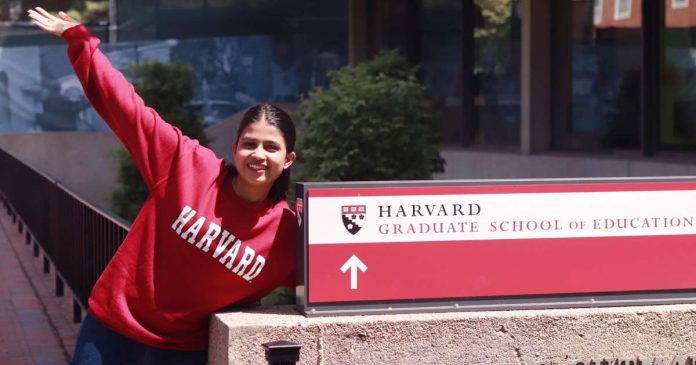
One such dreamer is Kainat Ansari, a former resident of Orangi Town in Karachi, who is now pursuing her Master’s in Education Policy and Analysis with a concentration in Early Childhood at Harvard University. Coming from a humble background and growing up in the world’s largest slum, Kainat shattered barriers and achieved what many thought was impossible.
As a proud TCF alumna, Kainat became the girl who earned her place at an Ivy League institution. Her journey is nothing short of remarkable and deserves to be celebrated. Our team at Brandsynario connected with her for an exclusive interview, where she shared insights into her education at TCF, the challenges she faced, how she overcame them, and much more.
Interview With Kainat Ansari
Brandsynario: Reflecting on your early years at TCF, in what ways did educational experience influence not just your academic aspirations, but your sense of identity and possibility, especially as a young girl growing up in a place like Orangi Town, where opportunities often feel out of reach?
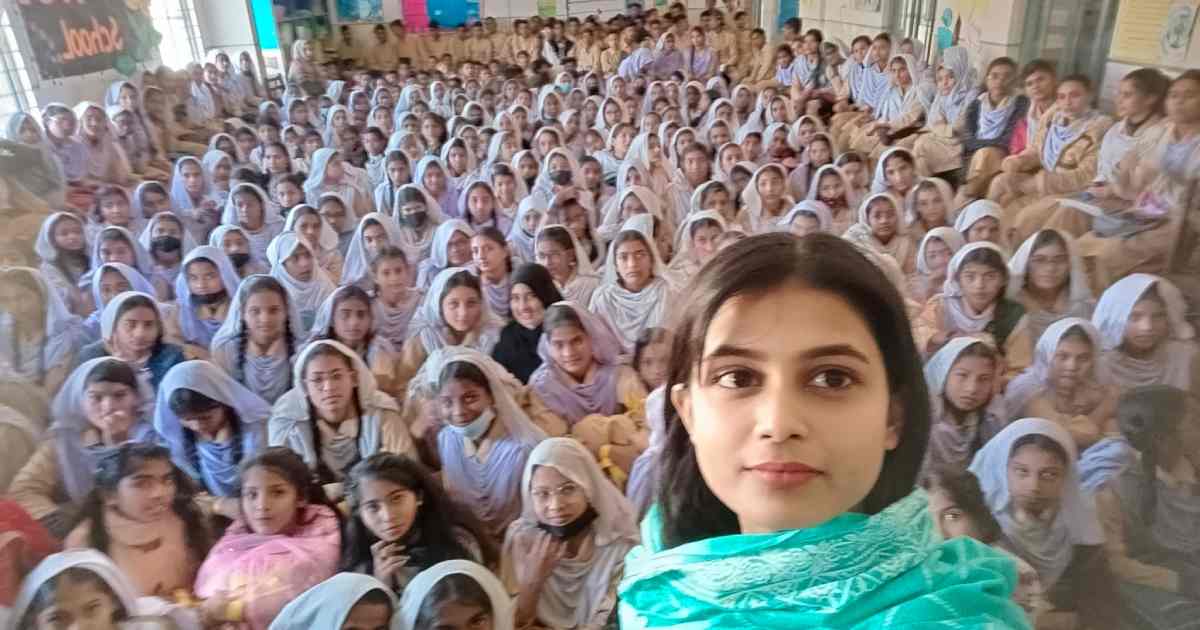
Kainat Ansari: My years at TCF shaped far more than my academics. They gave me dignity and a sense of possibility in a place where dreams often ended too soon. Growing up in Orangi Town, I saw my cousins drop out of school in grade 7 or 8 due to poverty. At TCF, my teachers not only taught me subjects, but they also believed in me. That belief made me see myself not as a girl limited by her circumstances, but as someone who could challenge the odds. That experience sparked in me a lifelong care for social mobility. I realised education wasn’t just about my success; it was the single most powerful way to break cycles of inequality and uplift entire communities.
Brandsynario: Growing up in a community where educational aspirations are not always the top priority for women, what were some of the most profound academic, social, or emotional challenges you encountered, not just in terms of access, but in terms of belief in your own potential? And how did you find the strength or support to push through those moments?
Kainat Ansari: The biggest challenge was the constant reminder that as a girl, my future would be limited. It was not just about access, but about being told, directly or indirectly, that I should not even dream. My strength came from my mother. She read Urdu newspapers to us, told us stories of young women breaking barriers, and reminded me that education was my only real inheritance. Her faith became the anchor that helped me push through despair. And over time, I began to understand that my pursuit of education wasn’t only about me; it was about building a pathway of social mobility that others could follow.
Brandsynario: Unfortunately, some biases never end. Even after making it to globally respected institutions like Oxford and now Harvard, do you still encounter moments of resistance or bias, whether due to your identity as a woman or where you’re from? How do those experiences shape your sense of belonging in these spaces?
Kainat Ansari: Yes, bias follows you no matter how far you travel. At Oxford and now Harvard, I have sometimes felt that my background, coming from Orangi Town, is not always understood. There are moments when I am reminded I am “different,” whether because I am a woman, Pakistani, or from a slum community. However, I carry those differences with pride, because education was the catalyst that propelled me upward. It gave me the language, the tools, and the credibility to step into these spaces. Each bias I encounter only strengthens my conviction that true belonging isn’t about erasing where you come from; it’s about carrying it forward and making sure others have the same chance for upward mobility through education.
Brandsynario: You’ve spoken about the importance of financial independence for women on your social media, something that’s not always prioritised in communities like ours. Where do you think this belief comes from in your own life experience, and why do you see financial freedom as such a critical part of empowerment for women?
Kainat Ansari: I saw women in my community trapped in abusive cycles because they had no economic choices. Financial freedom is not just about money; it is about dignity, voice, and agency. For women, especially in places like Orangi Town, financial independence means the ability to say no to injustice, to make choices for themselves and their children, and to live with respect. It is a critical pillar of social mobility: without economic independence, education cannot fully translate into empowerment. For me, empowerment without financial independence is incomplete.
Brandsynario: Given your own journey as a powerful example, what role do you think education can play in breaking cycles of marginalisation, not just for neurodivergent children but for all underserved groups in general?
Kainat Ansari: Education is the most powerful equaliser I know. I’ve seen firsthand how it can change not only individuals but entire generations. My siblings, my cousins, and my community are examples of this ripple effect. For underserved groups, whether it’s neurodivergent children, girls in marginalised communities, or children in war zones, education is the only real pathway to freedom. It gives dignity and the chance to move upwards. This is why I care so deeply about social mobility, because once a child breaks through, it doesn’t stop with them; it lifts families, communities, and generations.
Brandsynario: You’ve just begun your journey at Harvard, it’s been a month, and now that you’re actually there, how does the reality compare to what you imagined? Have you found any moments of belonging in this new environment, perhaps even within a desi community? And what have been the most meaningful parts of the experience so far?
Kainat Ansari: Being at Harvard feels surreal. Growing up in Orangi Town, Harvard was not even in my imagination. Now that I’m here, the reality is both overwhelming and grounding. I’ve found belonging in small, unexpected ways; in desi student gatherings, in professors who take time to listen, and in peers who are genuinely curious about my story. The most meaningful part has been realising that my presence here is not just my achievement. It is an example of social mobility made possible through education, and a reminder that I carry the dreams of every girl from my community with me. That thought keeps me grounded and motivated.
Brandsynario: If you could speak directly to a young girl in Orangi Town today, who thinks her dreams are beyond achievable, what would you say to her?
Kainat Ansari: I would say that your dreams are not too big; your circumstances are just too small right now. Don’t let them fool you into thinking you can’t rise beyond them. I was once exactly where you are. People told me that I was dreaming too high, that girls like us should be content with less. But I stand here as proof that nothing is impossible when you hold on to your education and your belief. Education is the ladder of social mobility; it’s what helped me climb out of limits that once seemed permanent. You are not defined by your circumstances. You are defined by the courage you carry in your heart.
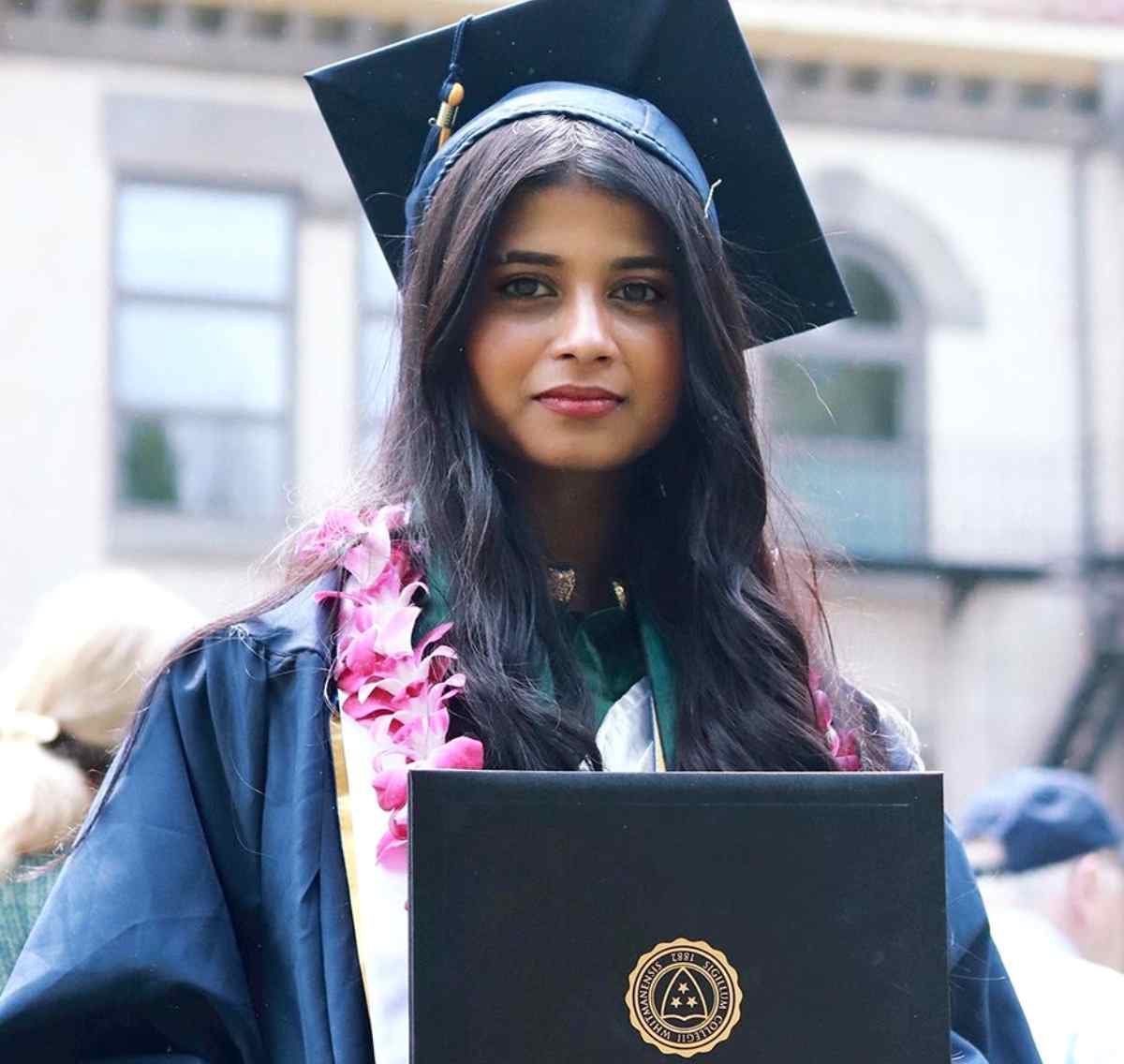
Kainat has shown that circumstances should never define your destiny. From Whitman College to Oxford University, and now Harvard University, she has repeatedly proven that with determination and resilience, nothing can stand in the way of success.
At Brandsynario, we wish Kainat Ansari continued success in her journey ahead and hope her story serves as an inspiration for underprivileged children across the country.
Stay tuned to Brandsynario for latest news and updates