














The much-anticipated Nawaz Sharif IT (NSIT) City is taking shape as Pakistan’s first fully integrated technology, education, and creative hub. Spread over 800 acres under the stewardship of the Central Business District (CBD) Punjab, the project promises to redefine Lahore’s urban and economic landscape, and, more importantly, to keep Pakistan’s brightest minds from leaving the country.
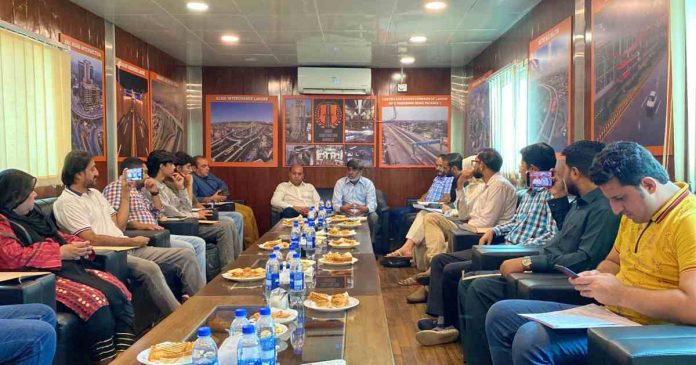
A recent digital media visit to the site offered journalists and influencers an exclusive look at the progress on the ground. The delegation received detailed briefings from Mohammad Asif Iqbal, Director of Project Management at CBD Punjab, and Riaz Hussain, Executive Director Technical at CBD Punjab, on the development of upcoming zones, including Education City, Film City, and Residential & Commercial Districts.
The visit showcased the Punjab Government’s vision for innovation, sustainability, and economic growth, while underscoring CBD Punjab’s commitment to creating a self-sustaining ecosystem where residents can live, work, and innovate.
The masterplan divides NSIT City into three core zones:
- IT City – Envisioned as a powerhouse for startups and tech firms, the IT district aims to build on Pakistan’s growing IT export market, which has risen to $2–3 billion in recent years. Special Technology Zones Authority (STZA) has granted NSIT City a special status. Specifically, the Silicon Block of NSIT City, developed by the Central Business District (CBD) Punjab, has been declared a Development Zone and Special Technology Zone by STZA. It also offers a 10-year tax holiday for IT companies. Already, over 20 firms have committed to establishing operations here, with 90 % of Silicon Block plots sold.
- Education District – In an unprecedented move to curb brain drain, CBD Punjab is in talks with top-ranked universities to open campuses in Lahore. The plan calls for at least 25 % of faculty to be foreign nationals, delivering global-standard education without requiring students to move abroad. Scholarships for Pakistani students are also in the pipeline. A 400-kanal site is already earmarked for one university, with two more universities planned on 100 acres each.
- Film City – Designed as Pakistan’s first dedicated film production zone, the district will house studios, creative workspaces, and media infrastructure to promote the local entertainment industry.
Infrastructure at Global Standards
Beyond its core sectors, NSIT City boasts state-of-the-art urban planning:
- 296-foot-wide boulevard — the widest road in Lahore.
- Underground electricity and international-grade sewerage system designed to last 80–100 years.
- A 500–600 Kanal central park with a scenic canal, integrated with an SRT tram system.
- Smart metering, advanced weather monitoring, and green building standards.
A Strategic Shift for Pakistan
By combining cutting-edge infrastructure with internationally recognized education, NSIT City aims to reverse decades of talent migration. If executed as planned, NSIT City could be more than just a real estate project; it could be the catalyst that turns Pakistan’s brain drain into brain gain.