
















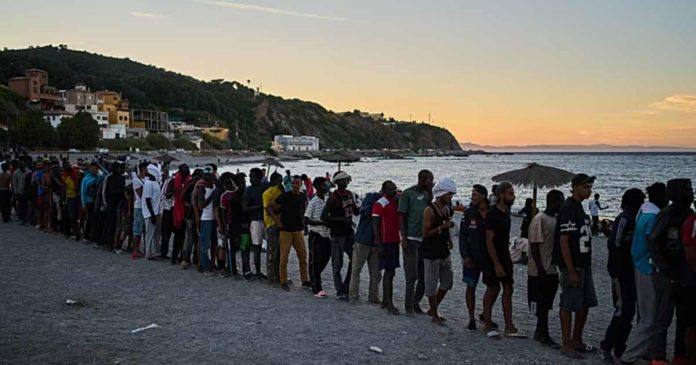

The Ceuta crisis unfolded after tens of thousands of migrants crossed from Morocco into the Spanish enclave of Ceuta within two days, driven by viral social media posts claiming the route to Europe had become easier. The border was swamped by an unprecedented surge that took the lives of dozens. It set off political tensions across Europe and raised urgent questions about the power of online misinformation to shape real-world events.
Key Takeaways
- Up to 60,000 migrants crossed or attempted to enter Ceuta in one of Europe’s largest recent border surges.
- At least 72 people lost their lives during dangerous sea crossings, according to regional authorities and official reports.
- EU interior ministers are expected to discuss stronger external border measures following the Ceuta crisis.
How Viral Videos Sparked a Mass Crossing
What began as a stream of TikTok clips and Instagram reels quickly snowballed into one of Europe’s most significant migration emergencies. For weeks, social media accounts portrayed the journey from Fnideq in northern Morocco to Ceuta as simple, safe and successful.
Many videos showed young migrants celebrating after reaching Spanish territory, while others shared maps, satellite images and step-by-step advice on where to swim. Some posts even encouraged people to travel in groups, carry as little as possible and head towards the Tarajal breakwater or the rocky coastline near Belyouch.
The message spreading online was clear: Spain’s border was “open.” It wasn’t.
The Supreme Court Ruling That Was Misunderstood
Much of the confusion centred on a recent decision by Spain’s Supreme Court. The ruling stated that migrants intercepted after arriving by sea could no longer be immediately returned under Ceuta’s special border regime and instead had to go through Spain’s standard legal process.
That legal distinction was quickly distorted across social media. Posts falsely claimed the judgment guaranteed migrants the right to stay in Spain or continue into mainland Europe, even though neither was true.
Spanish Prime Minister Pedro Sánchez later argued that smugglers and online rumours had misrepresented the ruling, leading thousands to believe they had an easy path into Europe.
A Border Town Overwhelmed in Hours
By the time thousands gathered along Morocco’s coastline, border authorities were struggling to contain the crowds. Hundreds entered the sea at once, attempting the dangerous crossing around the Tarajal breakwater despite strong currents and cold water.
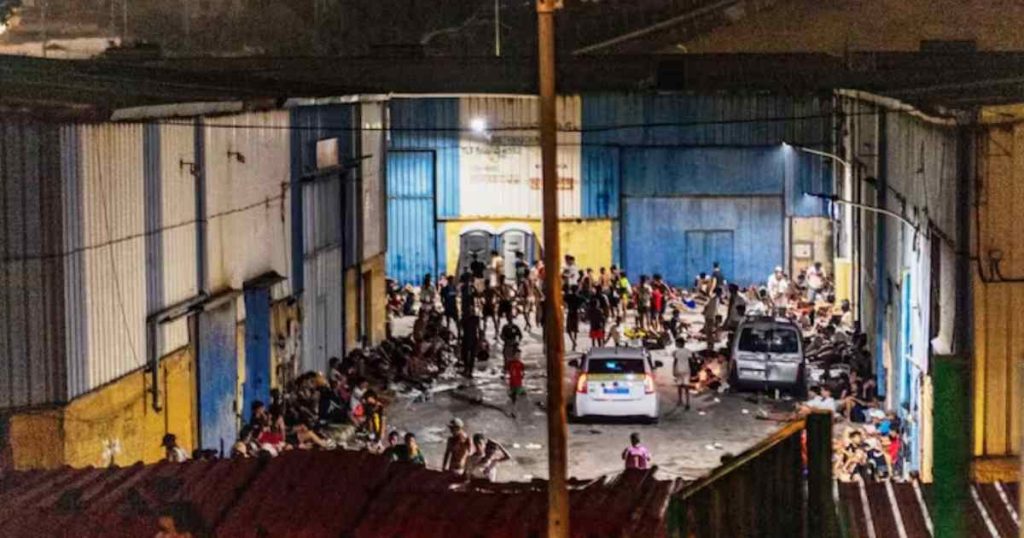
The consequences were devastating. Rescue teams recovered dozens of bodies from the water, while exhausted survivors arrived on Ceuta’s beaches with little more than the clothes they were wearing. Reception centres rapidly exceeded capacity, forcing authorities to establish temporary shelters as public spaces filled with new arrivals.
Within days, Spanish police and military personnel escorted many migrants back to Morocco, while others entered legal processing procedures.
Politics Quickly Took Centre Stage
The Ceuta crisis soon became more than a migration story. It exposed fresh divisions within the European Union over border security and immigration policy.
Italian Prime Minister Giorgia Meloni criticised Spain’s handling of the situation and temporarily tightened checks on arrivals from Spain, arguing the influx posed a wider security concern. Meanwhile, Pedro Sánchez insisted the crisis had been contained and urged European leaders to show solidarity instead of turning the situation into a political battleground.
Questions have also been raised about Morocco’s border response, although Rabat blamed criminal networks and misinformation rather than government policy.
The Bigger Lesson
The Ceuta crisis points to the growing influence of online misinformation during humanitarian emergencies. False claims spread faster than official guidance. In this case, it ended up convincing thousands that a dangerous sea crossing would lead to a new life in Europe.
The reality proved very different. Most migrants were unable to continue beyond Ceuta, many returned to Morocco within days, and dozens never made it ashore. For European policymakers, the events have become a stark reminder that digital misinformation can move people just as powerfully as economic hardship or political instability.
FAQs
1. What triggered the Ceuta crisis?
Viral misinformation and migration rumours spread across social media triggered the Ceuta crisis.
2. How many migrants crossed into Ceuta?
Around 60,000 crossed or attempted to cross into Ceuta.
3. Did migrants automatically gain entry to mainland Spain?
No, reaching Ceuta did not grant automatic access to mainland Spain or Europe.
Stay tuned to Brandsynario for latest news and updates



 Join a Channel
 Brandsynario
 Veryfilmi