
















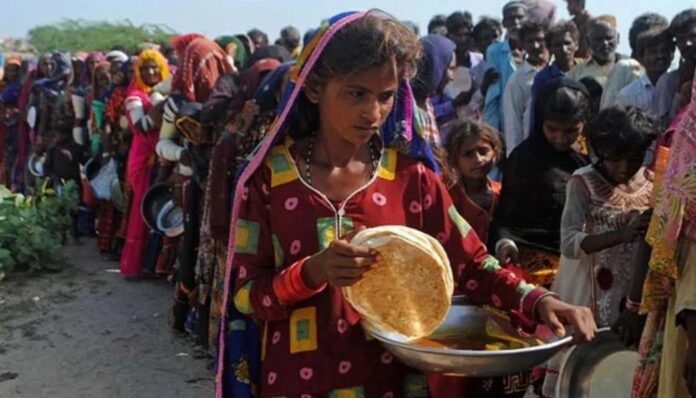

Experts state that Pakistan is about to face significant challenges that will cause food insecurity in 2025. Although the country produces a substantial amount of food, consistently meeting the needs of its growing population—over 240 million—has become increasingly difficult. Some indicators point to even greater risks in the future.
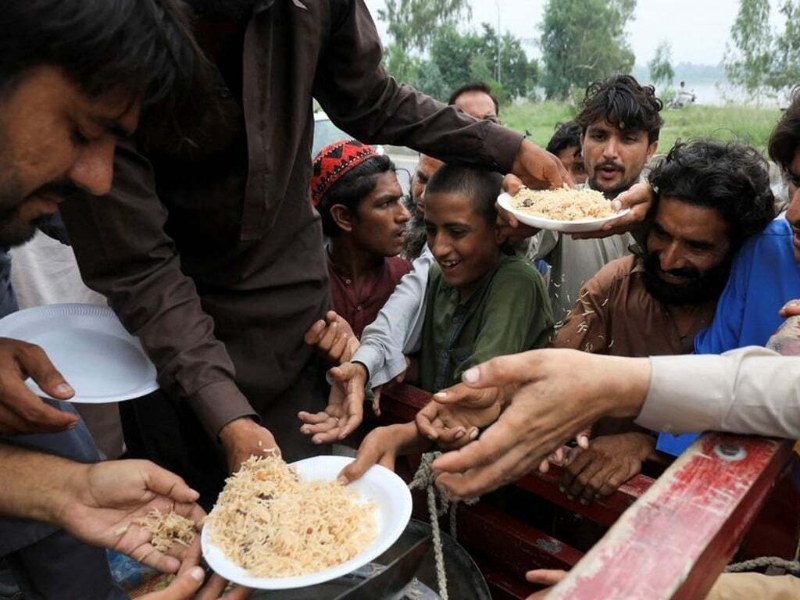
Existing Vulnerabilities
Recent analysis indicates ongoing issues. The Integrated Food Security Phase Classification (IPC) offers a snapshot of late 2024 to mid-2025. It forecast severe issues even before recent happenings. Approximately 10 million individuals in poor rural regions probably experienced extreme acute food insecurity (IPC Phase 3 Crisis or worse) from April to July 2025. This represents roughly 20% of the population under study within those districts. Such conditions make individuals unable to obtain sufficient food. This difficulty results in malnutrition or drives households into desperate survival strategies.
Economic Pressures and Inflation
Economic uncertainty and inflation are the main issues. Overall food inflation fell from its 2023-24 highs. Still, most staple foods remain significantly more expensive than they were. Prices of farm inputs such as fuel and fertiliser, and transport costs, tighten farmers’ pockets. These prices also increase consumer prices. This particularly affects poor households. Reports indicate that almost 40% of Pakistanis are living in poverty, leaving them extremely exposed to increased food prices.
Read More: How Can Students Make Money During An Economic Crisis
Climate Change Impacts
Climate change introduces immense risk. Pakistan is among the world’s most climate-risk countries. The devastating 2022 floods were an open warning. Increased heat waves, droughts, and unstable monsoons disturb farming on a regular basis. Specialists say climate change might reduce farm production by 30-50% without huge adaptation. This directly impacts food supply and prices. Water shortage also jeopardises agriculture. Climate change and possible Indus water problems exacerbate this shortage. Agriculture in Pakistan depends greatly on the Indus basin for irrigation.
Outlook and Opinion
Pakistan has demonstrated resilience in the past. However, the present combination of factors is concerning. Climate risk, economic issues (notably dependence on costly food imports), population expansion, and probable water scarcity produce a perilous combination. Unless vigorous action is taken to address climate-smart agriculture, improved water management, food price stability, and social protection, aggravated food insecurity is likely for the majority of Pakistanis.
Stay tuned to Brandsynario for latest news and updates



 Join a Channel
 Brandsynario
 Veryfilmi