
















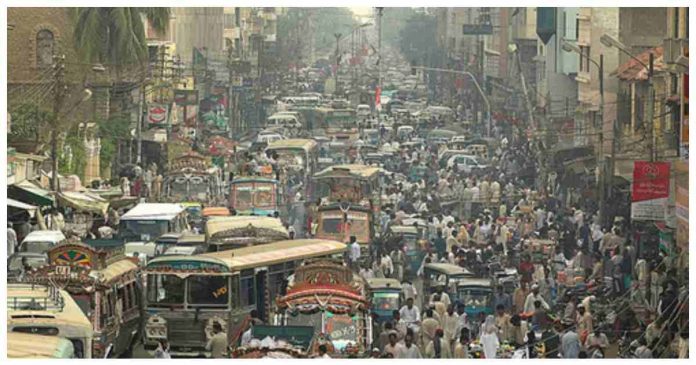

According to the United Nations Population Fund (UNFPA), Pakistan’s population count has surpassed 225 million, making it the fifth most populous country in the world.
With a population exceeding 225 million, Pakistan now ranks behind only India, China, the United States, and Indonesia, underscoring both its immense human potential and the scale of challenges ahead.
This demographic statistic is a powerful force shaping Pakistan’s economy, healthcare system, education sector, urban planning, and digital future.
Why Does Pakistan’s Population Keep Rising?
Overpopulation is one of Pakistan’s biggest problems, and the population count is not slowing down anytime soon. Several factors contribute to this conundrum:
- High fertility rate (estimated at 3.14 children per woman) means more births than deaths.
- Limited access to contraception and gaps in family planning strategies contribute to population growth
- Low literacy among women
- Cultural and social norms tied to family honour, prestige, and prosperity encourage larger families
- A youthful population structure keeps more women in the childbearing age and continues the momentum
Population growth places enormous pressure on infrastructure and development services. Overcrowding leads to higher disease frequency. Maternal health needs and childcare services remain substandard and Pakistan, and higher birth rates aggravate the issue.
The job market in Pakistan is extremely volatile. A large population, thus, automatically signals increases in unemployment rates and reduces job security as there are insufficient working opportunities. Consequently, economic disparities widen and persist.
View this post on Instagram
Is There An Upside to Pakistan’s High Population Growth?
As noted previously, Pakistan has a youthful population structure with more than 50% of individuals in the 15 to 59 age bracket. While this directly contributes to overpopulation, it is a significant demographic dividend that can bear fruit.
A young population provides a massive workforce pipeline for industry, technology, healthcare, and services. Furthermore, the younger population is more educated, digitally connected, and capable, creating more room for economic growth.
Thus, the country’s youth could boost Pakistan’s digital economy with freelancing and new startups taking centre stage. Increased domestic demand boosts retail, housing, and fintech.
If properly skilled and employed, Pakistan’s youth population could become the backbone of long-term economic growth, similar to what China experienced in the early 2000s.
Entering 2026 as the world’s fifth most populous country is both a moment of pride and a test of leadership for Pakistan. The country’s future will depend not on how large its population is, but on how effectively it is educated, employed, and empowered.
Handled wisely, Pakistan’s demographic strength can fuel decades of growth. Mishandled, it risks deepening economic and social stress. The choices made now will define the nation’s trajectory for generations.
Stay tuned to Brandsynario for latest news and updates