
















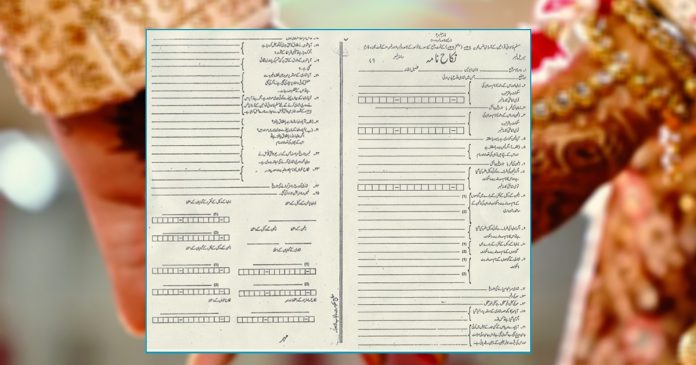

Weddings in Pakistan are the most celebrated events but tucked between the bridal outfits and the last-minute venue checks sits a quiet piece of paper that actually seals the marriage: the Nikah Nama.
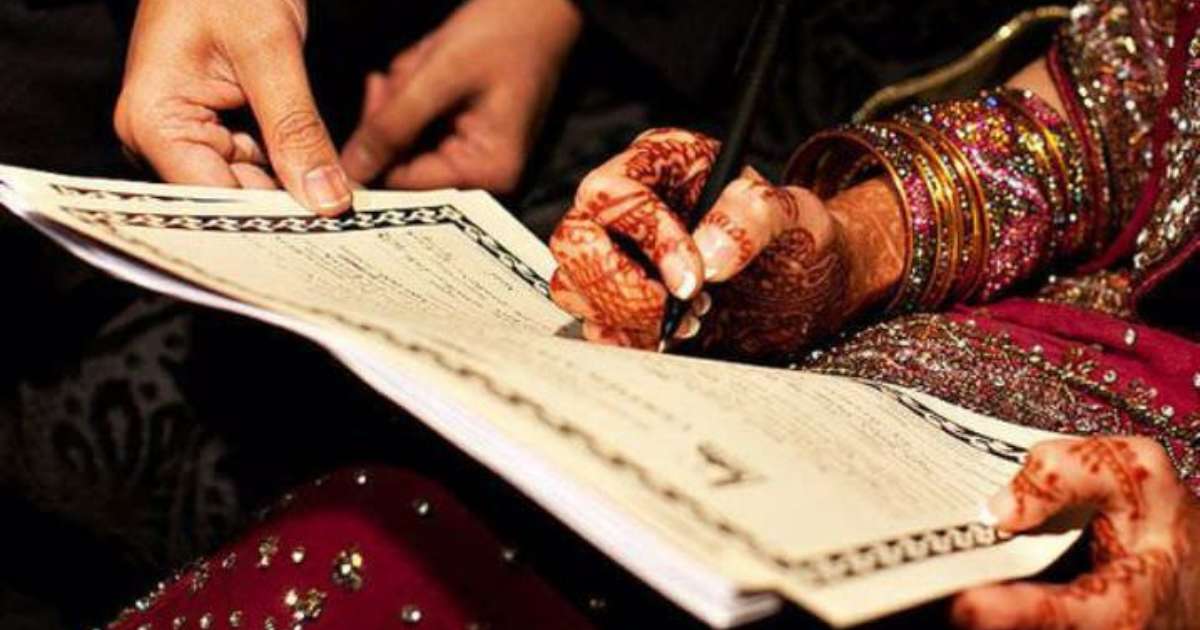
It looks dull, it’s often poorly printed, and many couples only see it seconds before the imam asks them to sign. Don’t let that be you, because this paper is probably the most important paper you will ever sign
The Nikah Nama is both a religious declaration and a legally binding civil contract under the Muslim Family Laws Ordinance, 1961.
It spells out rights, responsibilities and protections that matter if your marriage prospers or if it unfortunately breaks down.
What Exactly Is the Nikah Nama?
The Nikah Nama is both:
- A legally binding civil contract under the Muslim Family Laws Ordinance (MFLO) of 1961, and
- A religious document that formalizes a Muslim marriage.
Once signed and registered, it carries enforceable rights in Pakistani courts. Many clauses protect the bride financially and legally but they’re only effective if they’re filled in and agreed to, explicitly.
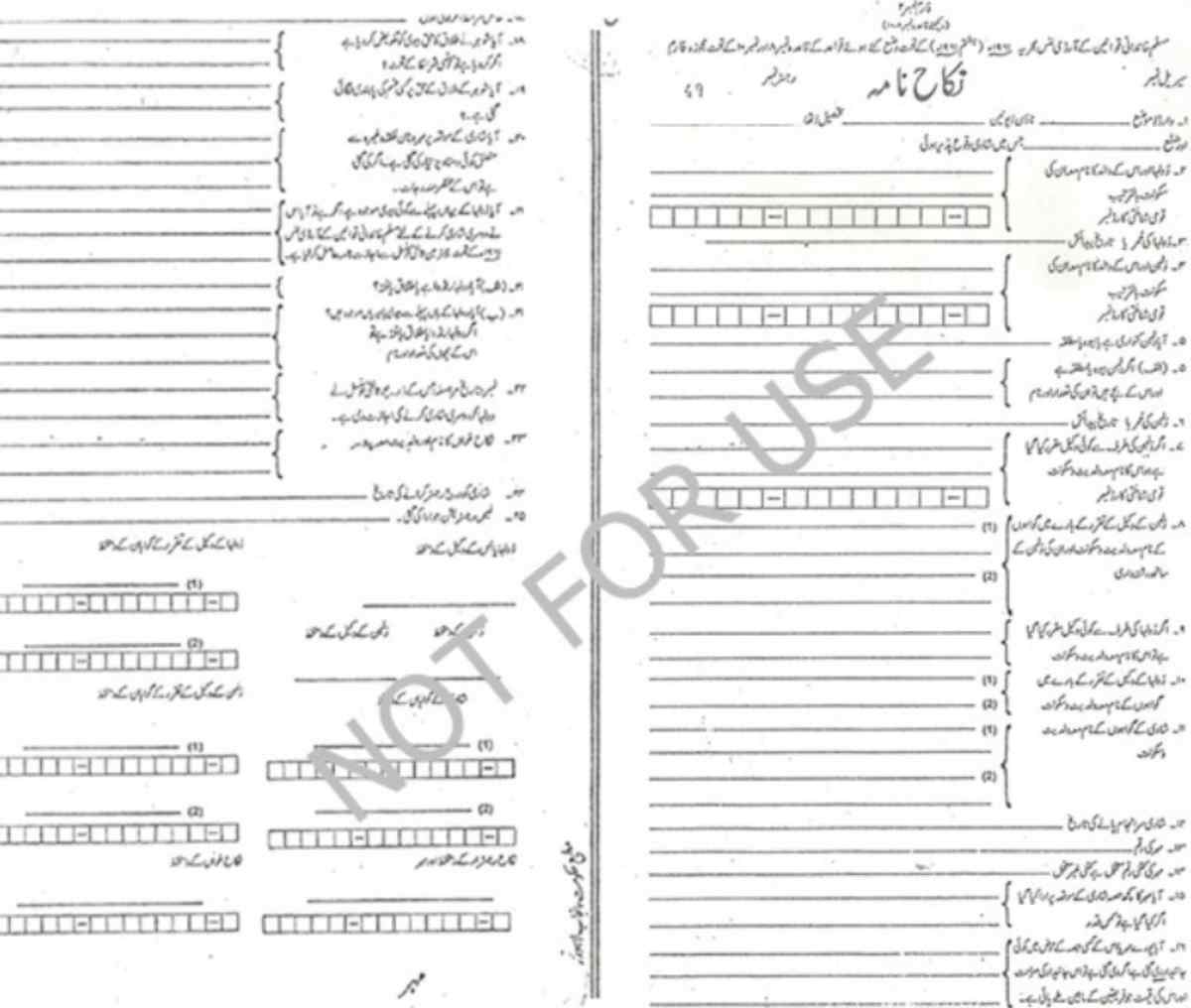
The Anatomy of the Nikah Nama (Clauses Explained)
A typical Nikah Nama has around 25 clauses. The early ones are straightforward.
The later ones? They decide your financial security, your autonomy, your rights in separation, and even how disputes might be resolved.
Let’s break them down simply:
Clauses 1–12: The Basics
These sections cover:
- Names
- Ages (legal minimum: 16 for brides, 18 for grooms)
- Addresses
- Occupations
- Names of representatives (vakils)
- Witness details
While straightforward, these sections are often incorrectly filled, especially regarding age, due to social pressure.
Clauses 13–17: Haq Mehr (Dower)
This is one of the most important protections a bride has in marriage.
These clauses determine:
- The amount of Haq Mehr
- Whether it’s cash, gold, property, or valuable items
- Whether it’s mu’ajjal (paid immediately) or mu’wajjal (paid later/on demand)
Why it matters:
- If Haq Mehr isn’t clearly written, disputes later become harder to resolve.
- Whatever gold amount is written becomes legally claimable by the bride.
- If left blank, the wife can sue for a reasonable dower determined by the court.
Many families skip discussing Mehr out of hesitation, but doing so can cause years of resentment or financial struggle, as many women later discover.
Clause 18: The Wife’s Right to Divorce (Talaq-e-Tafweez)
This clause is routinely crossed out by officiants without telling the bride or her family even though it is completely legal and Islamic to include.
When this clause is checked:
- The husband delegates the right of divorce to his wife.
- The wife can dissolve the marriage without going through Khula, avoiding a complex court process.
- She keeps her Haq Mehr when initiating divorce.
When left unchecked:
- The wife must pursue Khula, which may require returning the Mehr and can take months or years.
Many women regret discovering this too late after the marriage has turned difficult.
What is The Difference Between Right to Divorce And Khula?
Many people get confused between Khula and right to divorce hence we are including this section.
Khula is when a woman dissolves the marriage through the court.
Key points:
-
It can be granted even without the husband’s consent.
-
The woman must usually forgo her mehr, maintenance and alimony.
-
It requires hiring a lawyer and preparing a case.
-
A judge decides whether khula will be granted.
By contrast, when a woman is delegated the right to divorce (also known as Talaq-e-Tafweez), she can end the marriage through the same administrative procedure that men follow.
This means:
- You can issue a divorce deed yourself.
- You present it to the Union Council and notify your spouse.
- If reconciliation efforts fail, you receive an official divorce certificate after 90 days.
- No court case, no lawyer, and no forfeiting of financial rights.
In simple terms: khula is a conditional, court-based dissolution, while the delegated right to divorce is an independent authority to end the marriage without going to court or giving up financial entitlements.
Clause 19: Restrictions on Husband’s Right to Divorce
This clause allows couples to set conditions or restrictions on unilateral divorce by the husband. Few people use this clause but it can provide clarity and fairness.
Clause 20: Special Conditions
This is where you keep your rightful conditions. Couples can legally set terms such as:
- The wife’s right to work or study
- A defined monthly maintenance allowance
- Where the couple will live
- Financial terms during separation
- Custody arrangements
- Conditions around shared property
- Any mutually agreed expectations
As long as the conditions do not violate Islamic or Pakistani law, they are enforceable.
Clause 21: Polygamy Restrictions
This clause confirms:
- Whether the groom has another wife
- Whether he obtained written permission from his existing wife/wives and the Union Council, which is legally required
Ignoring this clause can lead to serious legal complications later, especially in Pakistan.
Mistakes To Avoid During Nikah Nama Signing
- Incorrect ages get written in to “make someone younger.” Example: a woman saying her nikahnama listed a younger birth year than true. This matters for legal validity and rights.
- Mehr taken lightly can leave a woman financially vulnerable years later.
- Skipping clause 18 is common and costly. In many cases, brides were labelled as “misguided” for insisting on retaining their right to annulment.
Other Clauses You Can Add to Your Nikah Nama
You can (and you should) include additional, lawful conditions such as:
- A monthly allowance for the wife (specify amount or calculation method and whether it continues after separation).
- Agreement that husband will continue payments on separation, if desired.
- A clause requiring proof of permission from a first wife in case of polygamy.
- Custody pre-agreements for children (subject to court discretion later).
Marriage Certificate Information
Here are some basic information that everyone must know about.
| Category | Details |
|---|---|
| Authorities That Issue the Computerized Marriage Certificate | – Union Council- Cantonment Board Office- Tehsil Municipal Administration (TMA)- Arbitration Council Office |
| Required Documents | – Copy of the Nikah Nama (original required for verification)- CNIC of bride and groom- CNIC of Nikkah Khawan- Passport copies if either spouse is a foreign national |
| Updating CNIC After Marriage | Visit any NADRA Registration Center with:- Computerized Marriage Registration Certificate- Spouse for biometric verification |
We know this might feel like a lot, but marriage is the most blessed and important part of one’s life; hence, it must never be taken lightly. And this is never in vain.
Following through with all the above guidelines and details can spare you (and your future children) a lot of heartache.
Stay tuned to Brandsynario for latest news and updates