
















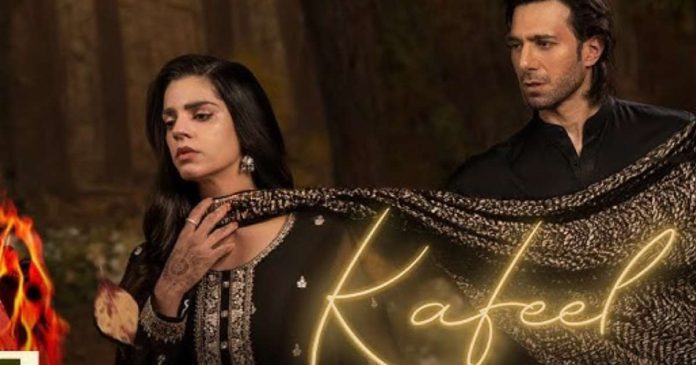

ARY Digital’s prime-time landscape witnessed a noticeable shift with the premiere of Kafeel Episode 1, a drama that instantly stirred conversation among viewers who have long complained about declining writing quality on television.
Penned by Umera Ahmed and directed by Meesam Naqvi, the serial arrived with expectations already running high, yet the opening episode managed to exceed them by doing something surprisingly rare: it trusted silence, subtlety, and emotional honesty.
Produced by Big Bang Entertainment under the leadership of Fahad Mustafa and Dr Ali Kazmi, Kafeel replaces Biryani in the coveted slot, and from its very first scene, it signals that this transition is not just about timing, but also about tone and substance.
Kafeel Episode 1 Review: Umera Ahmed’s Quiet, Powerful Return to Television
Kafeel Episode 1 unfolds in a world that feels instantly familiar yet deeply reflective, a signature style that Umera Ahmed has perfected over decades. The drama resists loud plot devices and instead grounds itself in the emotional rhythms of everyday life. The story centres on Zeba, portrayed by Sanam Saeed, a young woman raised in a privileged and intellectually aware household.
Her father represents progressive thinking, firmly believing that education must come before marriage, while her mother embodies traditional values and quietly but persistently searches for a suitable proposal. This ideological divide does not explode into confrontation; it simmers gently through conversations, glances, and unspoken expectations, making the tension feel authentic rather than manufactured.
The early 1990s setting plays a crucial role in shaping the narrative’s mood. Costumes, interior spaces, and dialogue delivery are carefully curated to reflect the era, creating a sense of nostalgia that longtime Pakistani drama viewers instantly recognise.
This visual restraint complements the writing, allowing emotions to surface organically. Instead of dramatic background scores forcing reactions, the episode allows pauses to speak, giving viewers time to absorb Zeba’s inner conflict and quiet resilience. This measured pacing stands out sharply in an industry often dominated by hurried storytelling.
Sanam Saeed’s performance emerges as one of the episode’s strongest pillars. Her portrayal of Zeba feels layered and introspective, prompting immediate comparisons to Kashaf from Zindagi Gulzar Hai, a parallel that quickly trended across social media platforms. Rather than relying on exaggerated expressions, she conveys emotional depth through controlled gestures and subtle shifts in tone, aligning perfectly with the script’s understated strength.
The supporting cast, including Emmad Irfani, Munazza Arif, Kashif Mehmood, and Javed Rizvi, complements the narrative without overshadowing it, suggesting that each character has been written with intention and narrative purpose.
Audience Reaction, and Why Kafeel Feels Like a Turning Point for Pakistani Dramas
The response to Kafeel Episode 1 was immediate and telling. Social media timelines filled with praise for the dialogue, which many viewers described as classic Umera Ahmed, reflective, meaningful, and refreshingly free of unnecessary theatrics. The slow pacing, often criticised in modern dramas, was celebrated here for allowing emotions to breathe and characters to settle into the viewer’s consciousness.
Rather than rushing toward sensational twists, the episode focused on building trust, an approach that resonated strongly with audiences craving realism.
What makes Kafeel particularly compelling is its refusal to underestimate viewers. It assumes emotional intelligence and patience, qualities that have often been ignored in recent television offerings. By prioritising character development over shock value, the drama positions itself as a return to storytelling rooted in emotional truth.
While it is too early to predict the full trajectory of the series, the premiere successfully establishes a narrative foundation that feels both confident and sincere.
For fans of Umera Ahmed, Kafeel does not feel like just another project; it feels like a homecoming. Episode 1 rekindles the belief that Pakistani dramas can still be thoughtful, layered, and quietly powerful. If the series maintains this discipline, it may well become a benchmark for writing standards that viewers have been longing to see revived.