















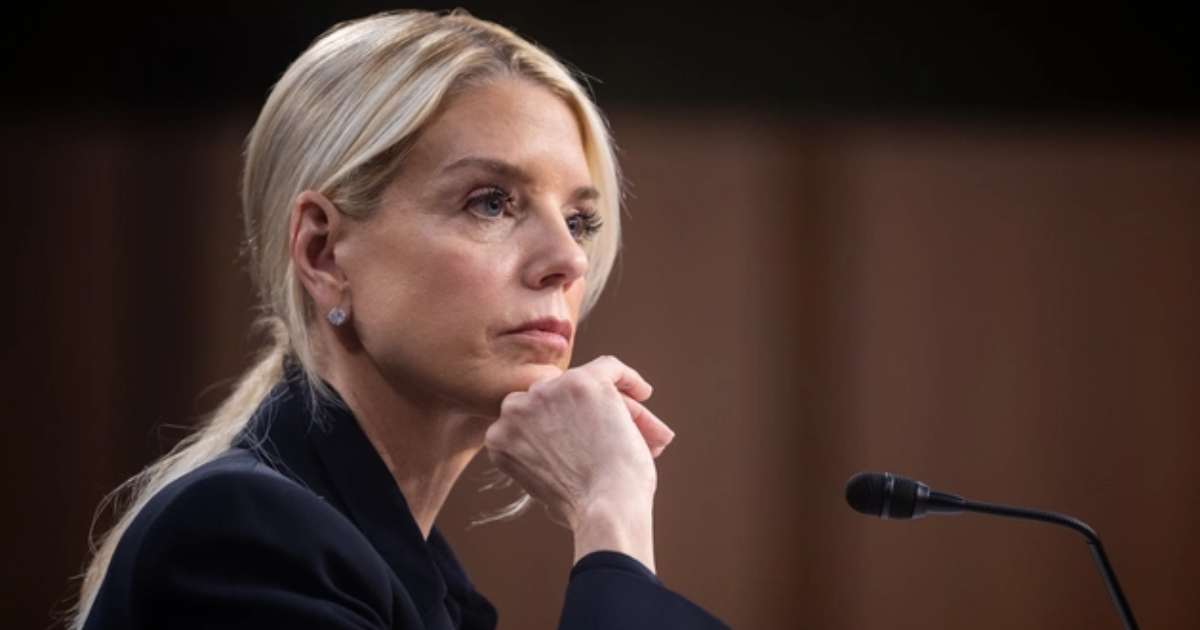
Attorney General Pam Bondi turned a routine House hearing into a political war zone on February 11, 2026. For five hours, she faced a Judiciary Committee fuelled by bipartisan anger. At the centre of the storm was the Department of Justice’s handling of the Epstein files.
The document release has been a disaster. Lawmakers accused the DOJ of reckless incompetence for exposing victims’ names while protecting perpetrators. Tensions peaked when Bondi was caught holding a search history log of a sitting congresswoman. This sparked immediate claims of illegal surveillance.
Bondi remained defiant throughout. She dismissed her critics and hinted at secret, pending investigations. Her testimony revealed a department in chaos. It also showed a Justice Department focused more on political combat than public transparency.
The Search History Document
The document in Bondi’s hand appeared to be a detailed log of Representative Pramila Jayapal’s recent activity within the DOJ’s sensitive file room.
-
The Specifics: The printout listed at least eight distinct files Jayapal had accessed. It included specific file numbers and brief descriptions of the contents.
-
The Access Point: Lawmakers review unredacted Epstein records in a high-security room at DOJ headquarters. They must use specific terminals and are prohibited from bringing in cell phones.
-
The Implication: Jayapal argues that for Bondi to possess this list, the DOJ must be tracking every keystroke and query made by members of Congress during their oversight duties.
Jayapal’s Accusation of Surveillance
Representative Jayapal characterised the document as a “burn book” intended to intimidate critics.
-
Separation of Powers: Jayapal stated that the DOJ’s tracking of her search history violates the constitutional separation of powers. She maintains that the executive branch has no right to monitor how the legislative branch conducts its investigations.
-
“Outrageous Abuse”: In a public statement, she called the monitoring an “outrageous abuse of power.” She has already begun organising a formal letter to the DOJ Inspector General to demand an investigation.
The Wider “Burn Book” Allegations
Other Democrats joined Jayapal in accusing Bondi of using DOJ resources to compile opposition research on the committee members themselves.
- The Moskowitz Challenge: Rep. Jared Moskowitz dared Bondi to reveal the best insult her aides had prepared for him. He suggested the DOJ is spending more time investigating its overseers than the individuals named in the Epstein files.
- Raskin’s Critique: Ranking Member Jamie Raskin slammed the department for tracking members’ investigative steps. He accused the DOJ of using this data for polemical, rather than justice-based, purposes.
Bondi’s Defiant Defense
- Bondi did not deny having the document but instead used it to pivot and attack Jayapal’s credibility.
- Dismissal as Theatrics: When Jayapal pressed her on the ethics of tracking searches, Bondi dismissed the inquiry as theatrics and a circus.
- Combativeness: Bondi’s refusal to apologise to survivors or address the surveillance claims directly led to some of the hearing’s most heated shouting matches.
Exposure of Survivors and Sensitive Data
Critics argued that the DOJ’s redaction team showed a stunning lack of competence.
-
Victims Revealed: Lawmakers highlighted instances where the DOJ failed to black out the names of Epstein’s survivors. In the most egregious cases, some public files even included unredacted nude photographs of victims.
-
Perpetrators Protected: In contrast, the names of many potential perpetrators and high-profile associates remained heavily blacked out. Rep. Thomas Massie (R-KY) slammed the DOJ for this sloppy and incompetent work, noting it seemed to prioritise the privacy of the accused over the safety of the survivors.
-
Technological Failures: Experts noted that many redactions were digitally transparent. This allowed users to copy and paste the blacked-out text into a different document to reveal the hidden names.

The Bipartisan Backlash
Disgust over the redaction errors bridged the usual partisan divide.
-
The Massie Critique: Rep. Thomas Massie led the Republican charge, calling the document dump a dumpster fire that failed to deliver transparency.
-
Democratic Outrage: Rep. Pramila Jayapal and others argued that these errors were not accidental. They suggested the DOJ rushed the release to distract from the information it was choosing to hide.
The Gutter Remark and the Refusal to Apologise
The tension reached a boiling point when the focus shifted to the survivors present in the hearing room.
-
The Request: Rep. Jayapal asked Bondi to turn around and look at the group of Epstein survivors sitting directly behind her. She challenged Bondi to apologise to them for the exposure of their private information.
-
The Refusal: Bondi refused to turn around. She dismissed the request as a political stunt, stating: “I’m not going to get in the gutter for her theatrics.”
-
The Reaction: Her comment sparked immediate condemnation from the gallery. Survivors described the remark as a slap in the face that mirrored the dismissal they faced for years under Epstein’s influence.
Bondi’s Defence of the Process
Bondi defended her department by shifting the blame to the sheer volume of the records.
-
The Volume Defence: She argued that processing millions of pages in a short timeframe inevitably leads to human error.
-
Opening Statement Sympathy: While she refused the direct apology during questioning, Bondi noted in her opening statement that she has always been a champion for victims. However, critics argued her actions during the hearing told a different story.
The Pending Investigations Revelation
During a relatively calm exchange with Representative Chip Roy (R-TX), Bondi confirmed that new legal actions may still be on the horizon.
-
The Admission: When Roy asked if the DOJ intended to indict anyone else named in the millions of pages of records, Bondi stated, We have pending investigations in our office.
-
Lack of Specifics: She strictly adhered to department policy regarding ongoing cases, refusing to name targets, specific charges, or which U.S. Attorney’s offices were leading the probes.
-
The Indictment Context: This comment came shortly after she was asked about a criminal referral involving former CIA Director John Brennan. While she wouldn’t confirm if he was a target, she used the phrase ‘no one is above the law’ to emphasise her department’s aggressive stance.
Potential Targets of Interest
While Bondi remained tight-lipped, lawmakers used the hearing to highlight specific individuals whose names appear frequently in the unredacted files:
- Current Administration Officials: Democrats, including Rep. Becca Balint, questioned whether the DOJ was investigating Commerce Secretary Howard Lutnick, Navy Secretary John Phelan, or Deputy Defence Secretary Steve Feinberg, all of whom have documented ties to Epstein.
- Former Political Figures: Bondi alluded to a November directive from President Trump to investigate Epstein’s ties to figures like former President Bill Clinton.
- Co-conspirators: Rep. Thomas Massie and others pointed to names like Leslie Wexner (founder of L Brands), questioning why he appeared as a potential co-conspirator in some documents but remained uncharged
The February 11 hearing left the Justice Department’s reputation in the balance. Pam Bondi’s testimony confirmed a hard shift in federal priorities. She chose combat over contrition. She traded technical answers for political broadsides.
The Epstein files were meant to bring transparency. Instead, they have fuelled new allegations of surveillance and incompetence. Survivors are still waiting for a direct apology. Lawmakers are still waiting for unredacted truths.
Bondi’s mention of pending investigations offers a slim hope for future justice. However, for many, the day proved that the DOJ is now a primary stage for America’s deepest political divides.
Stay tuned to Brandsynario for the latest news and updates

 Join a Channel
 Brandsynario
 Veryfilmi