

















You must have heard of bold headlines about the human Y chromosome effectively vanishing and disappearing from existence. But are they really true?
The Y chromosome is the sex-determining gene that determines a male’s sex. It is inextricably associated with masculinity. Thus, many have equated the extinction of the genetic marker with the end of the male sex.
Here, we answer the big question: Is the male sex chromosome vanishing? If so, will that mean the extinction of masculinity?
Despite scary headlines, the human Y chromosome isn’t disappearing anytime soon. Gene loss largely happened long ago, and evidence suggests the remaining genes are stable and protected, meaning this is more evolutionary trivia than an impending crisis for masculinity.
Is the Male Sex Chromosome Really Disappearing?
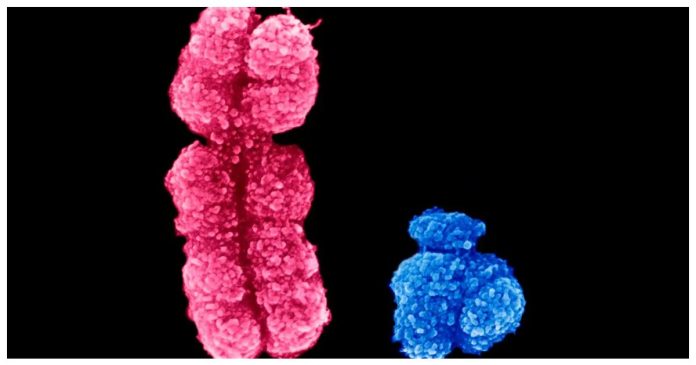
Millions of years ago, the X and Y chromosomes were identical in size and shape. Over time, the Y chromosome lost many of its genes due to a failure of recombination.
Today, the human Y chromosome has only 3 percent of the genes it once shared with X. While it is now much smaller than the female sex chromosome, the rate of loss of genes has slowed down.
Past predictions were based on the assumption that gene loss follows a constant linear process. However, new research suggests a different picture.
According to some research, the decline has slowed or has almost halted. Y genes have remained stable for tens of millions of years, opposing simple decay models.
Furthermore, hypothetically speaking, even if the Y chromosome did disappear, it wouldn’t necessarily herald the end of masculinity. In many other species, sex-determining functions were transferred to alternate gene systems. This phenomenon was observed in many rodents where previous sex determination systems disintegrated.
It is also worth noting that the supposed “disappearance” would take millions of years. Many current and subsequent generations wouldn’t be around to witness the event. Thus, claims of the Y chromosome vanishing are highly oversimplified and misinterpreted.
The Human Y Chromosome is Going Nowhere Anytime Soon
Despite early claims that the human Y chromosome is shrinking toward extinction, current scientific evidence shows that it has stabilised and is not disappearing.
While it did lose many genes deep in evolutionary history, the remaining genes are functionally important and actively preserved through natural selection and internal repair mechanisms.
Any potential change to human sex determination would take millions of years, making the idea of an imminent “vanishing Y chromosome” a myth rather than a scientific reality.
Thus, all those worried about humans losing the Y chromosome and masculinity coming to an untimely extinction can relax. The male sex chromosome is not going anywhere anytime soon, and the same sex-determining functions are likely to persist in the coming years.
Stay tuned to Brandsynario for latest news and updates