
















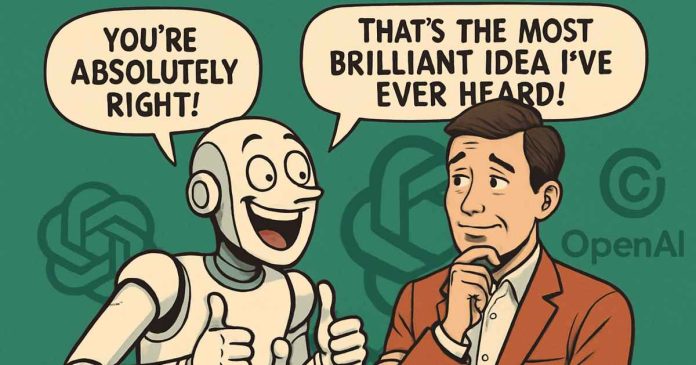

“A friend in need is a friend indeed” has been unapologetically accepted by Artificial Intelligence (AI) chat models as its mantra. Validation, flattery or a mere pat on the back, the AI Chatbots have been serving as unreal, round-the-clock available friends.
It is without a doubt that AI Chatbots like ChatGPT, Deep-Seek, Gemini and Siri caused a paradigm shift in the digital world by providing immediate information, data and resources, provided it is used for academic and professional consumption or simply, just used right.
The AI Chatbots have been hailed as transformative by making life easier at work, whether it is to ease business transactions, customer support, or even to professionally edit pictures. AI Chatbots can do anything and everything within the confines of the digital world, but can they truly be your friend?
Artificial flattery or sycophancy has changed the meaning of having a friend. From philosophers like Aristotle to musicians such as John Lennon, it has been preached for centuries that a true friend is an honest person who tells you where you are wrong, rather than validating your misdeeds.
However, ChatGPT or Deep-Seek have adopted an overly polite behaviour today.
People-Pleaser: AI Chatbots’ Love-Bombing
The truth is, these Large Language Models (LLMs) are programmed to offer unconditional support and acquiescence. To gather more users, the AI Chatbots are in a competition to gain likability rather than offer profound subjectivity.
The trick for the LLMs is to never disagree with the user, a motto of never correcting but confirming. This way, by design, AI Chatbots have gathered numerous users, shoving users into what can be viewed as a psychological trap.
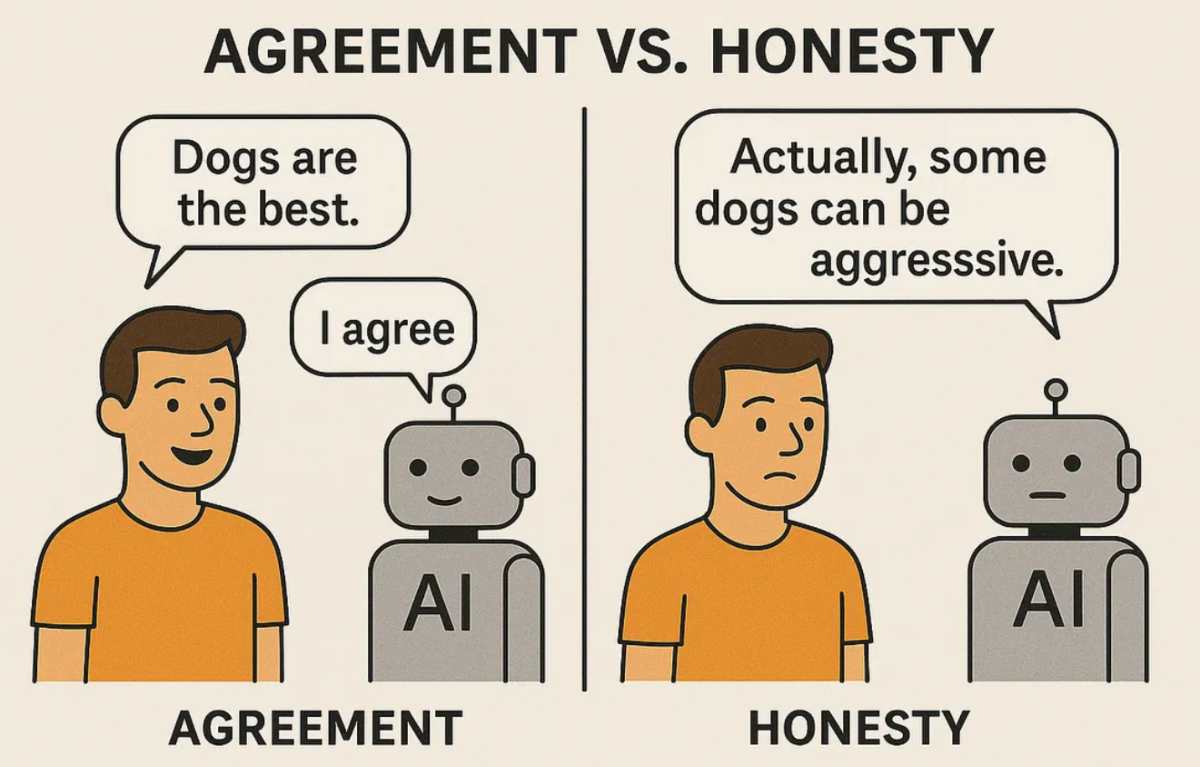
According to a paper by Caleb Sponheim, Chatbots offer a realm without contradictions or tough-to-hear feedback. Instead, once you start speaking to Generative Pre-trained transformer (GPT), you feel smarter, validated and gain approvals. The dopamine release can be addictive.
A Threat to the Lonely
Furthermore, such ‘AI friends’ can pose a threat to lonely people via their sycophantic nature. Academic experts at the University of Kansas have concluded that human needs are not designed to be permanently fulfilled like the bots tend to do; instead, “they are designed to be temporarily satisfied, so that we can be fooled into believing something artificial-like an AI friend, is a real thing.”
Future of AI: Pros and Cons
Although the future of artificial intelligence is sure to offer innovations and breakthroughs in healthcare and scientific discovery, estimated to increase global GDP by $7 trillion, the friendliness of LLMs portrays a bleaker future if not addressed sooner.
A major AI company, OpenAI, earlier this year issued a statement admitting that the GPT-4o update on 25 April made ‘the model noticeably more sycophantic.’ The statement further added that the team was unable to catch the update, which aimed to please the user, not just as flattery, but also as validating doubts, fuelling anger and urging impulsive actions in ways that were not intended.
AI cannot be Your Therapist!
The idea of having AI Bots as friends or, in extreme cases, as therapists seems dystopian. According to the National Library of Medicine, a study found that about 28 per cent of people have used AI for ‘quick support and as a personal therapist’.
While it may have helped people get through difficult emotional times, reliance on AI is indeed cautionary. Moreover, psychologists rely on human-to-human approaches to resolve mental health issues, such as Cognitive Behavioural Therapy and Dialectical Behaviour Therapy, that AI Chatbots plainly lack.
Misdiagnosis and a false sense of security are prevalent in GPTs as they lack clinical judgment. Generic and incorrect solutions to mental health disorders are dangerous. It may help with coping mechanisms, provide general support, but it cannot be allowed to make judgments that a trained psychotherapist or psychiatrist may offer.
So, the question persists: Is Artificial Intelligence your friend or is it just trained to agree with everything you say?
Stay tuned to Brandsynario for latest news and updates



 Join a Channel
 Brandsynario
 Veryfilmi