















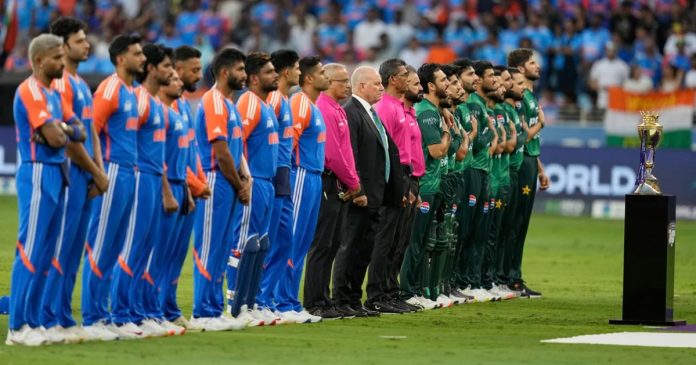

For days, the cricket world has lived in uncertainty. Will Pakistan play against India in the ICC Men’s T20 World Cup 2026? Now, the picture is slowly becoming clearer. The match could still happen, but only if Pakistan’s conditions are met.
What began as a venue and safety concern has grown into something far bigger. Governance, money and diplomacy have all entered the conversation. And at the centre of it all stands one crucial meeting that may decide everything.
Pakistan Cricket Board (PCB) chairman Mohsin Naqvi is set to meet Prime Minister Shehbaz Sharif once again in the next couple of days regarding the highly anticipated clash against India on 15th February in Sri Lanka.
This meeting has come at the request of the ICC. Naqvi is expected to brief the Prime Minister on the situation and seek clear instructions. Sources indicate that the final decision will once again rest with Shehbaz Sharif, not the PCB.
How did the situation escalate?
The roots of this crisis go back to Bangladesh’s request to move its matches out of India due to safety concerns. The ICC rejected that request and replaced Bangladesh with Scotland. Pakistan publicly backed Bangladesh and announced a boycott of the India match in protest.
The PCB even explored invoking the Force Majeure clause, but the ICC rejected the move. Citing a lack of sufficient grounds and existing contractual obligations.
Pakistan’s demands and the larger power struggle
According to reports, Pakistan has put forward a list of conditions for playing the India game on February 15. These include a larger share of ICC revenue, revival of bilateral cricket with India and stricter enforcement of handshake protocols during matches.
While the ICC has limited authority over bilateral series and behavioural customs, these demands highlight Pakistan’s broader concerns about fairness and influence within international cricket.
Meanwhile, Bangladesh may also push for compensation after being removed from the tournament, though the legal strength of such a claim remains unclear.
Pressure from cricketing allies
The situation has drawn reactions from multiple cricket boards. The Emirates Cricket Board has urged Pakistan to reconsider the boycott, stressing the long-term interests of the game.
Sri Lanka has also voiced concern, pointing to the heavy financial losses a cancelled India-Pakistan match could cause for tourism and hospitality.
ICC holds firm but keeps doors open
The ICC has made its stance clear. Selective participation in a global tournament cannot be allowed, and the integrity of the World Cup must be protected.
However, the governing body is still keeping negotiation channels open, clearly hoping to avoid a high-profile boycott that could disrupt both the sporting and commercial balance of the event.
At this point, the India-Pakistan clash sits at the intersection of sport, politics and business. Pakistan’s willingness to play now depends on whether its concerns are addressed and whether the government gives approval.
The coming days will be decisive. Either compromise will bring the biggest match in cricket back to life, or confrontation will reshape the tournament in ways no one expected.
Stay tuned to Brandsynariofor the latest news and updates.



 Join a Channel
 Brandsynario
 Veryfilmi