














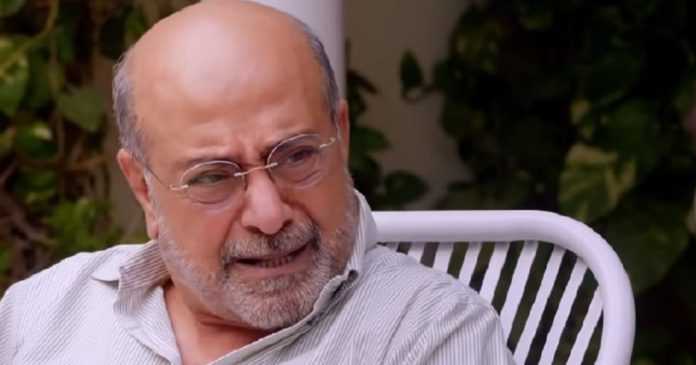

Pakistan’s drama industry is the new subject of discussion after veteran actor and writer Syed Mohammed Ahmed raised his concerns over the rising trend of artificial intelligence (AI) in scriptwriting.
Speaking on Sheeba Khan’s Dareecha podcast, Ahmed said some writers are now relying on AI to write long drama scripts, but also expressed his frustration over producers changing original stories to suit commercial interests.
His comments have triggered debates on creativity, originality, and the future of storytelling in Pakistan’s television industry.
Key Takeaways
- Syed Mohammed Ahmed has claimed that artificial intelligence (AI) is increasingly being used to write scripts for Pakistani dramas.
- Speaking on Sheeba Khan’s Dareecha podcast, Ahmed expressed concern over the growing reliance on AI in scriptwriting.
- He alleged that some AI-generated scripts fail to reflect Pakistani culture, language, and natural dialogue.
- Ahmed said it typically takes him 10 or 11 months to write a single drama, questioning how some writers produce multiple scripts in a short period.
- The veteran writer also claimed that producers frequently alter original scripts, leaving writers with little creative control.
- According to Ahmed, some writers, students, and content teams contribute to scripts without receiving proper credit, while established names receive the recognition.
- He revealed that he has stepped away from screenwriting, saying he no longer wants to write stories that are heavily modified or focused on repetitive family conflicts.
- Ahmed also shared that a socially impactful script he wrote, aimed at empowering women, failed to receive support from producers.
- His remarks have sparked a wider debate about AI in the Pakistani drama industry, originality, creative freedom, and the future of television storytelling.
- Ahmed’s comments reflect his personal views and experiences and have not been independently verified as representative of industry-wide practices.
Writers Are Losing Creative Control, Says Syed Mohammed Ahmed
Syed Mohammed Ahmed, an actor and writer who has spent decades contributing to Pakistan’s entertainment industry, explained that he has gradually walked away from screenwriting as he no longer believes that writers have full ownership of their work.
Scripts tend to change quite a bit after submission, he says, with producers reshaping stories to fit their vision.
AI-Generated Scripts Spark New Debate Over Ahmed’s Claims
One of the strongest points made during the interview was Ahmed’s claim that some writers are now using AI to write 26-episode drama scripts.
He claimed that the dialogue in these scripts often lacks the natural rhythm, language, and cultural authenticity expected in Pakistani households in Pakistani households.
Knowing that it takes nearly a year to develop a single well-written serial, Ahmed wondered how some writers could finish three scripts in such a short space of time.
While his comments are based on his observations, they have initiated broader discussions about whether AI is starting to impact creative writing in the entertainment industry in Pakistan.
View this post on Instagram
Fears of being recognized and the need for original stories are significant concerns.
Ahmed also pointed to what he views as a persistent issue with uncredited creative work. Aspiring writers, students, and content teams often make significant contributions to script development without getting proper credit, he said, while well-known names continue to receive public recognition due to their commercial value.
“The environment discourages originality and favours quick production over meaningful storytelling,” he added.
Ahmed: Powerful Stories Falling Through the Cracks
He said that he wrote a drama based on an issue that women face because he believed it could start conversations that matter in Pakistani homes. But the script, he said, attracted little interest despite its message.
“The industry’s increasing focus on familiar family conflicts and commercially successful formulas leaves little room for projects that challenge societal norms or encourage deeper reflection,” Ahmed said.
The Future Of Pakistani Television Is Under Discussion
Syed Mohammed Ahmed’s comments have revived the discussion about on the future of the Pakistani drama industry, especially as artificial intelligence becomes more common in creative fields worldwide.
While some may see AI as a productive tool, others share Ahmed’s concerns that dependence on technology might affect originality, cultural authenticity, and the ability to recognise true creative talent.
His comments have also sparked wider conversations about the balance between commercial success and artistic integrity.
Ahmed’s observations are based on his opinions and experiences, but they echo concerns shared by many viewers and industry watchers, who continue to debate how technology should be integrated into creative storytelling.
With the evolution of AI, the debate over Pakistani drama scripts, writers’ credits, and creative freedom is unlikely to die down anytime soon.
FAQs



 Join a Channel
 Brandsynario
 Veryfilmi