















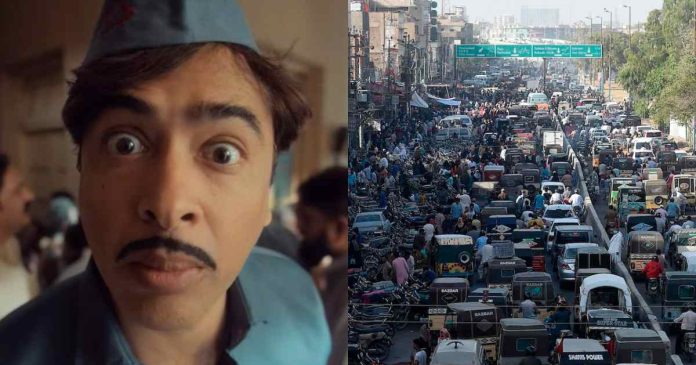

Shehzad Roy’s latest endeavour, ‘Waqfa Mubarak Ho’, is haunting behind its satirical exterior. The video opens up with a grim statistic, and from the get-go, the viewer knows that Shehzad Roy won’t be holding back.
Pakistan’s maternal mortality remains a silent emergency, with a woman dying every single hour due to childbirth complications. Roy strips away the typical “celebratory” veneer of birth and replaces it with a desperate plea for a cultural reset.
An Overdue Cultural Reset
Shehzad Roy’s ‘Waqfa Mubarak Ho’ refuses to glorify birth on its own merits and asserts the need to celebrate the ‘gap’ instead. In a country riddled with an overpopulation and maternal death crisis, a gap between childbirth is more of an occasion to celebrate.
“Duniya mein jaan ko laate laate de deti hai apni jaan, har ek ghante mein ek maa.”
A simple line with burdensome implications. In Pakistan, every hour, a woman dies due to childbirth-related complications. The song puts this statistic forward and seeks to humanise it. The next lyric is biting as he goes:
“Mubarak ho… aadhi se zyada abaadi hamari umeed se hai, par jeene ka saaman toh bahar quwat-e-khareed se hai.”
This rubs in how ironic a celebration is, as while numerous births take place every day, the resources to sustain this growth in population dwindle or remain stagnant.
Population Pressure
Shehzad Roy’s ‘Waqfa Mubarak Ho’ isn’t making empty claims; his message is backed by numbers that can’t be dismissed.
Pakistan’s population has crossed 250 million, growing at over 2.5% annually. At the same time, the fertility rate remains around 3.5 children per woman, far above what can be considered a sustainable amount.
This unchecked growth has distressing consequences, some of which include:
- Over 26 million children out of school
- Water scarcity is intensifying nationwide
- Nearly 40% of children are stunted
The lines “Aur race laga di hai, bhagdadh macha di hai… line laga di hai dayi ne” immerse the listener into this sentiment, giving them a sense of how this stifling growth is wreaking havoc on society.

The Pause Our Nation Needs
As the beat slows down, so does the force of the message.
“Khair zara dum le, waqfa zara hum le, khud bhi zara jee le, auron ko bhi jee lene de.”
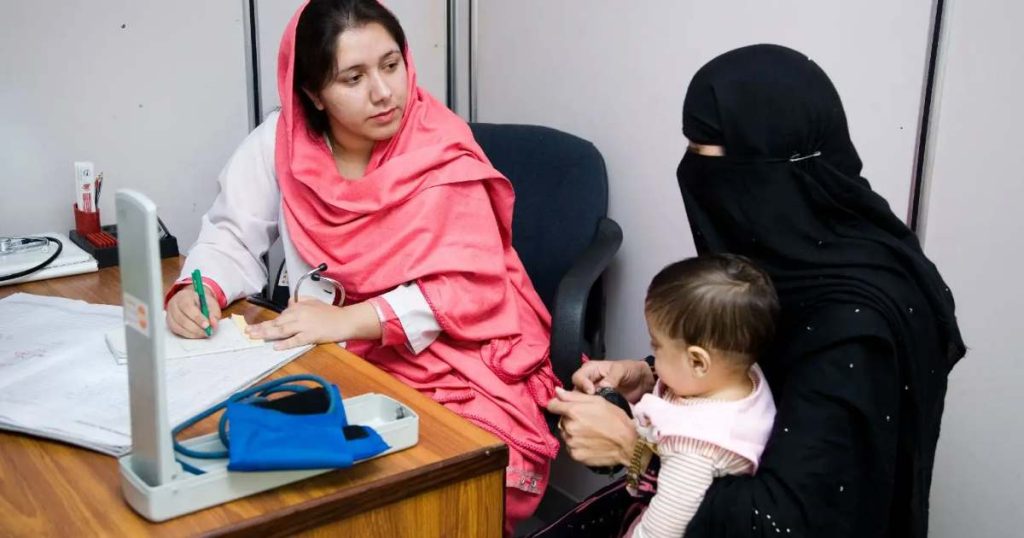
After the initial critique, this is when Shehzad Roy’s ‘Waqfa Mubarak Ho’ moves into a tempered reflection. The “waqfa” is a space to breathe. Birth spacing is not a choice; it is a medical necessity. By spacing out childbirth, maternal recovery is improved, and health risks become less significant. Families are also able to invest in each child better and give them the due attention needed in their formative years. In a broader sense, it aligns with development goals such as literacy and workforce readiness.
The song directly jabs at the lack of resources with the line “Dum hai paani is duniya mein, khatam na ho jaaye pee lene de.” Pakistan is one of the most water-stressed countries in the world, with the per capita annual water availability being below 1,000 cubic meters. In the current fuel crisis, the overpopulation adds to the stress as the volume of the population creates a need for a daily 480,000 barrels, despite a low number of individual uses at only 0.08 gallons per person.
A National Wake-Up Call
Shehzad Roy’s ‘Waqfa Mubarak Ho’ is jarringly honest in its adamance to not simplify the issue.
The song avoids cheap slogans and mirrors society, revealing how habits and values translate into real-world consequences and contradictions. The video underlines the simplicity of the solution, a “waqfa”, and shows how proper timing can heavily reduce the maternal death crisis.
Family planning has never been much of a priority in Pakistan, and it’s time for the country to take it seriously. By taking a gap in childbirth, Pakistan can work towards solving overpopulation, maternal deaths, inflation, and resource scarcity.
18 years ago, Shehzad Roy sang Laga Reh. 18 years later, why are we still fighting the same ghosts?
Stay tuned to Brandsynario for latest news and updates

 Join a Channel
 Brandsynario
 Veryfilmi