














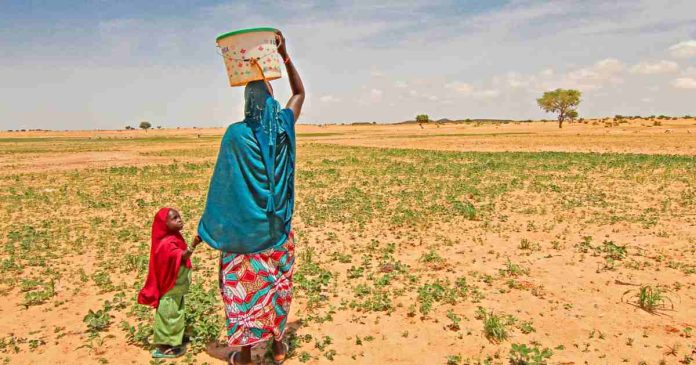

Water is synonymous with life. For millions of women, this signifier of life is more of a daily battle for survival. The global water crisis was once an environmental concern but has now transformed into a full-blown social and economic emergency. It is a crisis that disproportionately affects women and girls worldwide.
There have been decades of development efforts, and while global progress has been made, access to safe water remains unequal. Infrastructure has improved in some regions, but deep-rooted gender disparities continue to dictate who bears the greatest burden. Women stand at the centre of this crisis as they are tasked with water collection but excluded from shaping the policies that govern it.
The Invisible Labour Behind Water Access
Tap water is a privilege that many households, especially in rural areas, do not have access to. Water needs to be carried home over long distances, and the responsibility for this overwhelmingly falls on women and girls. More than 80% of households without direct access to water rely on women for this task.
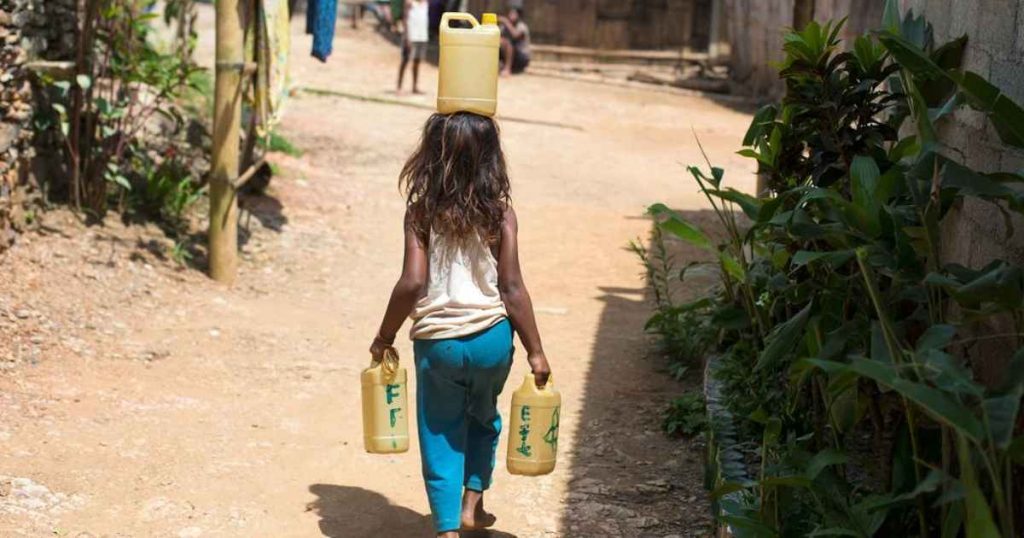
Globally, women and girls spend an estimated 250 million hours every day in water collection. This figure is more than a blunt statistic; it translates into lost education, economic participation, and physical exhaustion. Young girls suffer the most. Gender roles are enforced early in life, as they are more likely than young boys to fetch water. This ends up limiting their educational opportunities and reducing their chances of breaking out of poverty.
A Blow to Education
Beyond household life, the global water crisis directly interferes with education. When access to water is scarce, school becomes secondary to survival. Girls are withdrawn from schools to assist with domestic responsibilities, especially water collection.
The need for proper sanitation further widens this gap. The lack of safe facilities is why millions of girls struggle to attend school during menstruation. Between 2016 and 2022, nearly 10 million adolescent girls across 41 countries missed school, work, or other social activities due to inadequate sanitation. This soon results in lower literacy rates and thus fewer career opportunities.
Health Risks
The global water crisis severely impacts women’s health. Most women rely on contaminated sources, which expose them to diseases such as cholera, diarrhoea, and hepatitis.
The physical strain is just as alarming. When a woman carries heavy water containers over long distances, it can lead to chronic fatigue and issues such as joint pain and spinal injuries. In severe cases, it can result in pregnancy complications such as miscarriages and early deliveries. In poor sanitary conditions, women become more vulnerable to infections and malnutrition. They tend to prioritise the needs of their family over their own, and this creates a cycle of vulnerability across generations.
Locked Out of Leadership and Decision-Making
It is ironic that those who are most affected by water scarcity are rarely present in formal decision-making spaces. Only 27% of countries report notable female participation in water governance.
The workforce is no better. Fewer than 20% of employees in water utilities are women and earn less than their male counterparts as well. This imbalance inhibits diversity of perspective when developing policies.
UNESCO Director-General Khaled El-Enany states “Ensuring women’s participation in water management and governance is a key driver for progress and sustainable development. We must step up efforts to safeguard women and girls’ access to water. This is not only a basic right; when women have equal access to water, everyone benefits.” This statement enforces the fact that effective solutions cannot be reached without inclusivity.
Climate Change
Climate change has been aggravating the global water crisis. Temperatures are on the rise, and rainfall has been predictable, while droughts have been prolonged. With things being so volatile, vulnerable regions are at greater risk of water scarcity.
Women bear the brunt of these changes. Studies show that a 1°C rise in temperature leads to 34% greater income loss for female-headed households compared to male-headed ones. At the same time, their workload increases notably. Women are at the frontlines of climate vulnerability, and their ability to recover from shocks is diminished as well.
Surviving the Arid Heartland: The Daily Struggle in Balochistan
The water scarcity in Pakistan aptly demonstrates the intersection of the water crisis with gender. In Balochistan, women and girls walk between 8 and 10 kilometers daily to collect water.
This routine has serious health consequences. Health studies have linked it to spinal deformities and chronic fatigue. Middle-aged women in the region have raised issues with pain in the neck and shoulders, and diarrhoea, hepatitis, and immobile births, as well as skin and eyesight problems.
Since Balochistan is an arid area, the water scarcity is felt more sharply. When the land isn’t getting enough water, the agricultural produce dwindles as well, from growth to size.
Did You Know? In parts of Pakistan, a woman’s “workday” begins at 4:00 AM with an 8km walk just for a single bucket of water. That is 250 million hours lost globally every day.
East Africa’s Struggle and Progress
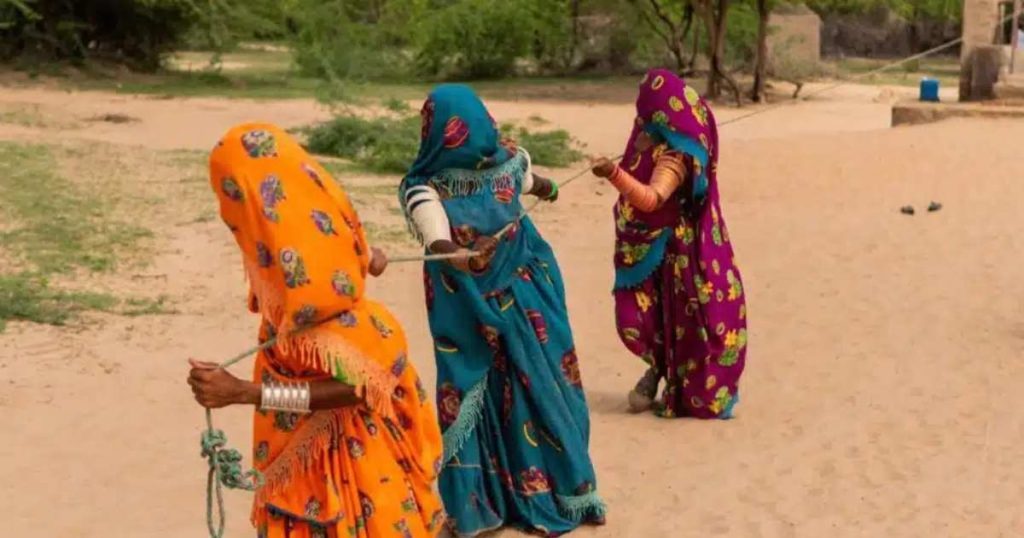
Water scarcity has gone up alarmingly in the Horn of Africa. Recent years report an 88% increase in household insecurity as drought and climate pressures have pushed the matter to the brink.
This means longer journeys and increased exposure to violence for women. However, the UN has introduced clean water initiatives that have shown results, such as the World Water Assessment Programme (WWAP) and UN System-wide Strategy for Water and Sanitation.
Economic Impact
A critical dimension of the global water crisis is its financial cost. To achieve global water security, it would take an estimated $700 billion annually.
Once again, it is gender inequality that holds back economic growth. Women own less than 15% of agricultural land, which restricts their access to water resources for farming. If this gap were closed up, it would add up to $1 trillion to the global GDP. If the role of gender is dismissed, no effective solution for water scarcity can be achieved.
A Roadmap Forward
Weak policy implementation ends up delaying progress. Land ownership laws tend to favour women, and without land, women are hindered from securing water for agriculture or business. Cultural norms drive these barriers further, as water collection is seen as a “woman’s duty,” and challenging these roles isn’t easy.
To address the global water crisis, both policy and perspective need to be reworked. When developing sustainable solutions, gender equality needs to be considered.
To bring change, we must start with:
- Removing legal and financial barriers to women’s access to water and land
- Increasing gender-responsive funding and accountability systems
- Investing in data to highlight gender disparities
- Recognising unpaid labour in economic planning
- Promoting women’s leadership in water-related sectors
Alvaro Lario, President of the International Fund for Agricultural Development (IFAD), and Chair of UN-Water, states, “It is time to fully recognise the central role of women and girls in water solutions; as users, leaders and professionals. We need women and men to manage water side by side as a common good that benefits the whole of society.”
A Future Where Water Means Opportunity
The global water crisis stems from broader issues of access and power. The burden that women carry goes unseen. However, change is not out of reach.
When women gain equal access to water, the community as a whole benefit from it. Literacy improves, economies grow, and health outcomes get better. The path forward is clear, but some urgency is due. Women need to be empowered through better infrastructure and inclusive policies. Equitable water flow will create lasting change.
Stay tuned to Brandsynario for latest news and updates

 Join a Channel
 Brandsynario
 Veryfilmi