

















Audiences laughed, critics sighed…Pakistan’s Eid blockbuster delivered chaos, but Did It Deliver cinema?
Eid in Pakistan is no longer about sheer khurma and crispy new notes; it’s about cinema. Families spill into cineplexes, tickets priced like luxury items, popcorn replacing biryani, and the big screen becoming the new mehfil. This year’s contender, Aag Lagay Basti Mein, promised fireworks. Big Bang Entertainment and ARY Films did not just drop a movie this Eid, they dropped a spectacle.
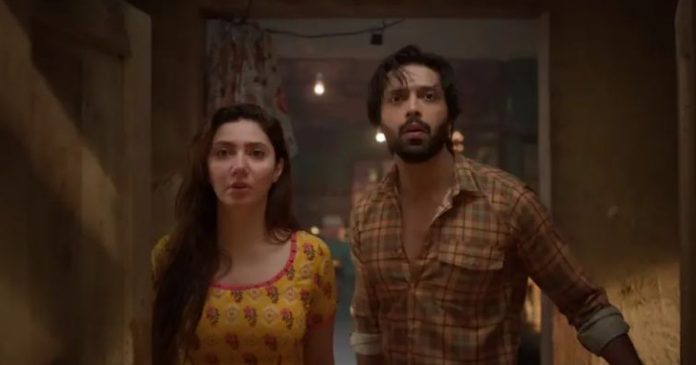
Aag Lagay Basti Mein, directed by Bilal Atif Khan in his debut, produced by Salman Iqbal, Fahad Mustafa, and Dr Ali Kazmi, arrived with the swagger of a festival headliner. Mahira Khan and Fahad Mustafa lead the charge.
The trailer was enough to set pulses racing: a promise of high‑stakes crime thriller chaos, car chases, gunfights, and a heist gone wrong. Add to that a soundtrack engineered by the Big Bang music team, and you had hype colliding with hunger in the last week of Ramadan. By the time Eid rolled in, Aag Lagay Basti Mein was not just a film; it was the centrepiece of our collective distraction.
The Audience vs. The Critics
Step outside the cinema and you will hear it: “Paisa wasool!” Audiences laughed, clapped, and cheered. Critics, meanwhile, scribbled notes about bloated length, lost themes, and a screenplay that wandered off mid‑film. The divide is stark: one side wants entertainment, the other wants cinema. And Eid, as always, sides with entertainment.
Characters: Poverty, Dreams, and Comedy Villains
The protagonists are poor, living in cramped quarters with oversized furniture, dreaming of “Doobai.” Their jar labelled “Doobai” becomes a metaphor for impossible aspirations. The wife urges dishonesty, the husband resists, then caves. It’s Adam and Eve retold, with “Doobai” as the forbidden fruit, a promise of paradise that tempts them into dishonesty and chaos. But instead of a tragedy, we get slapstick: mafia chases, accidental killings, and jokes cracked in front of guns… the usual.
This is where the audiences divided. Poverty is not funny, yet Pakistani cinema insists on laughing at it. The maid who steals, the labourer who cheats, these are not caricatures; they are realities twisted for punchlines. In truth, most of Pakistan’s poor survive through honest labour, child work, and the daily grind. If they all turned to crime, the country would collapse. But cinema prefers comedy over critique.
Tabish Hashmi: The Spark That Lit the Fire
Forget the protagonists. The real star is Tabish Hashmi, the comedian turned actor who outshines everyone. His timing, his wit, his absurdity; audiences loved him. Critics admitted he carried the film. But what does it say about Pakistan’s film industry when the villain‑comedian becomes the hero? When satire overshadows the story?
Music: Nostalgia Meets Noise
Now here is where the film completely stood out: the music. It added that extra punch of entertainment that fans are usually looking for on Eid.
Two songs stole the show: Dil Bechara, a romantic ballad in the first half and a Aag lagi Basti main, the rap‑heavy OST.
The ballad nods to old‑school Pakistani music, reminding us of a time when melody mattered. The OST, meanwhile, is pure chaos: rap frustration, fast beats, colours exploding across the screen. It’s enough to set expectations. And audiences, trained by Netflix gore and Bollywood spectacle, ate it up.
Screenplay and Themes: Lost in Translation
The first half sets up themes of poverty, honesty, and dreams. The second half abandons them for chase sequences and comedy. The screenplay spirals, the story loses meaning, and the potential for social commentary evaporates. Critics wanted coherence. What they got was spectacle.
The Bigger Question: What Is Cinema For?
Aag Lagay Basti Mein entertains, no doubt. It gives audiences laughter, spectacle, and a festival escape. But cinema at its best does not just distract, it elevates. It challenges. It reflects. It asks us to see ourselves differently.
Pakistani cinema has a proud history of satire with bite and comedy with conscience. Today, the industry often leans toward louder formulas, chasing millions instead of meaning. And while success is vital, so is substance. And critics, too, can widen their lens: beyond pacing and dialogue, toward cinema’s role in shaping identity.
Box Office and Business Performance (2026)
But one simply can’t ignore the numbers. Aag Lagay Basti Mein stormed into Eid with a cash register roar, raking in a staggering PKR 27.2 crore worldwide in its opening weekend. At home, the film pulled around PKR 16.2 crore (give or take a decimal for the accountants), while overseas audiences chipped in roughly PKR 11 crore. That’s not just a strong debut, it’s historic, smashing past benchmarks and planting itself among the biggest opening weekends in Pakistan’s film history.
So, is Aag Lagay Basti Mein a good film? For the common audience: absolutely. It’s loud, funny, colourful, and cathartic. For critics, the answer isn’t so simple. While the film has it highs, it was messy at points. For Pakistani cinema, it’s a mirror. A mirror showing us that Eid films now carry the weight of festival identity. They are not here to teach; they are here to entertain, to distract, to make us laugh at lives we don’t live.
And maybe that’s the point. Eid isn’t about moral lessons anymore. It’s about release. About stepping out of poverty, politics, and phupo gossip for three hours of chaos. Aag Lagay Basti Mein delivers that chaos. But whether that’s enough for cinema’s future, that’s the real question.
Stay tuned to Brandsynario Entertainment for latest news and updates