
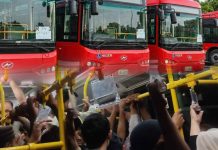
















Karachi has long struggled with an inadequate public transport system, leaving millions of residents with limited and often expensive commuting options. For people who cannot afford private transportation, public buses remain an essential part of everyday life.
So when the Red Bus service was introduced, people rushed to use them and it made their lives a little bit easier. The buses are affordable and were available for the general public to use.
However, as the service has expanded over the years, several problems have become increasingly visible. What was initially welcomed as a promising transport solution is now facing criticism from regular commuters who encounter overcrowding, irregular schedules, inadequate facilities and frequent operational issues.
Key Takeaways
- Irregular bus timings and long waiting periods make daily commuting difficult for passengers.
- Packed buses, limited personal space and malfunctioning doors affect passenger comfort and safety.
- Breakdowns, ineffective air conditioning and other mechanical issues disrupt journeys.
Problems Faced By The People While Commuting
As a regular commuter and observer of the service, I have witnessed several of these problems first-hand. Despite the promise of affordable and comfortable transportation, the everyday experience of travelling on Karachi’s Red Buses often tells a different story.
1. No Proper Timetable: The Uncertainty of Waiting
One of the biggest problems faced by Red Bus passengers is the absence of a reliable timetable. Commuters often have no clear idea when the next bus will arrive at their designated stop. The waiting time can range from 15 to 45 minutes, making it difficult for passengers to plan their journeys.
Many commuters report waiting for more than 25 minutes, only for the bus to arrive completely overcrowded. In such situations, passengers are often unable to board and have no choice but to wait for another bus.
For students and working professionals who depend on public transport to reach their destinations on time, this uncertainty creates unnecessary stress and delays.
2. Overcrowding: More Passengers Than the Buses Can Handle
The introduction of air-conditioned electric buses was a positive development for Karachi’s public transport system. Offering an affordable and relatively comfortable ride, these buses were welcomed by commuters across the metropolis.
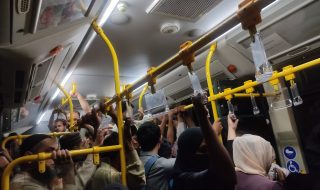
However, overcrowding has become a major concern, particularly during peak working hours. Buses often become full from their starting stations, leaving little room for passengers waiting at subsequent stops.
A bus with an approximate seating capacity of 30 passengers across its men’s and women’s sections reportedly carries between 70 and 80 people. During peak hours, this number can exceed 100 passengers on a single journey. The situation is particularly uncomfortable for women, who often struggle with a lack of personal space and unwanted physical contact during their daily commute.
The situation becomes particularly difficult when passengers are forced to stand in already congested spaces, while some are unable to board altogether.
To address this issue, the government needs to increase the number of buses operating on high-demand routes. During peak hours, buses should ideally arrive every five to ten minutes so commuters are not forced to wait for extended periods or travel in dangerously overcrowded conditions.
3. Engine Failures and Frequent Bus Breakdowns
One of the more concerning problems reported by commuters recently is the increasing number of buses experiencing mechanical and engine failures.
I experienced this first-hand while travelling from Power House towards Shahrah-e-Faisal on the R3 route. On an otherwise ordinary day, the bus began experiencing problems at consecutive stops. The staff attempted to restart the engine, but the vehicle eventually failed to start.
After reaching National Stadium, passengers were asked to board another bus. However, the next bus was already overcrowded and presented problems of its own. It was emitting excessive smoke, making it difficult for people standing nearby to remain comfortable.
After travelling a few more stops, the staff again instructed passengers to leave the bus and wait for another one.
Such experiences raise serious questions about vehicle maintenance, operational supervision and the overall quality of service being provided to commuters.
Passengers should not have to repeatedly change buses during a single journey because of mechanical failures. Regular inspections and proper maintenance are essential to ensure the service remains reliable.
4. Poorly Maintained Bus Stops and Skipping Designated Stops
Another major issue is the lack of properly maintained and designated bus stops along several routes.
Commuters are often left waiting in uncomfortable conditions, without adequate facilities or clear information about bus arrivals.
What makes matters worse is that drivers sometimes skip designated stops because their buses are already overcrowded. This leaves passengers stranded, forcing them to wait even longer for the next bus.
A public transport system cannot function effectively without properly managed stops and clear schedules.
5. Faulty Automatic Doors and Poor Air Conditioning
The excessive number of passengers has also begun affecting the basic operational features of the buses.
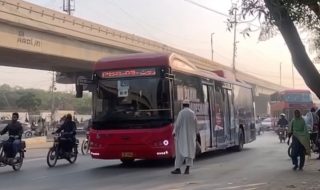
Although electric buses are designed with automatic door systems for passenger safety and convenience, overcrowding often prevents the doors from closing properly. In some cases, the doors remain open because passengers are standing too close to them.
Air conditioning is another concern. During Karachi’s extremely hot summer months, air-conditioned buses offer much-needed relief from the heat. However, when buses are packed beyond capacity, the cooling system often struggles to provide adequate comfort.
Passengers who initially welcomed the service for its air-conditioned facilities are now frequently forced to endure uncomfortable journeys.
Karachi’s Growing Transport Crisis: Is the Current Fleet Enough?
The problems faced by Red Bus commuters also shows the larger public transport crisis in Karachi.
According to figures shared by Sindh’s Transport Ministry in 2024, the city had approximately 1,029 buses against an estimated requirement of 15,000. This included around 380 electric and hybrid buses introduced through different Sindh government initiatives.
For a metropolis with a population of more than 25 million, the existing transport infrastructure remains inadequate to meet the daily commuting needs of its residents.
The ongoing problems raise a bigger question: will Karachi’s commuters eventually be deprived of even the limited public transport facilities they have today because of systemic failures? Despite repeated promises of better transport services, the city’s growing population, inadequate infrastructure and poor management continue to undermine progress. For a city as densely populated as Karachi, public transport cannot remain a promise that is repeatedly made but rarely fulfilled.
1. When was Karachi’s Red Bus service introduced?
The Sindh government introduced the Red Bus service in Karachi in 2022 to provide commuters with affordable and air-conditioned public transport.
2. What are the main problems passengers face on Karachi’s Red Buses?
Passengers frequently report irregular schedules, overcrowding, malfunctioning doors, poor air conditioning, inadequate bus stops and mechanical breakdowns.
3. Why do Red Buses frequently break down?
Mechanical failures and maintenance concerns have been reported by commuters. However, the specific causes of individual breakdowns require confirmation from the relevant transport authorities.
4. What improvements are needed in Karachi’s Red Bus service?
The service needs an expanded fleet, reliable timetables, regular vehicle maintenance, better bus stops and stronger operational supervision to improve the commuting experience.
Stay tuned to Brandsynario for latest news and updates

 Join a Channel
 Brandsynario
 Veryfilmi