













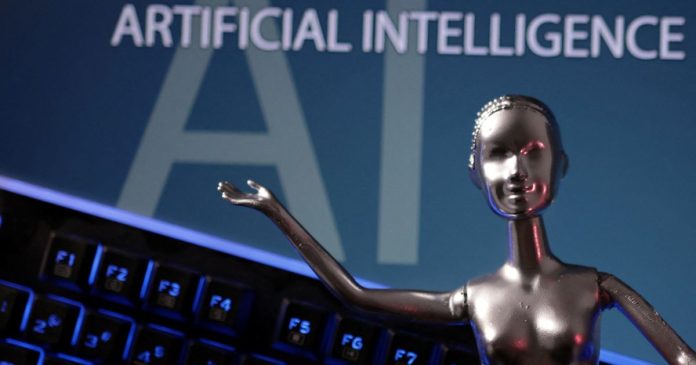

I am uncomfortable. Not necessarily negatively, but I am and I think that distinction matters. I am not scared of AI. I am not sitting here convinced that the world is ending, that machines are coming for us, or that we should somehow stop what is happening.
I don’t even know if we could. But when I zoom out for a second, beyond work, beyond advertising, beyond whatever deadline is due tomorrow, and look at the speed at which algorithms, LLMs, automation, and everything around them is developing, while the world itself is not exactly at its most peaceful or stable, I feel uncomfortable.
Not as an adman. Not as an employee. Just as a human being.
For decades, turning an idea into professional creative work required a relatively small group of people with the skills, tools and training to make it happen but AI is dismantling many of those barriers.
AI: A Conversation
We keep comparing AI to the computer boom or the internet boom. I don’t think that feels right. To me, it feels closer to electricity.
Not because AI and electricity are technically comparable, obviously. But because electricity stopped being a product and became infrastructure. It slipped underneath everything else.
AI seems to be heading in that direction. Writing. Designing. Coding. Research. Film. Music. Analysis. Search. Planning. Communication.
It is slowly becoming less of a thing you go somewhere to use and more of a layer underneath everything you already do.
But there is one strange difference. It is available to almost everyone. You don’t need to build a factory. You don’t need a laboratory You don’t need a team of engineers sitting in a basement.

You open a browser, and suddenly you have access to something that can write, reason, design, code, explain, analyse and imitate at a level that would have sounded absurd not very long ago.
Then, of course, we do the very human thing. We call it the next big thing, and then we start feeding it fuel.
Money. Attention. Competition. Fear. FOMO. Investment. Every company, product, and presentation need AI. Every person needs to learn AI before AI replaces them.
We have this strange habit of identifying the future and then collectively sprinting toward it. And somewhere in that process, it becomes difficult to tell the difference between something being inevitable and something becoming inevitable because all of us decided it was.
Maybe AI was always going to become this big, and maybe we are making it this big, or it is probably both. That is part of what makes me uncomfortable.
We are on the train, we are adding fuel to the train, we are improving the engine of the train, and at the same time we are asking each other where the train is going.
Nobody really knows, but we pretend we know. We make forecasts, decks, and five-year plans. We announce what jobs will disappear and what jobs will exist, but at the end of it all, we don’t know. How could we? We are inside it.
The Death of the Creative
Then there is creativity, or more specifically, the Creative. Capital C, the person. For a long time, creativity became almost a professional identity.
There were people who created and people who didn’t. The writer could write. The designer could design. The director could make films. The illustrator could draw. The musician could make music.
You spent years learning something, developing an eye, learning the software, learning the rules, and eventually learning when to break them, and that ability became part of who you were.
Then suddenly someone who has never opened Photoshop can describe an image and get one. Someone who has never written an ad can generate twenty headlines. Someone who has never touched a camera can make something that resembles a film.
Now, whether any of it is good is a completely different conversation, and perhaps that is exactly the conversation.
Maybe AI is not killing creativity. Maybe it is killing the idea that creativity belongs to a particular kind of person.
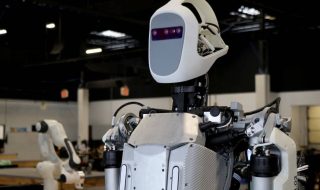
The monopoly on making things is disappearing, and I don’t know how I feel about that. Again, not negatively.
Because there is something genuinely beautiful about a person who could never draw suddenly being able to visualise an idea that had been sitting in their head for ten years.
There is something incredible about knowledge becoming easier to access. There is something exciting about removing technical barriers between an idea and its execution.
But there is also something strange about watching skills that people spent decades developing become available, at least superficially, through a text box. If everyone can make something, then making something itself becomes less special.
So, what becomes valuable? Maybe taste. Maybe judgment. Maybe context. Maybe knowing what not to make.
Maybe the ability to look at twenty technically perfect options and understand that nineteen of them are dead.
Maybe creativity was never really the ability to execute in the first place, and we just confused the difficulty of execution with the value of the idea.
And that leads to an even more uncomfortable question. If the thing you spent years learning can now be approximated in seconds, what exactly were you becoming during all those years? I don’t have an answer to that. I don’t think I want one yet.
Abundance
We have spent most of human history dealing with scarcity. Not enough information. Not enough access. Not enough tools. Not enough people capable of doing certain things. AI seems capable of creating the opposite problem.
Too much. Infinite copy.
Infinite images.
Infinite videos.
Infinite ideas.
Infinite versions of the same idea, and when creation becomes abundant, perhaps creation itself stops being the scarce thing.
Attention becomes scarce. Taste becomes scarce. Meaning becomes scarce. Maybe restraint becomes scarce.
Because if I can generate fifty things before lunch, the question is no longer whether I can make something. The question is whether any of those fifty things deserved to exist. And I think that is where my discomfort sits.
Not in the machine becoming more human. But perhaps in humans being forced to become more machine-like in response. Faster. More efficient. More productive. Always generating. Always optimising. Always producing another version.
We have spent years asking whether AI will eventually behave like us. Maybe we should also be asking whether, while competing with it, we will slowly start behaving more like it.
I don’t know where any of this goes. I don’t know whether AI ends up being one of the greatest democratising technologies humanity has ever built, whether it concentrates power in ways we have not properly understood yet, or whether both things happen at exactly the same time.
I don’t think anybody knows. And perhaps that is the entire point. Something enormous is happening.
We are participating in it while trying to understand it. We are building the language to describe it while it is already changing underneath us. We are passengers, engineers, and fuel suppliers on the same train.
And I am uncomfortable.
Not necessarily negatively.
But I am.
Stay tuned to Brandsynario for the latest news and updates.

 Join a Channel
 Brandsynario
 Veryfilmi