
















Shenzhen is preparing to welcome world leaders, including US President Donald Trump and Russian President Vladimir Putin, as China puts its technological ambitions in the spotlight this week. Humanoid robots, drone deliveries and driverless taxis offer a glimpse of what lies ahead. Yet, away from the city’s gleaming towers, factory closures, falling wages and job insecurity tell a very different story.
Key Takeaways
- Shenzhen has become a major centre for humanoid robotics, autonomous vehicles and advanced manufacturing.
- Around 200 million Chinese workers, nearly 40% of the urban labour force, depend on gig work.
- Factory relocations, falling property values and weaker consumer spending continue to affect ordinary households.
Shenzhen’s Next Big Transformation Is Already Underway
Shenzhen’s rise has been remarkable. What was once a fishing town grew into one of China’s wealthiest cities through manufacturing. Its factories produced everything from toys and televisions to smartphones and electric vehicles. Now, the city is moving towards robotics and artificial intelligence.
At DexForce Technologies, 27-year-old engineer Huang Shihua is working on humanoid robots designed to perform everyday and industrial tasks. Some can serve coffee and play chess, while others are being trained for more demanding jobs. Huang believes these machines could eventually take on repetitive or dangerous work in factories and mines.
“We have created a miracle in Shenzhen,” Huang says.
His ambitions extend beyond China’s borders. He hopes AI-powered production systems will help improve industries in developing economies in Africa and Southeast Asia. For young engineers like Huang, the city’s rapid development offers an opportunity to shape technology rather than simply manufacture products for other countries. This is the vision behind China’s AI wonderland, which Beijing wants visiting leaders to witness.
Behind the Skyscrapers, Businesses Are Struggling
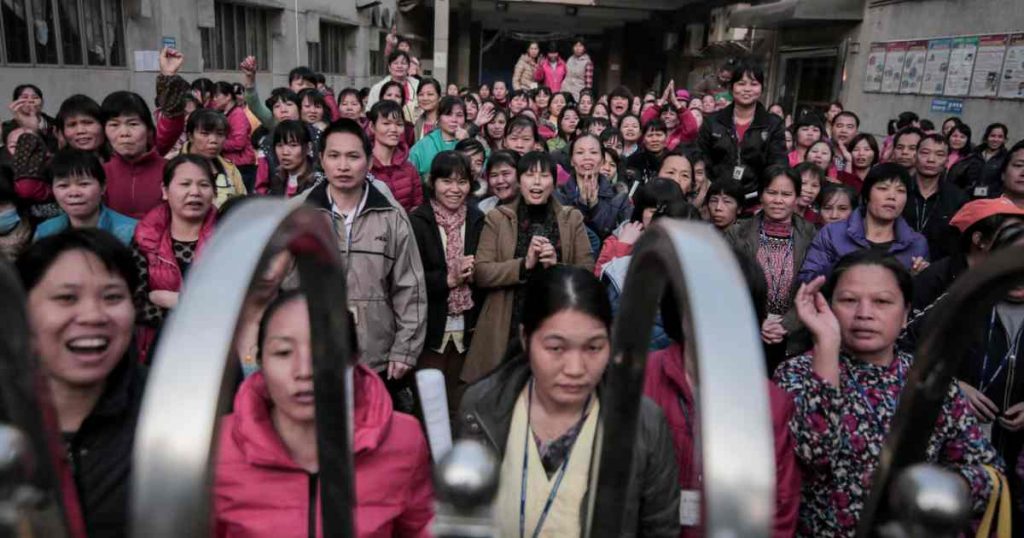
The picture is less encouraging in neighbourhoods such as Shajing and Songgang. These areas once supported much of the world’s electronics manufacturing. Today, factory relocations and reduced production have left workers searching for other sources of income.
The property downturn has made matters worse. Local businesses are feeling the pressure as customers cut back on spending. One restaurant owner reported a decline of more than 70% in business.
Why Delivery Work Is Becoming a Necessity
As permanent factory jobs become harder to find, more people are turning to temporary employment. An estimated 200 million Chinese workers, representing roughly 40% of the urban labour force, now rely on some form of gig work.
Ms Lu’s experience shows how quickly circumstances can change. The 50-year-old previously operated a circuit board business at SEG Plaza. However, rising rents and difficult trading conditions forced her to close it. She now helps delivery riders carry food orders to offices, earning two yuan per order. During the lunch rush, she makes around 200 yuan a day.
Temporary factory work offers another option. Labour agent Li Xiaohe advertises positions paying approximately 22 yuan an hour for assembling small electronics. However, demand has weakened, and his own business has suffered. He describes the changes as part of Shenzhen’s wider economic transformation.
Can Technology Create Opportunities for Everyone?
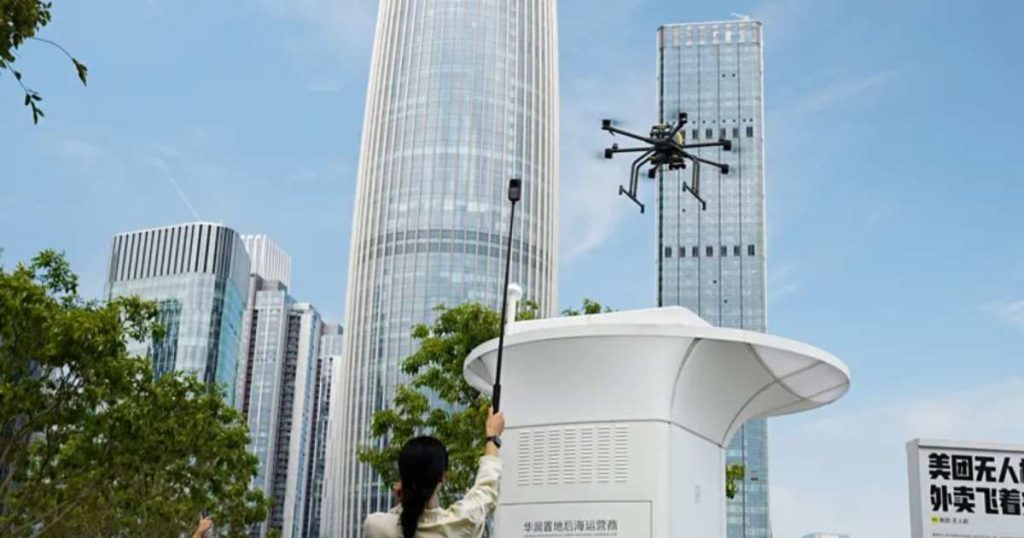
Shenzhen’s technological progress is difficult to overlook. Drones deliver meals to designated platforms, while driverless taxis operate in selected areas. Tourists gather to photograph these services, and visitors are often impressed by how smoothly they work.
However, these services remain limited to particular locations. They also represent only a small part of daily life in a city where many residents still depend on physically demanding jobs. The gap between the two experiences raises an important question: who benefits when industries become increasingly automated?
China’s AI wonderland offers an exciting picture of what technology can achieve. But innovation does not automatically guarantee better wages or secure employment. Robots may eventually take over dangerous tasks, yet workers displaced by changing industries will need opportunities to adapt.
For decades, Shenzhen attracted migrants with the promise that hard work would improve their lives. That promise helped turn the city into an economic powerhouse. Now, as China moves deeper into automation, ensuring that ordinary workers share in its success may prove just as important as developing the next generation of robots.
FAQs
1. Why is Shenzhen hosting world leaders?
To highlight China’s technological and economic ambitions.
2. How many Chinese workers depend on gig work?
Around 200 million.
3. What challenges are Shenzhen’s workers facing?
Job losses, lower wages and rising economic pressure.
Stay tuned to Brandsynario for latest news and updates.

 Join a Channel
 Brandsynario
 Veryfilmi