


















Fasting (sawm) during the month of Ramadan is one of the five pillars of Islam. From dawn (Fajr) to sunset (Maghrib), Muslims abstain from food, drink, and other specific actions as an act of worship and self-discipline.
However, many people remain unsure about what exactly breaks a fast and what does not.
This article explains things that break your fast in Islam, based on widely accepted Islamic rulings, while also addressing common questions and misunderstandings.
What Does It Mean to Break a Fast?
In Islamic jurisprudence, a fast is considered broken when a person intentionally does an act that nullifies fasting during daylight hours of Ramadan. Some actions require only making up the fast (qada), while others require both qada and an expiation (kaffarah).
Intent plays a crucial role. Actions done forgetfully or unintentionally usually do not invalidate the fast.
Clear Things That Break Your Fast in Islam
1. Eating or Drinking Intentionally
Consuming any food or drink deliberately after Fajr and before Maghrib breaks the fast, regardless of quantity.
This includes:
-
Water
-
Juice or tea
-
Snacks or meals
-
Nutritional supplements
If someone eats or drinks forgetfully, the fast remains valid, and they should continue fasting once they remember.
2. Sexual Intercourse
Sexual intercourse during fasting hours definitely breaks the fast and carries the most severe consequences.
The person must:
-
Make up the fast (qada)
-
Perform expiation (kaffarah), which includes fasting for 60 consecutive days or feeding 60 poor people
This ruling applies even if intercourse is brief.
3. Ejaculation Due to Sexual Activity
If ejaculation occurs due to:
-
Physical intimacy
-
Masturbation
-
Intentional stimulation
Then the fast is broken, and the person must make up the fast later.
However, involuntary discharge (such as wet dreams) do not break the fast.
4. Intentional Vomiting
If a person deliberately induces vomiting, the fast is invalidated.
Unintentional vomiting does not break the fast unless the vomit is swallowed back intentionally.
5. Menstruation and Postnatal Bleeding
If menstruation (hayd) or postnatal bleeding (nifas) begins at any point during the fasting day, the fast becomes invalid.
Women must:
-
Stop fasting for the day
-
Make up for missed fasts later
This applies even if bleeding starts moments before Maghrib.
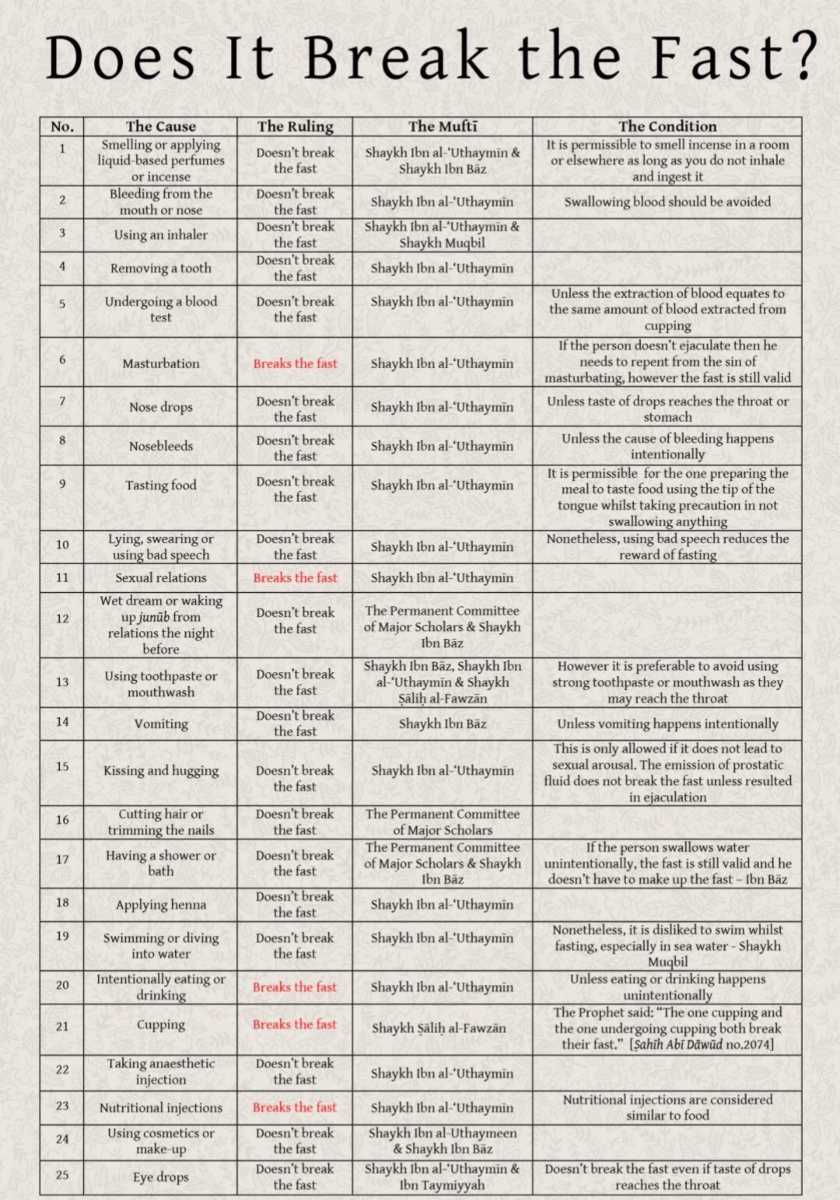
6. Taking Nutritional Injections or Drips
Injections or IV drips that provide nourishment, such as glucose or vitamin drips, break the fast because they serve the purpose of food and drink.
Non-nutritional injections (such as painkillers or vaccines) generally do not break the fast, according to many scholars.
Things That Do NOT Break Your Fast (Common Misconceptions)
1. Eating or Drinking Forgetfully
The Prophet Muhammad (peace be upon him) said that if someone eats or drinks forgetfully, Allah has fed them, and the fast remains valid.
2. Brushing Teeth or Using Miswak
Brushing teeth is allowed as long as toothpaste or water is not swallowed. Using miswak is also permissible.
3. Swallowing Saliva
Swallowing one’s own saliva does not break the fast. However, deliberately swallowing excessive substances mixed with saliva may invalidate it.
4. Perfume, Deodorant, or Smelling Fragrance
Smelling perfume or applying deodorant does not break the fast, as nothing enters the digestive system.
5. Blood Tests or Non-Nutritional Injections
Giving blood or taking blood samples does not break the fast, though some scholars discourage donating large amounts as it causes weakness.
6. Vomiting Unintentionally
If vomiting occurs without intention, the fast remains valid.
Does Smoking Break the Fast?
Yes. Smoking breaks the fast because smoke enters the body intentionally and has substances that reach the stomach and lungs.
This includes:
-
Cigarettes
-
Vapes
-
Shisha
What Happens If You Break a Fast Intentionally?
If a fast is broken intentionally:
-
Qada (making up the fast) is required
-
Kaffarah is required only in cases of sexual intercourse during fasting hours or eating on purpose.
-
Accidental actions usually do not require qada or kaffarah.
Importance of Intention (Niyyah)
Intention is central to fasting. A fast is not only about abstaining from physical acts but also about maintaining spiritual discipline. Deliberately breaking a fast without a valid reason is considered a serious sin in Islam.
Understanding things that break your fast in Islam helps ensure that fasting is observed correctly and with confidence. When in doubt, scholars encourage consulting reliable Islamic sources or local religious authorities.
Fasting is not meant to create hardship but to build self-control, awareness, and closeness to Allah. Knowing the rules allows believers to focus on the spiritual purpose of Ramadan rather than unnecessary confusion.
Stay tuned to Brandsynario for latest news and updates