














There is so much that can be said about Karachi: “The City of Lights,” “Pakistan’s Industrial Hub,” and “The Heart and Soul of Pakistan.” And why shouldn’t it be, after all, the metropolis carries a rich history filled with highs and lows.
Apart from serving as Pakistan’s initial state capital, it is the nation’s biggest port city, and one of the hotspots for industrial, sociopolitical, and cultural activities. Because of its proximity to the sea, it is also beloved for its calm and soothing breezes.
Karachi’s street food is synonymous with spice and flavour throughout the world. Paratha rolls and Sindi Biryani are beloved delicacies, and the city of lights is credited with their development.
What Made Karachi’s Glory Days?
After the partition of British India, several Muslim communities migrated to Karachi, leading to a diverse, culturally pluralistic society. In many ways, the city became a “melting pot” with various cultures melting together to give way to a unified system of values.
View this post on Instagram
Naturally, this made Karachi a tolerant and vibrant place, filled with energy, excitement, and acceptance. These communities added human and socioeconomic resources, leading to significant urban and industrial development.
Factories flourished with the formation of industrial estates like SITE (Sindh Industrial Trading Estate). Infrastructure development and employment opportunities followed suit, accelerating commercial and social activities.
The proximity to the sea not only provided strategic and economic benefits but also enhanced entertainment avenues and imparted a unique vibe to Karachi, which was different from Pakistan’s other major cities like Lahore and Islamabad.

What Happened to Karachi?
Where do we start with the downfall of Karachi? First and foremost, Karachi’s population exploded with urban sprawl and the migration of communities. Overpopulation is at the root of the city’s most significant problems.
Infrastructure couldn’t keep up with several water and electricity shortages reported throughout the city. More people mean more mess, leading to unimaginable waste production and pollution.
As vehicles increased on the roads, traffic congestion became the norm. Honking horns, screaming drivers, and motorcyclists switching lanes exemplify Karachi’s notorious image at rush hour.
Mismanagement at the level of local authorities made matters worse. Roads quickly broke down. Waste disposal systems were inadequate for a large city with a skyrocketing population. Water scarcity has only gotten worse in recent years.
Street crime became notorious, but some measures were taken to reduce such criminal activities. Nonetheless, Karachi is far from a safe and secure place.
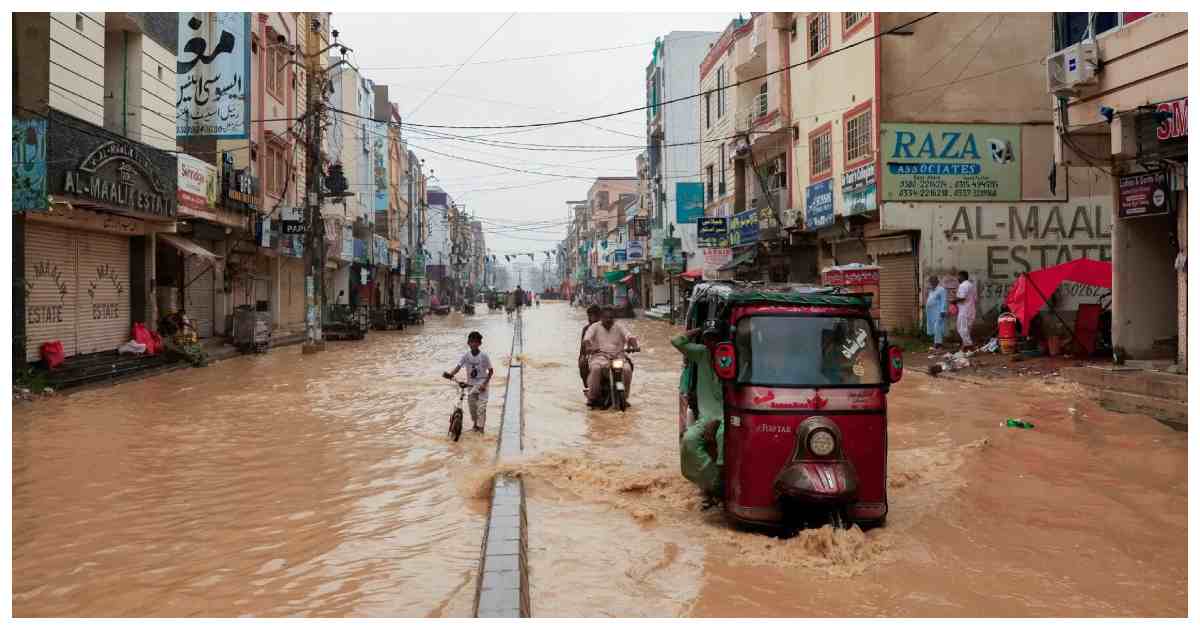
Recently, environmental challenges have only added to the plight of Karachiites. Unpredictable monsoon seasons with heavy rainfalls frequently bring the city to a standstill, and are often followed by disease outbreaks.
Is All Hope Lost for Karachi?
Given that the problems have intensified with time, change will not come so easily or quickly. It will take decades, and everyone will have to be on the same page, which is a difficult feat to accomplish with such a diverse population.
Karachi’s revival depends on a comprehensive, long-term urban renewal strategy that tackles governance, infrastructure, and social inclusion in tandem.
The priority is to strengthen metropolitan governance by unifying overlapping municipal authorities, enforcing building codes, and creating transparent mechanisms for budgeting and service delivery so that drainage, water supply, and waste management can be upgraded without political deadlock.
Climate-adaptation measures like restoring mangroves, expanding tree cover, and constructing stormwater retention basins should be embedded into every project to protect against rising sea levels and heat waves.
To fund these ambitions, the city will need a mix of public spending, international development support, and carefully structured public-private partnerships, with strict safeguards against corruption.
Finally, community participation must be institutionalised through neighbourhood councils and citizen feedback platforms so residents have a real voice in planning, ensuring that revitalisation benefits all Karachiites rather than a small elite and helping the city once again become an engine of culture, commerce, and opportunity.
Stay tuned to Brandsynario for latest news and updates

 Join a Channel
 Brandsynario
 Veryfilmi