














Yesterday, the skies opened over Karachi, and as expected, the city drowned. What should have been a welcome relief from the sweltering August heat turned into yet another episode of chaos, disruption, and despair.
Homes flooded, power outages spread like wildfire, roads vanished under water, and life came to a complete standstill. It’s a tale Karachiites know too well. In this city, even a few hours of rainfall are enough to push millions into crisis.
A Familiar Crisis, Replayed
This isn’t a new tragedy. Every year, when monsoon rains arrive, Karachi suffers. Urban flooding has become a routine disaster.
Despite being Pakistan’s largest metropolis and economic engine, Karachi continues to buckle under the same problems: poor drainage infrastructure, illegal encroachments on stormwater drains, a broken waste disposal system, and a general absence of disaster preparedness.
This year is no different, except the consequences feel heavier, the damage deeper, and the apathy stronger.
When the City Stalls
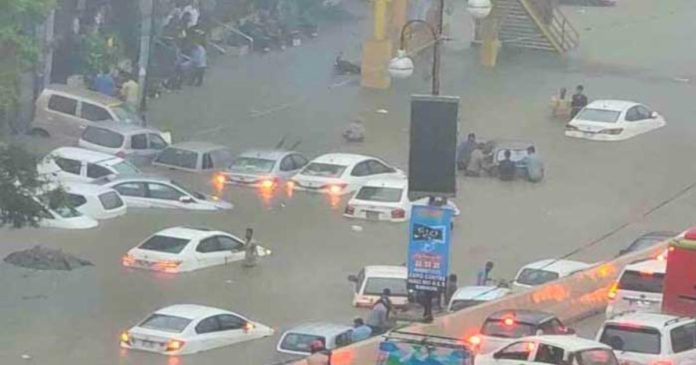
From DHA and Clifton to North Karachi and Korangi, floodwater submerged streets and seeped into homes. But one of the most jarring scenes played out on Shahrah-e-Faisal, one of the city’s most critical arteries.
The road, which connects the airport to the city’s commercial hubs, was completely submerged. Vehicles broke down mid-road. Entire roads turned into stagnant lakes. Commuters stuck in traffic for hours watched in disbelief as the road disappeared under water.
View this post on Instagram
People who left their offices early, hoping to beat the traffic, still found themselves crawling home at midnight. Many had no choice but to abandon their cars and walk long distances through knee-deep water.
For a city that prides itself on being the pulse of Pakistan’s economy, this paralysis is a devastating reminder of how low basic management has fallen.
The Human Cost
While flooded roads dominated the visuals, the real toll is much more personal. Families in low-lying neighbourhoods woke up to water pouring into their homes. Furniture, electronics, bedding, and everything else were destroyed in hours.
View this post on Instagram
For daily wage earners, a day like this means lost income. For patients, ambulances stuck in waterlogged streets can mean the difference between life and death. And for thousands of schoolchildren, being stranded in buildings without power or a way home is a terrifying experience.
Neglect, Not Nature
It’s easy to blame the rain, but Karachi’s disaster is not natural; it’s man-made. The city’s drainage systems are outdated and frequently clogged by plastic waste and debris. Encroachments have blocked natural waterways. Development has been driven by short-term political gain, not long-term sustainability. Billions have been allocated for infrastructure over the years, yet there’s little visible improvement on the ground.
Every monsoon brings the same cycle: promises of action, press conferences, short-term cleanups, and then silence, until the next devastating rain.
The Climate Clock is Ticking
As climate change accelerates, Karachi will continue to see heavier rains. If the city remains this vulnerable now, the future looks bleak.
Urban flooding is not just an inconvenience; it’s a crisis of public health, safety, and survival.
A City Desperate for Change
What happened yesterday wasn’t just about rainfall. It was about broken trust. About a city abandoned in moments when its people needed help the most.
Karachi deserves better. Its people deserve better. Until the city’s leaders stop treating monsoon flooding as a seasonal hiccup and start addressing it as a structural failure, the tale will remain the same: every time it rains, Karachi will suffer, and the people will pay the price.
Stay tuned to Brandsynario for latest news and updates

 Join a Channel
 Brandsynario
 Veryfilmi