

















Cervical cancer kills more than 3,000 women in Pakistan every year, but it’s one of the few cancers that’s almost entirely preventable.
This month, Pakistan is rolling out its first-ever nationwide HPV vaccination drive, a historic public health milestone that could change the future for millions of girls. Backed by the World Health Organisation (WHO) and Gavi, the campaign aims to vaccinate 13 million girls aged 9 to 14 across Punjab, Sindh, Islamabad Capital Territory, and Azad Jammu and Kashmir.
The vaccine will be available free of cost through the government’s Expanded Programme on Immunisation (EPI).
Higher Stakes
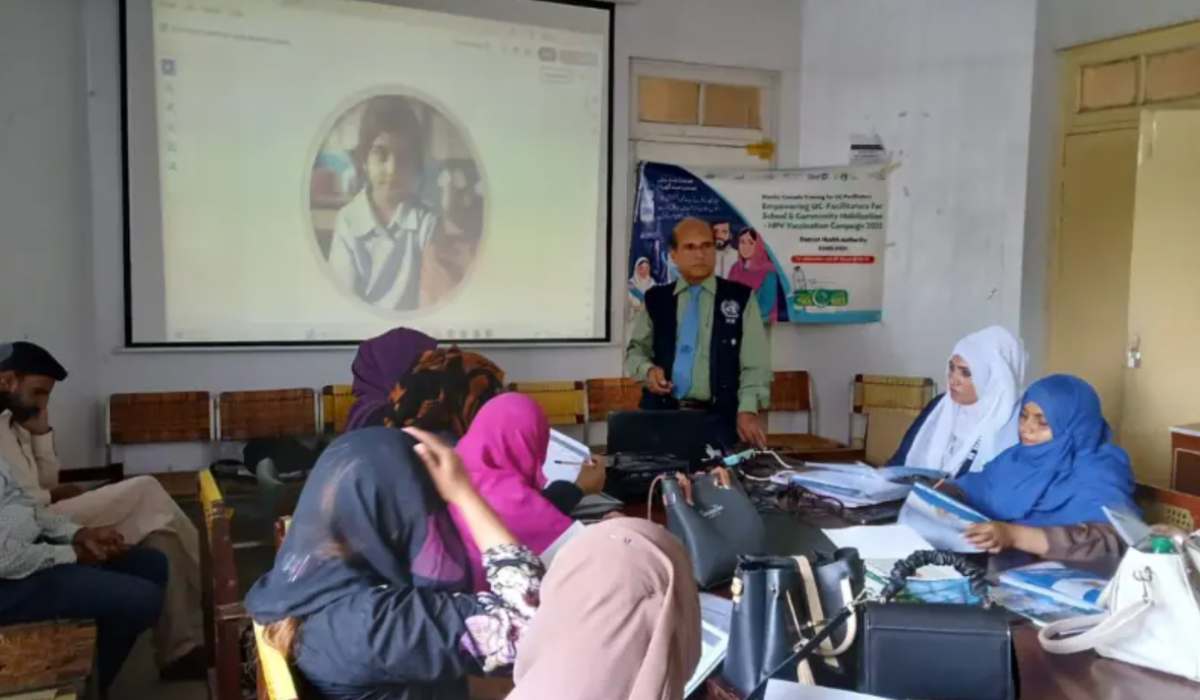
To make this massive effort possible, 49,000 health workers have been trained to deliver the shots through schools, community outreach programs, and mobile teams. With schools serving as primary vaccination sites and outreach workers covering out-of-school girls, health officials hope to reach as many adolescents as possible.
Experts say the stakes couldn’t be higher. Human papillomavirus (HPV) causes nearly 70% of cervical cancer cases worldwide. Early vaccination, ideally before a girl is ever exposed to the virus, is the single most effective way to prevent it.
Dr. Muslima Ejaz, an infectious diseases specialist at Aga Khan University, calls the campaign “a public health breakthrough,” emphasising that it not only protects future generations but also builds the systems needed to integrate HPV vaccination into routine care.
Cervical cancer is the fourth most common cancer among women in Pakistan, with over 5,000 cases diagnosed every year. Yet, until now, the vaccine remained out of reach for most families.
Myths and Challenges
The initiative also comes with challenges. Myths about vaccines, particularly those suggesting infertility, remain a barrier. Health workers are being trained to counter misinformation by explaining that HPV infection itself, not the vaccine, can harm reproductive health.
Globally, the HPV vaccine has been a success story. In countries where it’s been widely adopted, infection rates among vaccinated girls dropped by more than 50% within a few years.
WHO has set an ambitious target: to eliminate cervical cancer as a public health threat worldwide.
Stay tuned to Brandsynario for latest news and updates

 Join a Channel
 Brandsynario
 Veryfilmi