














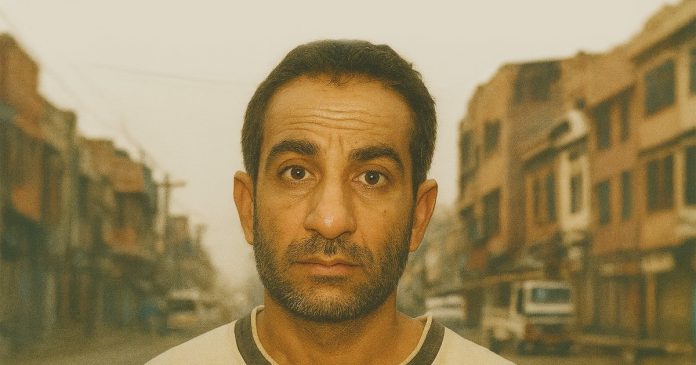

With the release of the Indian movie Dhurandhar, people in Pakistan are once again debating a name that refuses to fade from collective memory: Rehman Dakait.
To some, he was the face of terror in Lyari. To others, he was a Robin Hood–style figure shaped by decades of state neglect and political manipulation.
Some remember him as a bloodthirsty, cruel gang leader who played football with his enemies’ severed heads. Others remember him as their sardaar who ruled with strict orders and governance for his people.
Now, Akshaye Khanna’s portrayal has brought him back into the spotlight and made many wonder, all over again, who Rehman Dakait really was.
The Night Karachi First Heard His Name Loudly
On October 18, 2007, two bombs exploded in Karachi as Benazir Bhutto returned from exile.
As chaos unfolded, eyewitnesses claimed that Rehman Dakait slipped into the same white car that whisked Benazir to safety. Whether entirely true or partially myth, the rumour marked something important.
Rehman was no longer just a gangster from Lyari. He was now connected, protected or at least present in places only the powerful were allowed to be.

Who Was Rehman Dakait and Why Was He The Most Wanted Criminal of His Time?
To understand Rehman, you have to understand Lyari.
It is one of Karachi’s oldest settlements, home to over a million people living with poverty, limited schooling and a long history of political neglect.
For decades this neighbourhood was treated like Karachi’s expendable limb. Neglected by the state, exploited by political parties and policed through violence rather than protection. In that kind of world, authority doesn’t come from uniforms or constitutions. It comes from whoever can provide safety even if that safety is tied to fear.
That is how crime becomes governance. That is how a boy growing up in a marginaliSd community becomes Rehman Dakait.
Born in 1980, Sardar Abdul Rehman Baloch grew up in this environment, the son of a drug smuggler and a mother whose tragic fate would later become part of his dark legend.
His first brush with violence came early. At 13, he reportedly stabbed a man. By 1995, he was accused of killing his own mother after rumours spread about her ties to a rival gang.
Whether the motive was personal or political, the act cemented his transformation. Abdul Rehman Baloch became Rehman Dakait.
And now in 2025, we see something even stranger. His story has become raw material for convenient propaganda by India.
The attempt to recast him as some India-linked bogeyman is not just inaccurate but also historically illiterate. Let’s take a look at his real story through actual facts.
From Street Soldier to Gang Lord
Rehman started in the gang of Haji Laloo. When Laloo was arrested in 2001, Rehman took control. His operations expanded quickly.
Extortion, kidnapping, drug trafficking and illegal arms deals became part of the daily vocabulary of Lyari’s residents.
The gang war with Arshad Pappu (son of Haji Laloo and a once friend of Rehman) turned Lyari into a battlefield for nearly a decade. Streets that once echoed with football matches and boxing tournaments became crime scenes.
Innocent people were often the collateral damage.

Yet despite the brutality, Rehman kept growing in influence. Not because he was invincible or brilliant, but because the systems meant to control crime were broken.
Police often turned a blind eye. Some officers even supported him. Local politicians sought him out when it suited them.
Yes, Rehman’s rise was not just about guns but also about his political alliances. PPP insiders admit that political patronage for Rehman’s family stretched back to the 1960s.
Gangsters were useful as they could mobilise crowds, intimidate rivals and operate in ways politicians could not.
Moreover, Lyari loved Zulfiqar Ali Bhutto and later Benazir, who celebrated her wedding reception there. But affection aside, successive PPP governments did little to develop the area.
By 2008, after PPP returned to power, Rehman attempted a rebrand. He dropped “Dakait” and began calling himself Sardar Abdul Rehman Baloch.
He forged the People’s Aman Committee (PAC), a group presented as a peace initiative but widely seen as another chapter in Lyari’s gang-driven governance.
PAC units spread across the city and rallies were decorated with PPP flags. Rumours circulated that Rehman intended to run for office.
Supporters say Rehman funded madrassas and schools, paid teacher salaries and provided financial help to families. He reportedly gave young men daily wages and weapons and put them on patrol.
Many of these boys did not fully understand who they were fighting.
Critics saw the PAC as a political front for a criminal network. MQM and others later labelled it a gang outfit.
The Encounter By Chaudhry Aslam
On August 9, 2009, Rehman was killed in a police encounter led by SP Chaudhry Aslam in Steel Town, Karachi. Police said he died while trying to escape after they located him.
PAC leaders and supporters questioned the encounter. They pointed to autopsy reports suggesting close-range fire and argued that the state intervened only after gang war subsided and Rehman started gaining political visibility.
After his death there was unrest in Lyari and mourning among his supporters. His portraits went up across the area.
Portraits of Rehman appeared on walls. Supporters called him a martyr while critics called it the end of a dangerous era.
Dhurandhar and the Rewriting of a Pakistani Story
Years later, Rehman’s name has re-entered public debate through the Indian film Dhurandhar, where Akshaye Khanna’s character is based on him. The movie blends fact and fiction, inserting Rehman into broader geopolitical narratives that have little to do with the reality of Lyari.
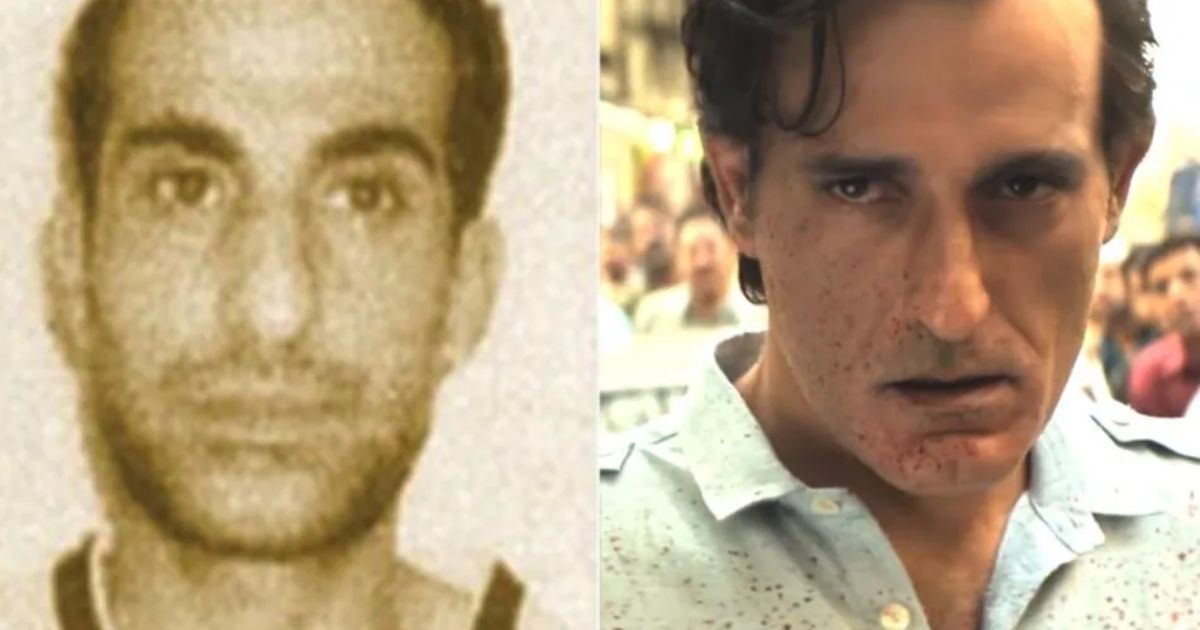
The real Rehman had no link to India. His story is rooted in Pakistani politics, Karachi’s underworld and decades of neglect in Lyari.
Using his image for cross-border propaganda distorts this context and shifts attention away from the local systems that produced him.
Stay tuned to Brandsynario for latest news and updates

 Join a Channel
 Brandsynario
 Veryfilmi