















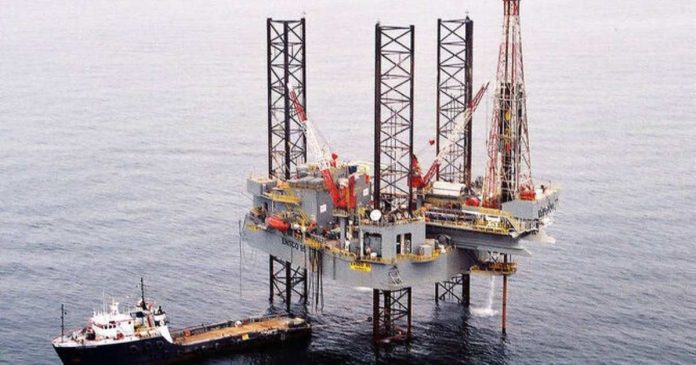

Pakistan has officially revived its hunt for offshore oil and gas after a dead silence of more than twenty years, launching a high-stakes gamble to secure energy independence. The Ministry of Petroleum finalised the regulatory paperwork for its monumental Offshore Bid Round, signing 21 crucial production-sharing agreements and exploration licenses in Islamabad.
This decisive move aims to unlock up to $1 billion in investments. Consequently, the government hopes to dismantle the country’s crippling reliance on expensive imported fuels. By mapping out a calculated, phased exploration strategy, the state is targeting an expansive maritime territory that has remained largely untouched for two decades.
Mapping Out the Massive Exploration Area
The newly signed agreements strategically target a massive expanse of Pakistan’s maritime frontier. In total, the exploration contracts cover 23 offshore blocks that span approximately 54,600 square kilometres. These blocks are located across two primary underwater regions:

- The Indus Basin: Situated primarily off the coast of Sindh, this area holds significant geological potential due to historical river sediment deposits.
- The Makran Basin: Located off the coast of Balochistan, this zone presents a complex deep-water terrain that requires advanced technological evaluation.
Because this vast territory sits within Pakistan’s exclusive economic zone, any major discovery will directly feed into the national grid. Furthermore, mapping these basins helps the state assert its economic control over underutilised maritime resources.
A Phased, High-Stakes Financial Strategy
Offshore exploration demands immense capital, forcing the government to divide the project into two distinct, risk-managed phases.
- Phase I (The Three-Year Data Search): During the initial three-year license period, participating companies will collectively inject $82 million into the economy. This money will fund extensive data acquisition, modern seismic processing, and critical geological studies. Therefore, companies can map out hidden structures before moving any heavy machinery out to sea.
- Phase II (The Billion-Dollar Drilling Rush): If Phase I yields promising, prospective targets, the venture will instantly transition into exploratory drilling. At this critical juncture, total investments are projected to surge to nearly $1 billion. This capital will fund deep-water drilling rigs and specialised marine crews required to physically extract the resources.
Domestic Giants Take the Steering Wheel
While international oil majors have historically dominated deep-sea drilling, local companies are entirely driving this new momentum. Domestic players have stepped up to shoulder the financial and technical risks where global corporations previously walked away.

- Mari Energies: This private sector giant is leading the charge by securing 18 of the 23 blocks as the primary operator, alongside holding a stake in 5 other blocks as a joint-venture partner.
- OGDCL and PPL: The state-run Oil and Gas Development Company Limited and Pakistan Petroleum Limited have each taken on eight blocks to safeguard national interests.
- Private and International Allies: Local firm Prime Global Energies, along with United Energy Pakistan and Orient Petroleum, are providing vital joint-venture support.
Defeating the Ghost of Past Failures
Deep-sea drilling is a notoriously volatile industry, and Pakistan has faced severe setbacks in the past. Since independence, the country has only drilled 18 exploratory wells across its entire 282,000 square-kilometre maritime territory.
The most painful setback occurred in 2019 during the high-profile Kekra-1 project. An international consortium including ExxonMobil and ENI poured tens of millions of dollars into an ultra-deepwater well off the coast of Karachi. Ultimately, workers declared the well completely dry. The failure dealt a massive psychological blow to the sector. However, this new bid round proves that Pakistan is resiliently stepping over past ghosts to try again.
Breaking the Chains of Imported Fuel
The timing of this offshore revival is incredibly critical for Pakistan’s survival. Currently, the country imports more than 60% of its oil and gas. This heavy reliance leaves foreign exchange reserves highly vulnerable to unpredictable global price shocks.
Every dollar spent on foreign fuel worsens the balance of payments crisis. Therefore, discovering indigenous gas reserves will completely transform the economic landscape. While actual production is still years away, the immediate exploration phase will still boost the local economy. As part of the signed contracts, these energy companies must fund social welfare, health, and capacity-building projects in the coastal areas of Sindh and Balochistan.
This ambitious offshore initiative represents a crucial turning point for Pakistan’s economic and energy security. By executing a transparent regulatory framework, the government is successfully presenting the country as a highly competitive offshore destination. If Phase I yields positive seismic data, global oil majors will undoubtedly return to the table for the drilling phase. Ultimately, Pakistan has boldly reopened a long-closed door, betting its economic future on the untapped wealth of its deep blue waters.
Stay tuned to Brandsynario for latest news and updates

 Join a Channel
 Brandsynario
 Veryfilmi