















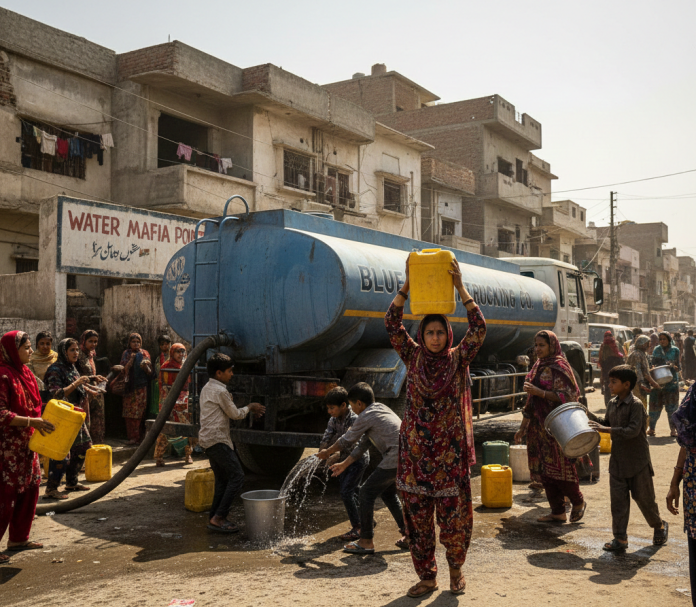

In Karachi, water does not flow through pipes; it rolls on wheels. While the city’s taps remain stubbornly dry, a thundering fleet of blue tankers dominates, transforming a basic human right into a high-stakes black market commodity. This is not a natural disaster or a simple drought; it is a meticulously engineered crisis.
By draining millions of gallons from a crumbling public grid, a sophisticated “tanker mafia” has replaced the state, extracting billions of rupees from the city’s most desperate residents. As the sun beats down on the concrete sprawl of 2026, Karachi serves as a haunting global case study. A shadow state has hijacked a vital resource. Today, twenty million people must buy back the very water that already belongs to them.
Anatomy of a Racket: How the Mafia Operates
The tanker mafia does not just wait for water shortages; it creates them through surgical precision. This network functions as a shadow utility company that bypasses state law.
-
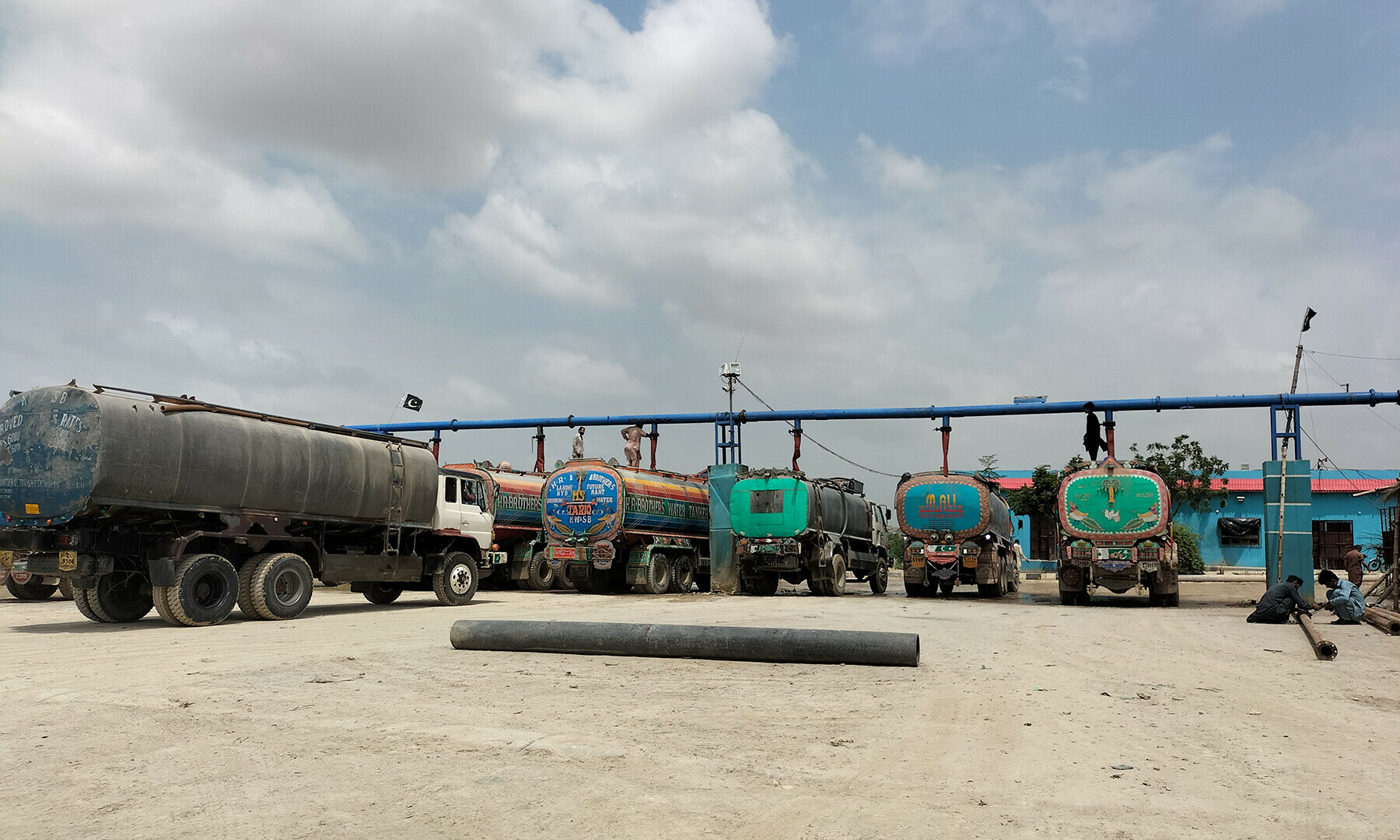
The Siphon Technique: Syndicates use industrial-grade suction pumps to puncture the city’s primary conduits. They target the 66-inch and 84-inch main lines that carry water from the Indus River and Hub Dam.
-
Illegal Hydrants: Operators run hundreds of unregulated hydrants across the city. These sites act as “fueling stations” for a fleet of over 10,000 tankers.
-
Strategic Valve Closing: Mafia members often bribe low-level valvemen. These officials shut off the flow to residential blocks. This forced “dry spell” leaves citizens with no choice but to call a private tanker.
Hence he city loses an estimated 150 to 200 million gallons per day (MGD) to theft. This stolen water then returns to the same citizens at a 1,000% markup.
The Institutional Vacuum: The Failure of KWSC
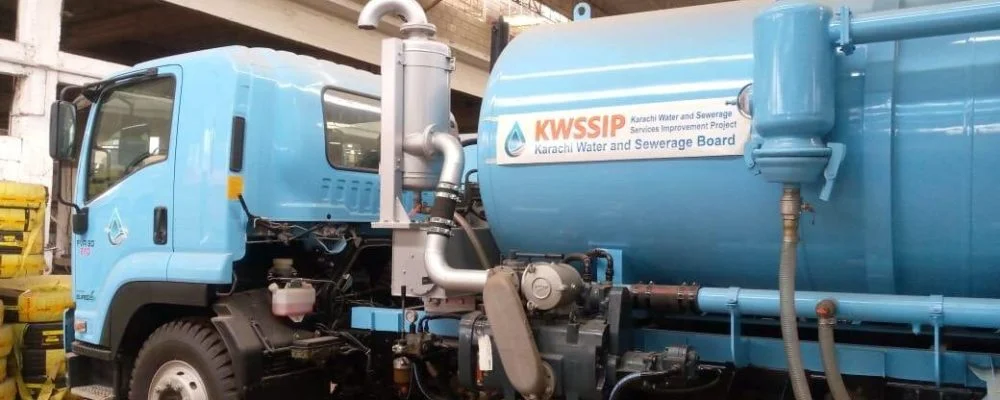
The Karachi Water and Sewerage Corporation (KWSC) struggles under the weight of debt and ageing infrastructure. However, many experts argue that the “incompetence” is actually a profitable arrangement.
-
Non-Revenue Water (NRW): Nearly 40% to 50% of Karachi’s total water supply is “lost” before it reaches a home. While some leaks are due to rusted pipes, a massive portion is unbilled theft.
-
The K-IV Stagnation: The Greater Karachi Bulk Water Supply Scheme (K-IV) remains the city’s “great hope.” Originally slated to provide 650 MGD, it has faced decades of delays. Costs have surged from an initial Rs25 billion to over Rs150 billion.
-
Operational Deficits: The KWSC’s struggle is not just about dry pipes; it is about unpaid bills. The utility frequently finds itself in a financial deadlock with K-Electric (KE), the city’s power provider. While KE possesses the right to disconnect power for non-payment, they treat the water utility as a “strategic” exception. Imran Rana, Spokesperson for KE, clarifies the delicate balance:
“Non-payment of electricity bills may lead to disconnection. However, in the case of KWSC, KE recognizes the strategic importance of its operations… In the event of any disruptions to power supply, KE teams remain available to support KWSC in prioritizing restoration.”
This “strategic importance” is the only thing standing between Karachi and a total blackout of its pumping stations.
Furthermore, the lack of digital meters means the state cannot track where the water goes. This “blindness” allows officials to deflect blame onto the mafia while profiting from the chaos.
The Cost of a Drop: Economic & Social Impact
Water in Karachi is no longer a right; it is a commodity. This shift has created a brutal class divide where the poor pay the highest price for the lowest quality.
-
The Financial Burden: Low-income families in areas like Orangi Town spend up to Rs.15,000 per month on water, according to reports. This often accounts for nearly half of their total household income.
-
The Health Crisis: Tanker water is rarely tested. Much of it comes from “subsoil bores” contaminated with industrial waste and sewage. As a result, waterborne diseases like typhoid, cholera, and Naegleria fowleri remain persistent threats.
-
Gendered Labour: Women bear the brunt of this crisis. They spend hours waiting for tankers or walking to distant community taps. This “water poverty” steals time from education and paid work, trapping families in a cycle of debt.
Ultimately, the mafia extracts billions of rupees from the city’s most vulnerable residents every year.
Can the Taps Be Turned Back On?
As we move through 2026, the provincial government has launched new initiatives to “break the back” of the mafia. However, scepticism remains high among the public.
-
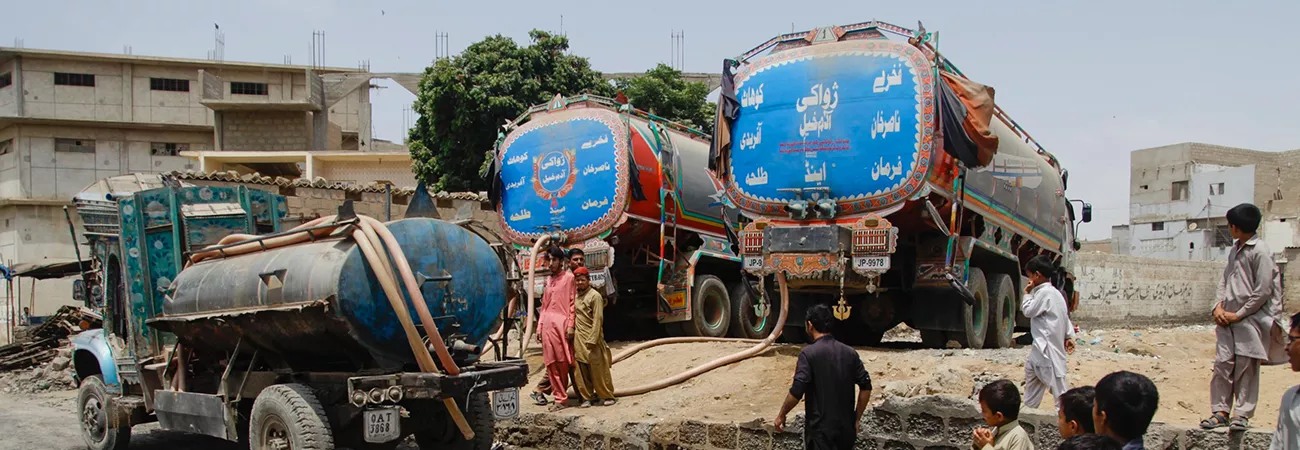
GPS Tracking & Digitisation: The government now requires all legal tankers to install GPS trackers. This allows the KWSC to monitor routes and ensure tankers reach their intended destinations.
-
The Decoupling Strategy: Officials are attempting to separate the hydrant management from private contractors. By taking direct control, the state aims to regulate prices and ensure “free” water for drought-hit zones.
-
Desalination Hopes: Small-scale desalination plants are finally appearing along the coast. While expensive, these plants offer a way to bypass the vulnerable pipeline network entirely.
Success depends on one factor: political will. If the state continues to protect the “big fish” behind the hydrants, the tankers will keep rolling, and Karachi will stay thirsty.
Karachi cannot survive on wheels forever. The city’s future depends on a simple shift: moving water from the tanker’s tank back into the citizens’ pipes.
While the 2026 reforms offer a glimmer of hope, real change requires more than just dismantling illegal hydrants. It demands a transparent, digitised, and accountable utility that serves people rather than profits.
Until the state reclaims its role as the provider of life’s most basic necessity, the “Blue Fleet” will continue to rule the roads, and the people of Karachi will continue to pay the price for a manufactured thirst.
Stay tuned to Brandsynario for latest news and updates

 Join a Channel
 Brandsynario
 Veryfilmi