















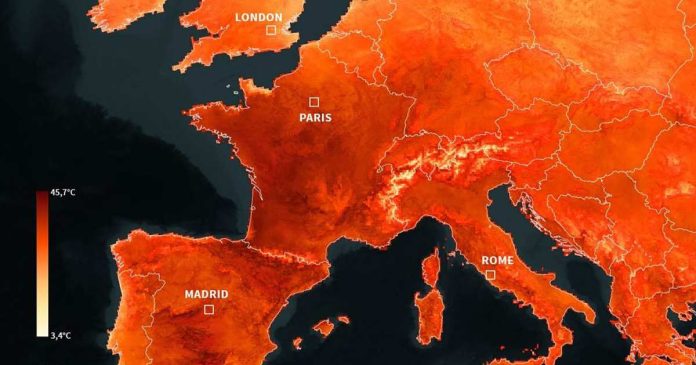

Europe is currently trapped inside a dangerous, record-breaking furnace. Across the continent, millions of people are enduring a severe, early-summer heatwave. This extreme weather has shattered decades-old temperature records. It has also claimed dozens of lives. Cities from London to Rome are facing unprecedented operational strain. Schools are closing their doors. Public transit systems are scaling back operations. Even iconic landmarks are shutting down early.
At the absolute heart of this climate emergency sits a powerful and stubborn meteorological phenomenon. Scientists call this event an Omega block. This atmospheric gridlock is effectively pinning a dome of blistering heat over western Europe. The system refuses to let cooler weather fronts break through.
Key Takeaways
- A historic early-summer heatwave is trapping Europe under extreme temperatures, causing casualties and massive daily disruptions.
- The jet stream has buckled into an Omega shape, locking a powerful high-pressure system completely in place.
- The trapped dome forces air downward, compressing it to generate extreme heat while clearing clouds for nonstop sunshine.
- Temperatures have reached unprecedented levels, with record highs of 35.8°C in the UK and 40.9°C in Paris.
- The intense heat has forced French nuclear plants to cut power, shut down famous museums early, and close schools.
- Global warming acts as a major amplifier, turning standard weather blocks into prolonged, deadly disasters.
Understanding the Atmospheric Trap
To understand this relentless heatwave, you must first look at high-altitude winds. A fast-moving ribbon of air called the jet stream flows steadily from west to east. This current acts as a massive conveyor belt. It constantly pushes shifting weather systems across the globe.
However, an Omega block completely disrupts this natural cycle. During this phenomenon, the jet stream buckles violently and shifts northward. A massive ridge of high pressure pushes upward. Meanwhile, two separate low-pressure systems flank this ridge on the east and west. This specific alignment mimics the uppercase Greek letter Omega ($\Omega$).
Consequently, this configuration creates a formidable atmospheric wall. The flanking low-pressure zones lock the central high-pressure system completely in place. The weather beneath the dome stalls entirely. Because the system cannot move, communities must endure the same oppressive conditions day after day.
The Physics of the Heat Dome
Once an Omega block seals itself over a region, it operates like a giant greenhouse. The central high-pressure system forces massive columns of air downward toward the earth. As this air descends, it compresses rapidly. This intense compression generates immense thermal energy.
Furthermore, this downward pressure clears the sky completely. Without clouds, uninterrupted solar radiation bakes the ground from dawn until dusk. The dry earth then reflects that heat right back into the lower atmosphere.
To make matters worse, the surrounding low-pressure systems act like mechanical pumps. In this specific crisis, a low-pressure front sits off the coast of Portugal. This front draws blistering, dry air directly from the Sahara Desert. It then channels that scorching air straight into western Europe.
Shattering Long-Standing Records
This combination of sinking air and African winds has driven European temperatures to extreme heights. Countries that rarely experience such heat are now seeing desert-like conditions.
- The United Kingdom: In the southern English village of Wiggonholt, West Sussex, temperatures soared to a staggering 35.8°C (96.4°F). This reading officially broke the record for the hottest June day since British records began.
- France: Paris endured an unprecedented high of 40.9°C (105.6°F). This set a historic June record for the capital city. Government authorities immediately placed 72 regional districts under their highest possible weather alert.
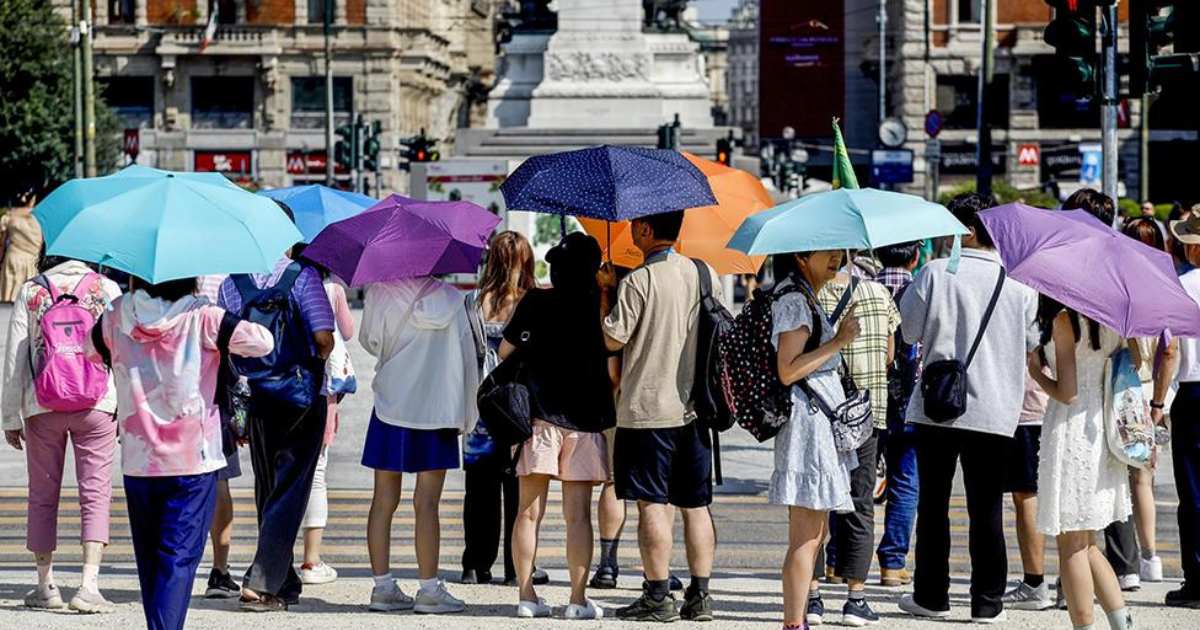
- Spain and Italy: Vast regions of Spain repeatedly breached the 40°C threshold. Meanwhile, Italy’s Health Ministry issued maximum emergency heat warnings for 16 major urban hubs. These hubs included Rome, Milan, Florence, and Turin.
Infrastructure on the Brink
The prolonged heatwave is now pushing Europe’s modern infrastructure past its breaking point. Systems designed for temperate climates are struggling to cope with the prolonged thermal stress.
View this post on Instagram
- Energy Systems: In France, nuclear power plants generate the vast majority of the nation’s electricity. These plants intentionally cut their power output by 7%. The surrounding rivers became too hot to safely cool the reactors. Higher outputs would threaten local aquatic ecosystems.
- Tourism and Culture: The Eiffel Tower and the Louvre Museum in Paris enacted early daily closures. They took these steps to protect staff and visitors. Similarly, the Uffizi Galleries in Florence abruptly halted all ticket sales. Their central air conditioning system failed under the heat strain.
- Public Safety and Transit: In France alone, authorities reported dozens of heat-related fatalities. This total included 48 tragic drowning victims who entered open waters to escape the heat. Across the Netherlands, schools shortened classes. Rail networks reduced train speeds to prevent metal tracks from warping.
The Climate Change Amplifier
Omega blocks are naturally occurring meteorological formations. However, global climate change aggressively amplifies their destructive potential. The planet’s baseline temperature has already risen significantly due to human activity. Therefore, these blocks now form over a heavily pre-heated landscape.
As a result, a weather pattern that once caused a brief warm spell now triggers a deadly natural disaster. The lack of soil moisture creates a vicious feedback loop. The sun’s energy cannot evaporate water from the dry soil. Instead, the solar radiation goes entirely into heating the air. This process only worsens the intense drought.
Ultimately, the current crisis across Europe serves as a stark reminder of our changing climate reality. The Omega block hovering over the continent proves that extreme weather is an immediate hazard to human life. It also directly threatens structural stability. Until this stubborn high-pressure dome breaks apart, millions of citizens will remain trapped in this dangerous cycle. The jet stream must resume its normal path to bring relief. As global temperatures continue to climb, meteorologists warn that these atmospheric blockades will likely become more frequent, more intense, and far more difficult to survive.
FAQS
1. What is an Omega block?
An Omega block is a large-scale weather pattern where the jet stream buckles violently into the shape of the uppercase Greek letter Omega ($\Omega$). It sandwiches a massive high-pressure system between two areas of low pressure, locking the entire weather system in place for days or weeks.
2. Why does the Omega block cause such extreme heat?
The trapped high-pressure dome forces air downward. As this air sinks, it compresses and heats up rapidly. This pressure also clears away all clouds, allowing nonstop solar radiation to bake the ground. Simultaneously, the flanking low-pressure zones act like a pump, drawing blistering hot air directly from the Sahara Desert into Europe.
3. Is climate change responsible for the Omega block?
While Omega blocks are naturally occurring meteorological events, global climate change aggressively amplifies their impact. Because human activity has raised the planet’s baseline temperature, these blocks now trap air that is already heavily pre-heated. This transforms ordinary summer warm spells into prolonged, record-breaking natural disasters.
Stay tuned to Brandsynario for the latest news and updates.

 Join a Channel
 Brandsynario
 Veryfilmi