

















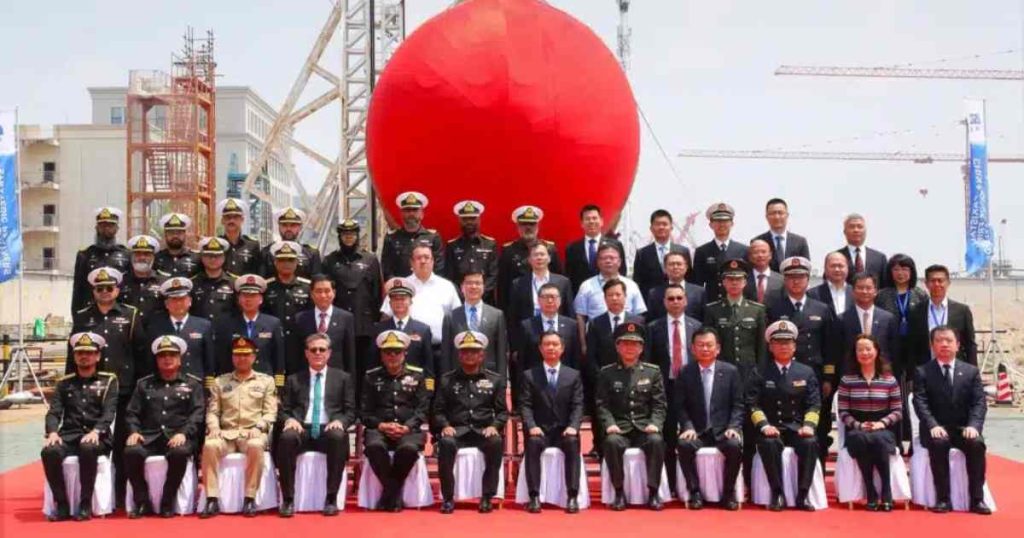
Pakistan has officially commissioned its first Hangor-class Submarine. This is one of the most significant milestones in the country’s naval modernisation efforts. The lead vessel, PNS/M Hangor, was commissioned in Sanya, China.
Key Takeaways:
- Pakistan plans to induct eight Hangor-class submarines.
- The project survived jarring setbacks like German export restrictions and COVID-19-related delays.
- Three more Chinese-built submarines are expected to join the fleet soon.
A Decade-Long Project
The commissioning of PNS/M Hangor wraps up a journey that began more than a decade ago. Pakistan originally explored acquiring German Type 214 submarines, but negotiations collapsed around 2011. The Pakistan Navy then turned to China Shipbuilding & Offshore International Co. Ltd (CSOC) for a new generation of air-independent propulsion (AIP) submarines.
In 2015, Islamabad approved the purchase of eight submarines. The vessels were later named the Hangor-class Submarine in honour of the historic PNS Hangor, which sank an Indian warship during the 1971 war, becoming the first submarine since World War II to achieve such a feat.
Technical Challenges and Postponement
Firstly, Germany declined to issue export licenses for MTU diesel engines originally selected for the submarines, forcing Pakistan and China to redesign the propulsion package around Chinese-made CHD-620 engines.
The COVID-19 pandemic added further delays. While obstacles cropped up, construction continued at the Wuhan Wuchang Shipbuilding facility. The lead submarine entered sea trials in 2024. PNS/M Shushuk, PNS/M Mangro, and PNS/M Ghazi followed during 2025. Meanwhile, four additional submarines are being assembled at Karachi Shipyard & Engineering Works (KSEW).
The Defining Element of the Hangor-Class
As a derivative of China’s Yuan-class submarine family, the Hangor-class is meant for long operations that need to be carried out in open waters. In terms of displacement, the submarine boasts around 2,800 tons and comes with six torpedo tubes. These are capable of launching heavyweight torpedoes as well as anti-ship missiles.
The most gleaming advantage is the Stirling-cycle Air Independent Propulsion (AIP) system. Diesel-electric submarines need to periodically surface or snorkel when they need to recharge their batteries. However, with AIP technology, submarines can be submerged for weeks on end. This powerfully contributes to reducing the chances of being detected by aircraft or surveillance systems. Therefore, the Hangor-class Submarine can operate far from home waters and keep a low profile.
Pakistan’s Maritime Strategy
The larger size and longer endurance of the Hangor fleet allow Pakistan to extend its operational reach deeper into the Indian Ocean. This strengthens the Navy’s ability to monitor and secure critical sea lines of communication that support regional trade and energy flows.
Once all eight vessels are inducted, Pakistan will operate one of Asia’s largest fleets of AIP-equipped submarines. That will provide greater patrol coverage, stronger deterrence, and improved operational flexibility.
FAQs
1. What is the Hangor-class submarine?
The Hangor-class submarine is a new-generation AIP-equipped submarine being inducted by the Pakistan Navy.
2. How many Hangor-class submarines will Pakistan receive?
Pakistan plans to acquire a total of eight Hangor-class submarines.
3. Why is AIP technology important?
AIP technology is important because it allows submarines to stay underwater for extended periods without surfacing.
Stay tuned to Brandsynario for latest news and updates

 Join a Channel
 Brandsynario
 Veryfilmi