















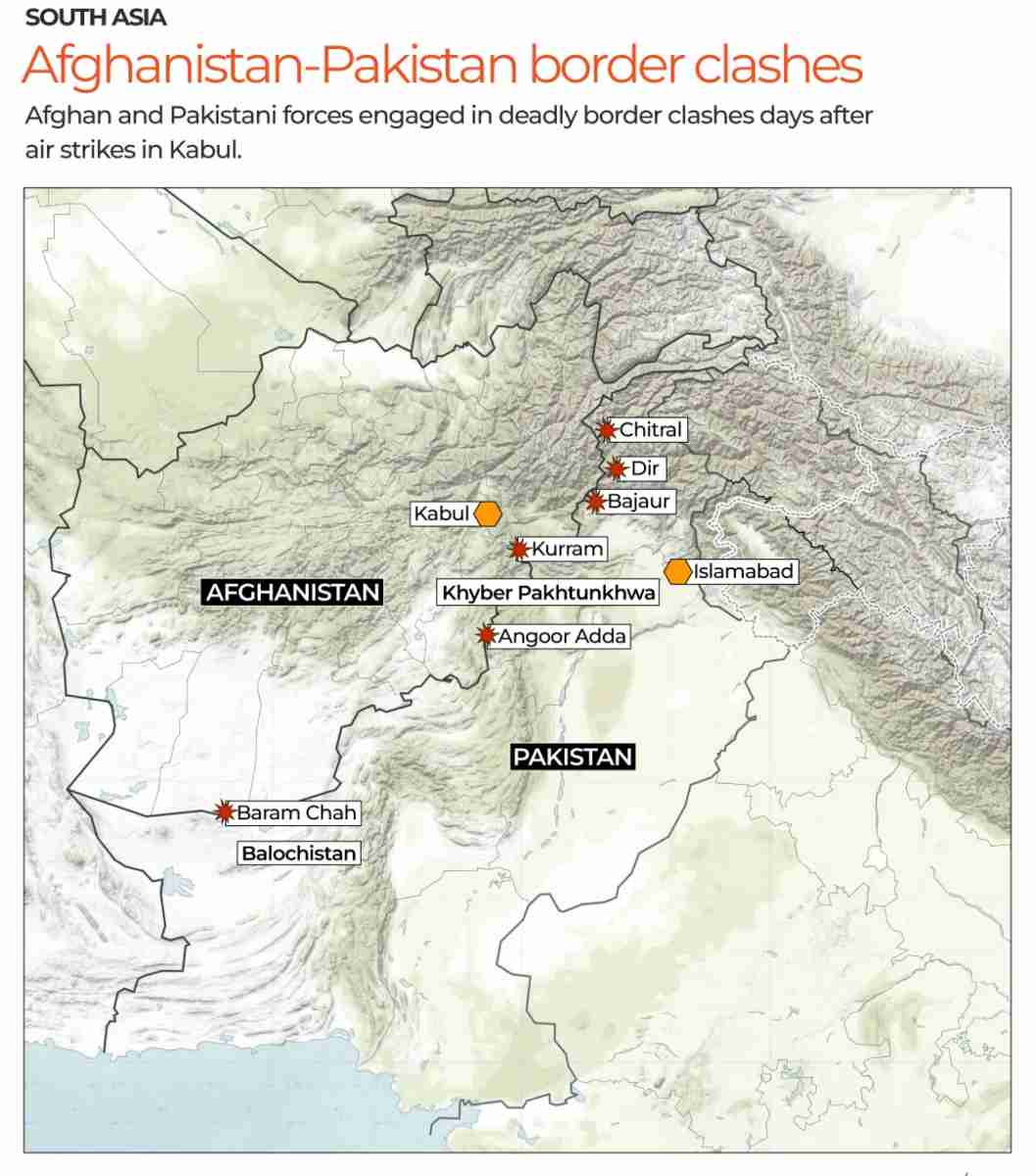
Tensions between Pakistan and Afghanistan have hit a new low after fierce overnight clashes left 23 Pakistani soldiers martyred and more than 200 Taliban fighters dead, according to the military. The violence erupted along several border points late Saturday and continued into Sunday morning.
The ISPR said Afghan Taliban fighters and allied militants launched unprovoked attacks on Pakistani posts, prompting a strong response. “Our forces acted in self-defence and targeted militant camps with precision,” the statement read. It added that 21 Taliban positions were captured and later vacated after the situation stabilised.
Afghan officials denied Pakistan’s account, claiming higher Pakistani losses. Islamabad rejected these claims as “baseless” and said all figures shared were accurate. Following the fighting, Pakistan closed all major border crossings, halting trade and leaving hundreds of trucks stranded.
Shehbaz Sharif’s Warning to Kabul
Days before the clashes, Prime Minister Shehbaz Sharif had urged Kabul to “choose between Pakistan and the TTP,” calling cross-border attacks unacceptable. His statement reflected growing frustration in Islamabad with the Taliban’s failure to act against militants attacking Pakistan from Afghan soil.
TTP attacks have surged since the Taliban returned to power in 2021. Several rounds of talks and promises from Kabul produced little result, and Pakistan has increasingly relied on airstrikes to counter the threat. Last year, Pakistani jets targeted TTP hideouts in Afghanistan after deadly attacks on border posts.
Despite growing anger, Pakistan has tried to balance force with diplomacy. In early 2025, Islamabad resumed high-level engagement with Kabul, with visits from both sides aimed at rebuilding trust and reviving trade. Deputy Prime Minister Ishaq Dar’s April visit led to progress on trade agreements, but Taliban assurances on tackling the TTP again proved empty.
At a trilateral meeting in Kabul with China, Pakistan pushed for a joint statement naming the TTP and ETIM. The Taliban refused, frustrating both Islamabad and Beijing. Still, Pakistan avoided cutting ties, hoping dialogue might eventually work.
After the latest clashes, Pakistan’s Foreign Office condemned “unwarranted aggression” by Afghan Taliban, FAK and “Fitna-e-Hindustan,” asserting Pakistan repulsed the attacks and hit terrorist infrastructure “used to plan and facilitate attacks against Pakistan.” It urged Kabul to take “concrete and verifiable” action against anti-Pakistan groups operating from Afghan soil, citing UN monitoring reports on terrorist presence.
President Asif Ali Zardari reaffirmed Pakistan’s commitment to sovereignty and rejected any “disputed or misleading” positions on Jammu & Kashmir, accusing the Afghan interim administration of turning away from the cause of oppressed Kashmiris and warning that India-backed Khwarij and allied groups remain the region’s gravest threat.
Prime Minister Shehbaz Sharif praised the army’s professionalism and vowed there would be no compromise on national defence. PPP leader Bilawal Bhutto Zardari urged the Taliban to act responsibly, while Senator Sherry Rehman called the firing from the Afghan side “unacceptable aggression.”
High-Tech Warfare on the Frontier
Defence sources said Pakistan used advanced drones and precision systems to carry out the strikes. Turkish, Chinese and locally made drones destroyed Taliban positions while minimising collateral damage. Tanks and artillery were deployed along the Balochistan border, though officials said only a fraction of Pakistan’s capacity was used.
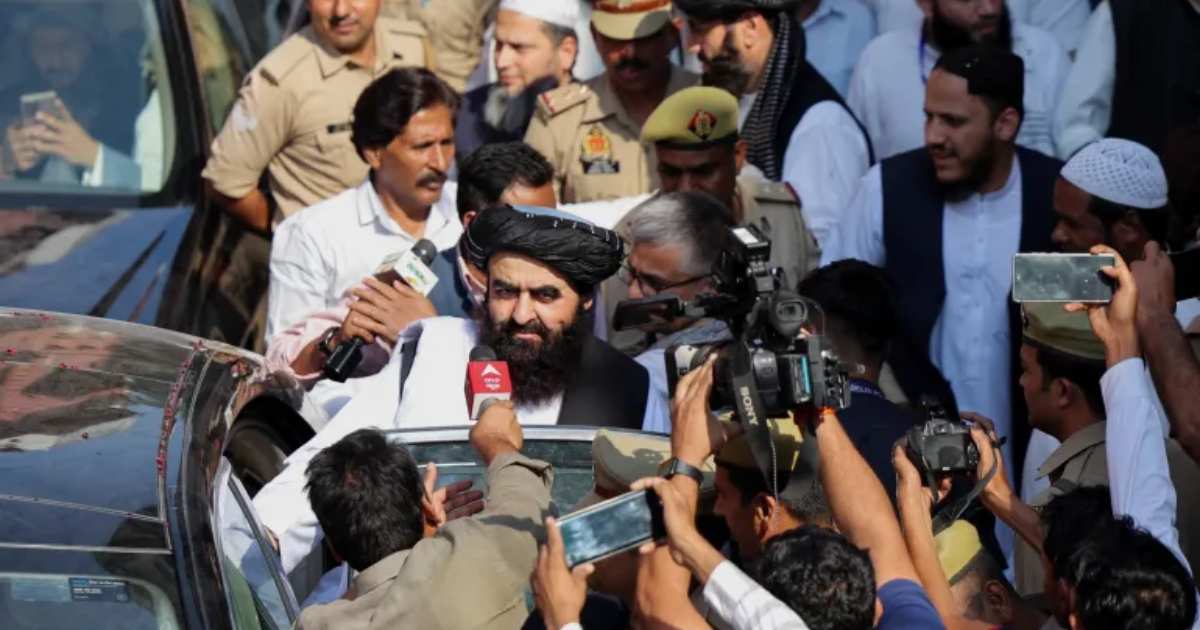
Separately, aviation sources said Pakistan will not allow Afghan FM Mullah Amir Muttaqi to transit Pakistani airspace on his return from New Delhi, citing recent “adverse developments” and language in the India visit’s joint communiqué.
Pakistan has a NOTAM barring Indian aircraft from using its airspace; India reportedly asked Kabul to seek a one-off exemption, which Islamabad declined.
Trump Offers to Mediate
Commenting on the situation, US President Donald Trump told reporters he was “good at making peace” and hinted he could step in to defuse the conflict. “This will be my eighth war that I’ve solved,” he said. “I save millions of lives.”
Whether or not Trump gets involved, the crisis has left both Pakistan and Afghanistan walking a thin line between confrontation and diplomacy. For now, Islamabad’s message to Kabul is clear: stop the cross-border attacks or face more consequences.
Islamabad has shifted from pure coercion to a carrot-and-stick approach, tightening economic screws and refugee regulation while keeping channels to Kabul open. Yet the weekend’s violence, Kabul’s refusal to name TTP/ETIM in trilateral texts, and duelling casualty claims underscore a widening trust deficit.
Stay tuned to Brandsynario for latest news and updates

 Join a Channel
 Brandsynario
 Veryfilmi