














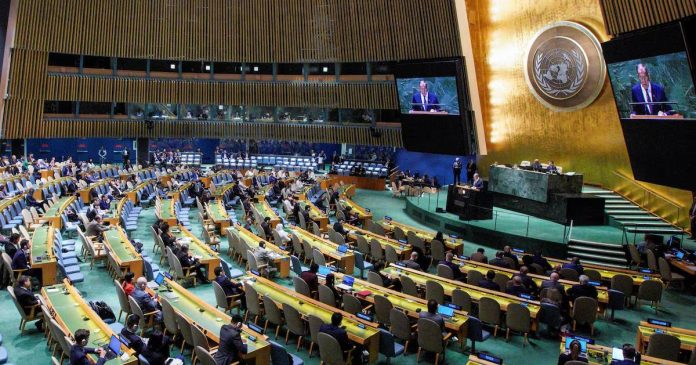

World leaders gathered at the United Nations General Assembly (UNGA) for a tense Day 3. Deep geopolitical divides and high-stakes diplomacy defined the session. Israeli Prime Minister Benjamin Netanyahu delivered a fiery address. He defended Israel’s military actions in Gaza and recent strikes on Iranian nuclear facilities.
However, his speech sparked intense opposition inside and outside the hall. Dozens of diplomats walked out as he took the stage. Outside, police arrested several high-profile protesters. Meanwhile, Iranian President Masoud Pezeshkian hit back with sharp criticism. He denounced Western nuclear standards and American threats. Finally, a decisive UN vote highlighted Israel’s growing diplomatic isolation.
Key Takeaways
- Netanyahu defended the Gaza war, rejected genocide claims, praised Donald Trump, and justified strikes on Iran’s nuclear program.
- Representatives from dozens of countries left the hall as Netanyahu began his address.
- Iranian President Masoud Pezeshkian denounced Western nuclear hypocrisy and rejected external threats.
- The UN General Assembly voted 152 to 3 to allow Palestinian President Mahmoud Abbas to deliver a pre-recorded address.
- Protesters gathered outside UN headquarters. NYPD officers arrested several demonstrators, including Hollywood actors.
Netanyahu Defends Israel and Attacks Critics
Netanyahu delivered an unyielding address to the General Assembly. He firmly defended Israel’s military operations in Gaza and recent actions against Iran. He explicitly rejected international accusations of war crimes. Instead, he called the Israeli Defense Forces (IDF) the “most moral army in the world.” He stated that Israel takes extra steps to protect civilian lives. He asserted that labelling Israel’s actions as genocide inverts reality.
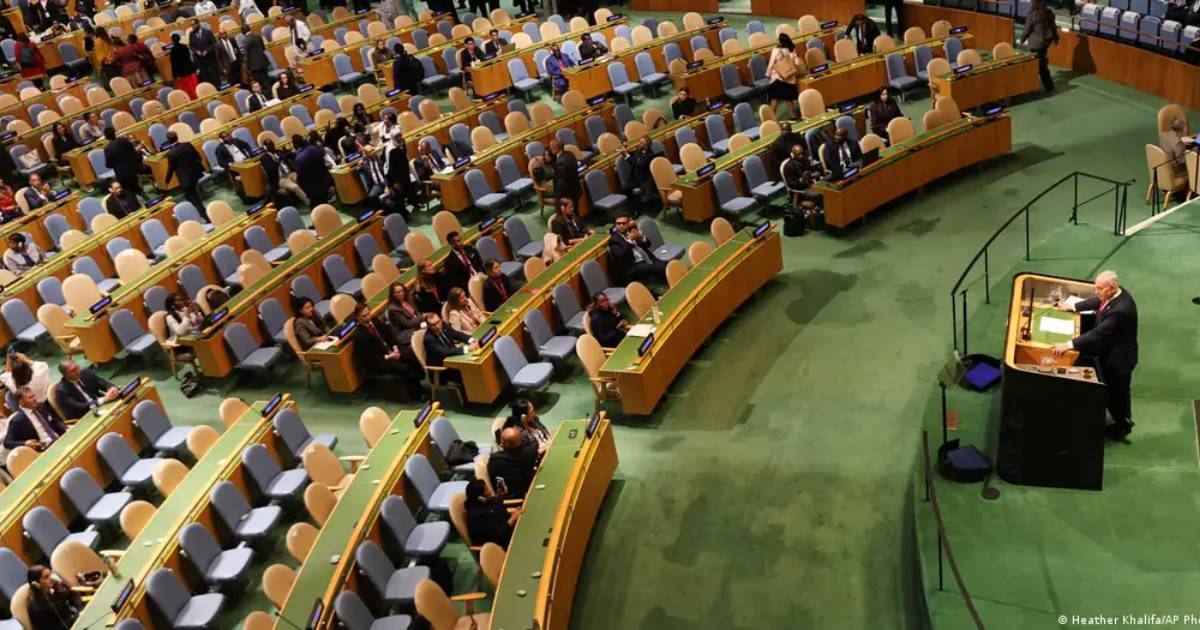
Netanyahu praised US President Donald Trump. Benjamin Netanyahu called Trump Israel’s greatest partner in efforts to save civilisation. He then criticised European nations. He scolded Western governments for failing to stand firmly with Israel and dismissed accusations of colonialism. Quoting Mark Twain’s 1899 essay Concerning the Jews, Netanyahu declared that the Jewish people have always overcome hostility and will continue to prevail.
Netanyahu Targets Iran’s Nuclear Sites
Iran’s regional influence and nuclear program formed a central part of Netanyahu’s speech. He defended Israel’s recent strikes on Iranian nuclear facilities as vital self-defence:
-
Justification of Military Action: Netanyahu argued that neutralising Iran’s nuclear capability ensured Israel’s survival. He stated that failing to act would have caused destruction.
-
Claims of Private Support: He asserted that several Arab nations secretly welcomed Israel’s action against Tehran, despite public criticism.
-
Labelling Iran a Global Threat: He urged the world to view Iran’s nuclear program as a direct danger to global security.
Iran’s President Responds to Western Pressure
Iranian President Masoud Pezeshkian delivered a forceful counter-attack. He focused heavily on Western double standards regarding nuclear weapons and regional conflict. He addressed threats from Washington directly, declaring that Iran will never bow to external force or intimidation.
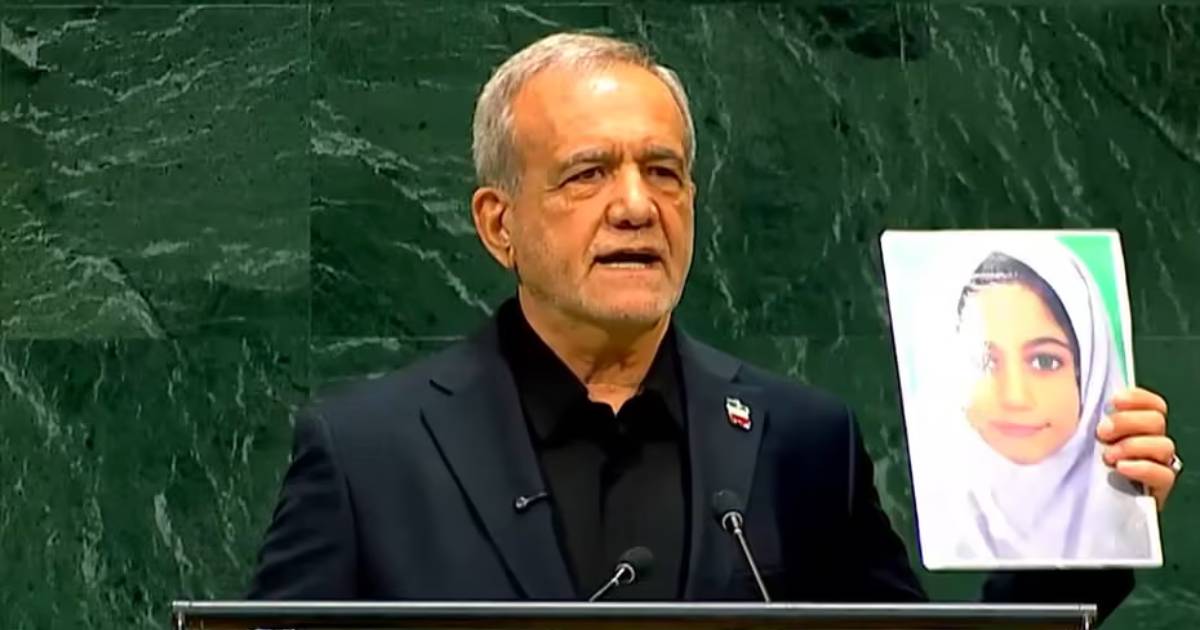
Pezeshkian held up photographs of late Supreme Leader Ali Khamenei at the podium. Pezeshkian also displayed images of Iranian children killed in recent military strikes. He called out international hypocrisy. He pointed out that inspectors scrutinise Iran while Israel operates an uninspected nuclear arsenal. Pezeshkian asserted Iran’s right to defend its sovereignty. However, he stated that Tehran remains open to diplomatic talks if built on mutual respect.
Delegates Walk Out on Netanyahu
The atmosphere inside the General Assembly turned hostile as Netanyahu stepped to the podium. Delegations from dozens of nations stood up and walked out in a coordinated protest. The departing groups included Saudi Arabia, Iran, Arab League members, and many non-aligned countries.
The Iranian delegation left a photograph of former Quds Force commander Qassem Soleimani on their empty desk as a silent protest. Netanyahu mocked the departing diplomats immediately, calling them “moral cowards.” He urged any remaining critics to leave as well. Meanwhile, supporters in the room gave Netanyahu standing ovations and chanted slogans backing Israel.
UN General Assembly Votes 152–3 on Palestine
Diplomatic tension spilt over into procedural votes. The General Assembly held a critical vote on Palestinian participation after the US denied entry visas to Palestinian President Mahmoud Abbas and his delegation.
The Assembly voted overwhelmingly to permit President Abbas to address the body via a pre-recorded video statement:
- 152 Countries Voted In Favor: Approved the resolution for the remote address.
- 3 Countries Voted Against: The United States, Israel, and one ally opposed the motion.
- 4 Countries Abstained: Refrained from casting a vote.
In his recorded statement, Abbas accused Israel of erasing the Palestinian presence and expanding territorial control. He thanked international partners who work to protect the two-state solution.
Protests and Arrests Erupt in New York City
Outside UN headquarters in Manhattan, massive demonstrations erupted against Netanyahu’s presence and Israel’s military campaign. Jewish Voice for Peace helped organise the protests near the perimeter. Demonstrators clashed directly with local law enforcement.
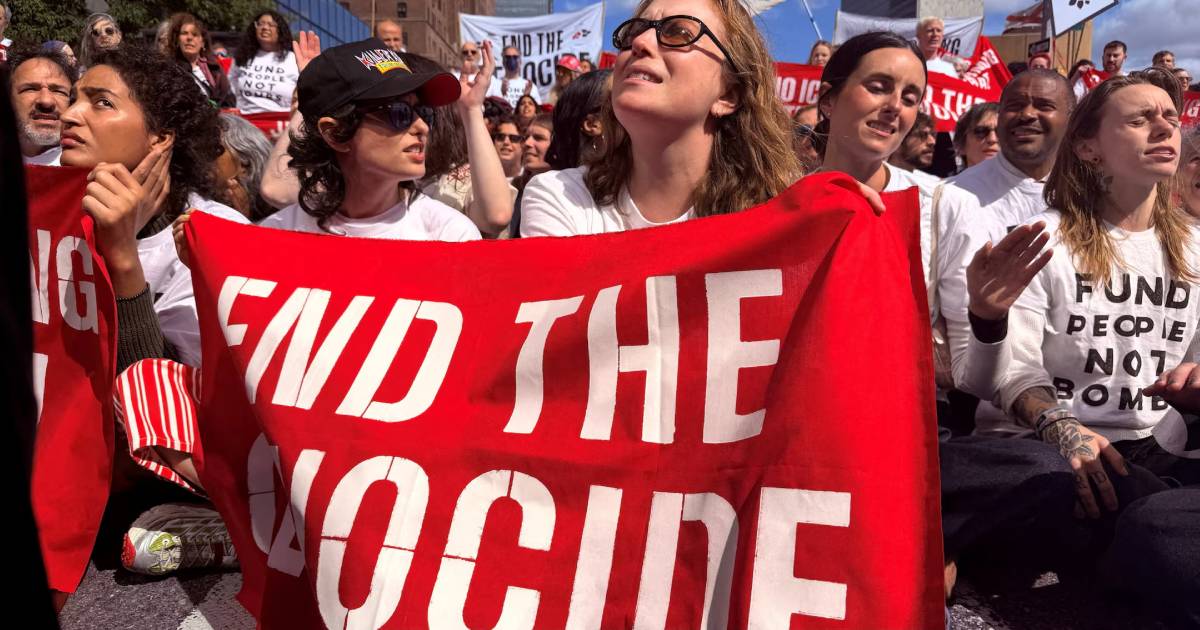
New York City Police officers arrested multiple demonstrators for blocking traffic and disobeying orders. NYPD officers detained high-profile figures and Hollywood actors, including Susan Sarandon and Hannah Einbinder.
Inside the hall, Netanyahu turned his focus to local politics. He explicitly criticised New York City Mayor Zohran Mamdani, claiming that anti-Israel rhetoric from local leadership threatens the safety of Jewish residents in the city.
FAQS
1. What were the main points of Benjamin Netanyahu’s UNGA Day 3 speech?
Israeli Prime Minister Benjamin Netanyahu defended Israel’s military campaign in Gaza, rejected genocide charges, and praised US President Donald Trump. He also justified recent strikes on Iran’s nuclear program as necessary self-defence.
2. Why did delegates walk out during Netanyahu’s UNGA address?
Representatives from dozens of countries, including Iran, Saudi Arabia, and Arab League states, staged a walkout to protest Israel’s ongoing military operations in Gaza and recent strikes on Iran.
3. How did Iranian President Masoud Pezeshkian respond at UNGA Day 3?
President Pezeshkian accused Western nations of nuclear hypocrisy, pointed out that Israel operates an uninspected nuclear arsenal, and declared that Iran will not bow to external intimidation or force.
4. What was the result of the UN General Assembly vote on Palestine?
The General Assembly voted 152 to 3 (with 4 abstentions) to allow Palestinian President Mahmoud Abbas to deliver a pre-recorded address after the US denied entry visas to his delegation.
5. Why did Netanyahu mention New York City Mayor Zohran Mamdani?
Netanyahu directly criticised Mayor Mamdani from the podium, claiming that anti-Israel rhetoric from local leadership compromises the safety of Jewish residents in New York City.
Stay tuned to Brandsynario for the Latest International News and updates.

 Join a Channel
 Brandsynario
 Veryfilmi