













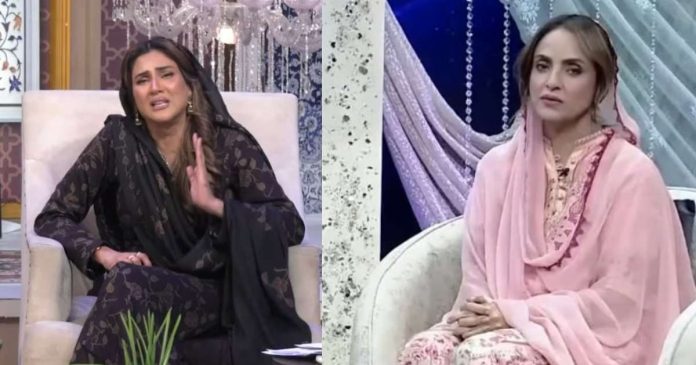

The controversy surrounding Fiza Ali has taken a dramatic turn, and this time, Nadia Khan has stepped forward to address the storm. What began as an emotional segment during a Ramzan transmission quickly spiralled into a nationwide debate about ethics, sensationalism, and the true spirit of Ramadan programming.
Fiza Ali recently made headlines after becoming visibly emotional on her Ramzan show while discussing the alleged injustice faced by Dr. Nabiha Ali Khan in a divorce matter. Tears, strong statements, and bold claims dominated the segment. However, instead of sympathy, the reaction online was fierce. Critics accused the host of turning a sacred month into a platform for viral drama, ratings, and attention.
The backlash intensified as leaked audio clips allegedly linked to Fiza Ali began circulating online. Moreover, Mishi Khan also commented on the controversy, further amplifying the debate. Social media timelines are filled with divided opinions. Some defended emotional expression, while others questioned the appropriateness of discussing private marital conflicts during a Ramzan transmission.
Nadia Khan Calls Out “Planned Sensationalism” in Ramzan Shows
During her own Ramzan broadcast, Nadia Khan addressed the controversy directly. The conversation began when a caller praised her for maintaining seriousness and dignity in her transmission. The caller then asked a Maulana to comment on what Fiza Ali had presented on her show.
Nadia did not hesitate. She firmly stated that such matters are not suitable for Ramzan content. According to her, discussing family disputes publicly, especially in a spiritual setting, crosses a line. She further claimed that if a host continues to drag a viral issue intentionally, it suggests a planned stunt rather than an accidental moment.
Her remarks shifted the conversation from emotional reaction to professional accountability. She implied that responsible hosting requires sensitivity, particularly during a holy month when viewers expect reflection, learning, and positivity.
The religious scholar present on the show added a strong perspective. He emphasised that family issues should remain private and be resolved within the household. According to him, conflicts between husband and wife should involve elders or parents for reconciliation. If differences escalate, temporary separation is preferable to public exposure. He strongly condemned the idea of a host intervening in personal matters or declaring that a divorce would not be allowed, calling such interference inappropriate.
These comments intensified public discussion. While some viewers supported Nadia Khan’s stance, others believed the issue reflects a broader trend in television where emotional sensationalism often overshadows substance.
The controversy now highlights a larger question about Ramzan’s programming standards. Should hosts focus solely on spiritual guidance and uplifting conversations? Or is there room for addressing real-life issues, even if they are uncomfortable? The debate continues to divide audiences.
What remains undeniable is that this incident has reignited conversations about media responsibility. Fiza Ali’s emotional segment may have captured attention, but Nadia Khan’s response has redirected focus toward ethical boundaries in broadcasting.
As the discourse unfolds, viewers are watching closely. In an era where viral content dominates screens, the line between awareness and sensationalism has become thinner than ever. And in the middle of this heated debate, Ramzan transmissions are under sharper scrutiny than before.
Stay tuned to Brandsynario for latest news and updates

 Join a Channel
 Brandsynario
 Veryfilmi