











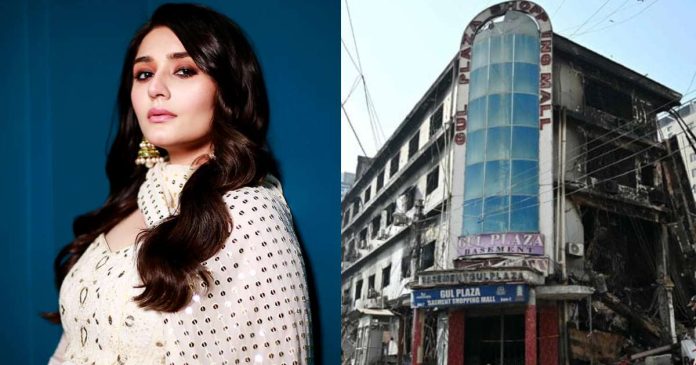

Karachi has once again found itself mourning lives that should never have been lost, and this time, the silence was broken by a voice many didn’t expect but desperately needed. Actress Durefishan Saleem did not offer the usual scripted sympathy or vague prayers.
Instead, she did something far more uncomfortable. She called the tragedy exactly what it was preventable. That single word has since echoed across social media, stirring anger, grief, and an unavoidable question why does Karachi keep paying the price for failure?
In a strongly worded Instagram story, Durefishan addressed a belief that many public figures quietly accept but rarely challenge. She acknowledged that people often think an actor’s job should remain limited to appearances and performances. However, she rejected that notion outright.
According to her, visibility without responsibility is meaningless. Influence, she implied, loses all value if it stays silent when something is deeply wrong. Consequently, her words struck a nerve because they weren’t poetic. They were blunt, timely, and painfully honest.
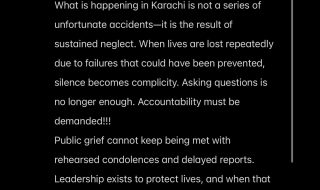
What is happening in Karachi, she emphasised, is not a random series of unfortunate accidents. Instead, it is the result of sustained neglect. When lives continue to be lost due to failures that could have been avoided, silence no longer remains neutral. In fact, it becomes complicity. Therefore, merely asking questions is no longer enough. Accountability, as Durefishan stressed, must be demanded—loudly and consistently.
When Condolences Replace Consequences
Time and again, Karachi witnesses tragedies followed by the same predictable cycle. First comes shock, then public grief, followed by rehearsed condolences and delayed reports. Eventually, attention fades, and promises quietly dissolve. Unfortunately, this pattern has become so familiar that outrage now feels temporary, while loss feels permanent. As a result, citizens are left wondering whether leadership remembers that its primary role is to protect lives.
Durefishan’s words cut through this exhausting routine. She reminded everyone that leadership exists for protection, not public relations. When that protection fails repeatedly, consequences must follow. Otherwise, statements mean nothing, and promises become empty noise. Moreover, when tragedies occur under a system’s watch, those at the helm must answer for them. Accountability cannot remain optional when lives are on the line.
What makes her stance particularly powerful is its clarity. She did not hide behind vague language or soften the truth. Instead, she directly challenged the culture of delayed responsibility. Public grief, she implied, deserves more than sympathy posts and press conferences. It deserves urgency, reform, and visible action. Without that, every condolence feels like an insult to those who never made it home.
Why Karachi Deserves More Than Words
Karachi is not asking for miracles. It is asking for basic safety, functioning systems, and leadership that responds before tragedy strikes—not after. Yet, every new incident exposes the same cracks, the same indifference, and the same lack of preparedness. Consequently, frustration continues to grow, especially when voices demanding change are met with silence or deflection.
By speaking out, Durefishan Saleem challenged not just authorities but also the uncomfortable expectation that celebrities should remain apolitical and quiet. She reframed visibility as a responsibility, not a privilege. In doing so, she echoed what many citizens feel but struggle to be heard saying. Karachi deserves more than statements and promises. It deserves action, urgency, and a system that values human life over damage control.
Ultimately, her message wasn’t about fame or outrage. It was about refusing to normalise loss. It was about demanding that preventable tragedies stop being treated as fate. And most importantly, it was about reminding everyone in power that when systems fail repeatedly, accountability is not optional it is overdue.
Stay tuned to Brandsynario for the latest news and updates

 Join a Channel
 Brandsynario
 Veryfilmi