















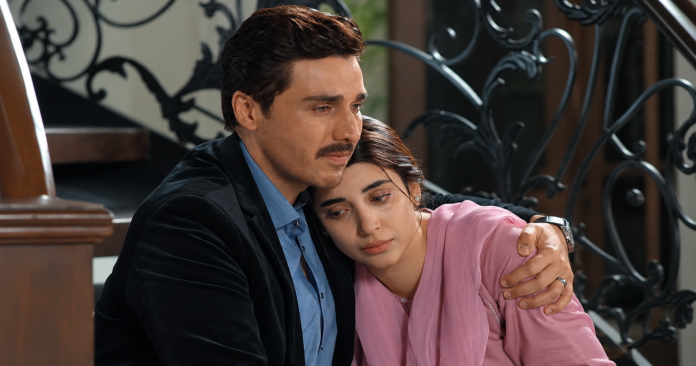

Aap Ki Izzat has officially come to an end, leaving viewers emotional, divided, and eager to discuss the final chapter of Beena and Tabish’s complicated marriage. Written by Umera Ahmed and directed by Saife Hassan, the Pakistani drama explored marital conflict, emotional neglect, ego, forgiveness, and the struggle to preserve dignity within a relationship.
Key Takeaways
- Aap Ki Izzat concludes with Beena and Tabish reconciling after a difficult marital journey.
- Urwa Hocane plays Beena, while Ahsan Khan portrays Tabish.
- The drama was written by Umera Ahmed and directed by Saife Hassan.
- The finale features an emotional forehead kiss that symbolises regret, acceptance, and a fresh start.
- Many viewers welcomed the happy ending as a message about love, forgiveness, and personal growth.
- Other viewers felt that the reconciliation happened too quickly and did not fully address Beena’s emotional pain.
- Sania Saeed’s portrayal of Maa Ji adds emotional and cultural depth to the story.
- The drama explores emotional neglect, marital conflict, ego, forgiveness, and the expectations placed on women in marriage.
- The ending has sparked discussions about whether forgiveness alone can repair a relationship or whether lasting change requires accountability and consistent effort.
The last episode of Aap Ki Izzat brings Beena, played by Urwa Hocane, and Tabish, portrayed by Ahsan Khan, back together after a long journey filled with heartbreak and emotional turmoil. Their reconciliation offers the happy ending many viewers hoped for, but it has also raised questions about whether the couple’s reunion truly reflects the emotional damage they experienced throughout the story.
While some viewers welcomed the ending as a heartfelt reminder that people can recognise their mistakes and rebuild relationships, others felt that the drama resolved years of pain too quickly. The final episode has therefore sparked a wider discussion about forgiveness, accountability, and the expectations placed on women in marriage.
Beyond the debate surrounding its conclusion, Aap Ki Izzat earned attention for its performances, emotionally charged scenes, and portrayal of the complicated dynamics that can shape a marriage.
Aap Ki Izzat Last Episode: Beena and Tabish Finally Reconcile
The final episode of Aap Ki Izzat brings Beena and Tabish’s troubled relationship to a moment of reconciliation. After enduring emotional pain, misunderstandings, and the consequences of their choices, the couple find a way back to each other.
Their reunion offers a sense of closure to a story that has consistently explored the fragility of trust and the difficulty of repairing a damaged marriage.
One of the most emotional moments comes when Tabish and Beena share a tender forehead kiss. The gesture becomes a symbol of regret, acceptance, and the possibility of beginning again. Rather than ending their story with separation, the drama chooses to give the couple another chance.
For viewers who had invested in their relationship, the moment delivered the emotional payoff they wanted. The reunion suggests that recognising one’s mistakes and accepting forgiveness can open the door to a new beginning.
However, the happy ending also raises an important question. Does reconciliation automatically mean that a relationship has healed?
The finale leaves viewers reflecting on whether Beena and Tabish have genuinely resolved the issues that damaged their marriage or whether their reunion represents the first step toward a longer process of healing.
Why Aap Ki Izzat’s Happy Ending Has Divided Viewers
The Aap Ki Izzat ending has generated different reactions because viewers interpreted Beena and Tabish’s reconciliation through different ideas about love, marriage, and personal dignity.
Some viewers welcomed the decision to reunite the couple, arguing that a relationship does not have to end permanently because of mistakes. They viewed Tabish’s realisation and Beena’s willingness to forgive as an important part of the drama’s emotional message.
Others questioned whether the conclusion gave enough weight to the pain Beena experienced. They felt that the story could have explored the consequences of Tabish’s actions more deeply before bringing the couple back together.
The disagreement reflects two distinct ways of understanding the finale.
For one group, the ending celebrates the possibility of rebuilding a relationship through remorse and forgiveness. For another, the reconciliation feels incomplete because the emotional damage appears to receive less attention than the couple’s reunion.
This difference in interpretation has become one of the most discussed aspects of the drama’s conclusion.
Urwa Hocane and Ahsan Khan’s Performances Become the Highlight of Aap Ki Izzat
One aspect of Aap Ki Izzat that received widespread appreciation was the lead cast’s performances.
Urwa Hocane, who plays Beena, and Ahsan Khan, who portrays Tabish, brought emotional depth to a relationship shaped by conflict, disappointment, and changing expectations.
Their performances required them to portray characters dealing with complicated emotions and shifting relationship dynamics. Beena’s vulnerability and emotional exhaustion contrasted with Tabish’s gradual realisation of his mistakes.
The actors brought intensity to the confrontations between their characters, making the couple’s struggles central to the viewing experience.
Their performances also helped communicate the emotional distance that developed between Beena and Tabish. As the story progressed, the characters faced difficult questions about trust, respect, and whether their relationship could survive the damage caused by their choices.
The final reconciliation gave both actors an opportunity to portray a different emotional register, moving from conflict toward tenderness and acceptance.
Viewers praised their chemistry and the emotional weight they brought to the drama. Many felt that the performances made the couple’s journey memorable, regardless of whether they agreed with the ending.
Sania Saeed’s Maa Ji Adds Emotional Weight to the Drama
Sania Saeed’s portrayal of Maa Ji contributed to the emotional and cultural depth of Aap Ki Izzat.
As a veteran performer, she brought a grounded presence to the story, helping establish the family dynamics and social expectations surrounding Beena and Tabish’s marriage.
Her character added another perspective to the drama’s exploration of relationships, family responsibilities, and the pressures that often influence decisions within a household.
The presence of an experienced supporting cast member also strengthened the emotional atmosphere of the story. Maa Ji’s role helped connect the couple’s personal struggles to the wider family environment in which their relationship unfolded.
The drama’s supporting performances complemented the central storyline, giving its themes of dignity, emotional endurance, and reconciliation a broader context.
Tabish and Beena’s Reunion: Is Forgiveness Enough to Repair a Marriage?
The central question raised by the Aap Ki Izzat finale is whether forgiveness alone can repair a relationship after prolonged emotional pain.
The drama presents Beena and Tabish’s reunion as an opportunity for a fresh start. Tabish’s realisation of his mistakes and Beena’s decision to forgive him create the emotional foundation for their reconciliation.
For many viewers, this message felt meaningful because relationships often involve mistakes, difficult conversations, and the challenge of rebuilding trust.
One viewer expressed this sentiment through the idea that recognising a mistake and forgiving another person can represent genuine love.
However, forgiveness and reconciliation are not necessarily the same as healing. A relationship may require honest communication, consistent changes in behaviour, and a willingness to acknowledge the harm caused before both partners can move forward.
This distinction lies at the heart of the debate surrounding the finale.
Some viewers wanted to see Tabish demonstrate a deeper understanding of Beena’s pain before the story brought them back together. Others felt that the reunion itself communicated the drama’s message about accepting imperfections and allowing people to change.
The ending leaves room for both interpretations, making the couple’s future an important part of the audience’s discussion.
Did Aap Ki Izzat Rush Beena’s Healing Process?
One of the main criticisms of the final episode concerns the pace of Beena’s emotional recovery.
Throughout the drama, Beena experiences the consequences of a difficult marriage and struggles with the emotional impact of her relationship with Tabish. Her journey highlights how neglect, conflict, and a lack of understanding can affect a person’s confidence and sense of self-worth.
For viewers who connected deeply with Beena’s struggles, the happy ending may have felt too sudden.
They wanted the story to spend more time exploring how she processed her pain, regained her confidence, and decided whether she could trust Tabish again.
The reconciliation provides emotional closure, but some viewers felt that the journey toward that moment deserved greater attention.
A slower resolution could have explored the steps required to rebuild trust and shown how both characters planned to approach their relationship differently.
At the same time, the drama’s conclusion can be interpreted as the beginning of Beena’s healing rather than proof that all her struggles have disappeared.
The difference between these interpretations explains why the finale has generated such varied reactions.
Aap Ki Izzat Explores Women’s Emotional Needs and Expectations in Marriage
Beyond the relationship between Beena and Tabish, Aap Ki Izzat explores the emotional expectations placed on women within marriage.
Beena’s journey reflects the pressure many women face to preserve relationships, manage family responsibilities, and navigate emotional neglect while maintaining their sense of dignity.
The drama also raises questions about how society interprets a woman’s reactions during marital conflict.
One viewer described a familiar relationship dynamic in which a woman may ask for distance while still hoping that her partner will make an effort to understand her feelings.
This interpretation reflects a traditional romantic expectation that persistence can demonstrate love and commitment. However, the same dynamic also raises questions about emotional boundaries and whether repeated attempts to reconcile always serve the needs of both partners.
The distinction matters because emotional endurance should not be treated as the only measure of commitment.
Beena’s story invites viewers to consider whether love requires constant sacrifice or whether a healthy marriage must also make room for mutual respect, communication, and personal dignity.
Does Aap Ki Izzat Romanticise Emotional Suffering?
The debate surrounding Beena and Tabish’s reunion also touches on a broader question about how television dramas portray difficult marriages.
Some viewers felt that the happy ending risked making prolonged emotional suffering appear acceptable as long as the couple eventually reconciled.
Others interpreted the conclusion differently, viewing it as a story about accountability, personal growth, and the possibility of repairing a relationship after mistakes.
The distinction depends partly on how viewers understand the characters’ emotional journeys.
A reconciliation can be meaningful when both partners recognise the harm caused and take responsibility for changing their behaviour. However, a reunion may feel incomplete if the story does not sufficiently address the underlying problems.
Aap Ki Izzat places these questions at the centre of its ending without providing a detailed account of what married life will look like for Beena and Tabish after their reconciliation.
This open-ended quality allows viewers to reflect on the relationship beyond the final scene.
Umera Ahmed and Saife Hassan Bring Aap Ki Izzat to a Close
Written by Umera Ahmed and directed by Saife Hassan, Aap Ki Izzat built its story around the emotional complexities of marriage and the consequences of ego, neglect, and damaged trust.
The drama’s narrative focused on the changing relationship between Beena and Tabish, using their struggles to explore questions about family expectations, personal dignity, and the possibility of forgiveness.
The final episode brings these themes together through the couple’s reconciliation.
While the ending offers emotional closure, it also leaves viewers considering whether the characters have fully confronted the issues that brought them to the brink of separation.
The drama’s conclusion has therefore become more than a simple question of whether the couple ends up together. It has prompted discussions about what a happy ending should represent when a relationship has endured prolonged emotional conflict.
Social Media Reactions to Aap Ki Izzat’s Last Episode
The final episode of Aap Ki Izzat sparked a range of reactions from viewers who had followed Beena and Tabish’s relationship.
Many praised Urwa Hocane and Ahsan Khan for bringing emotional depth to their characters. Their performances continued to be a key focus as viewers discussed the couple’s reconciliation.
Some viewers welcomed the happy ending and appreciated the message that recognising mistakes and forgiving one another can help a relationship to move forward.
Others questioned whether the conclusion gave Beena enough space to heal and whether Tabish’s actions received sufficient consequences.
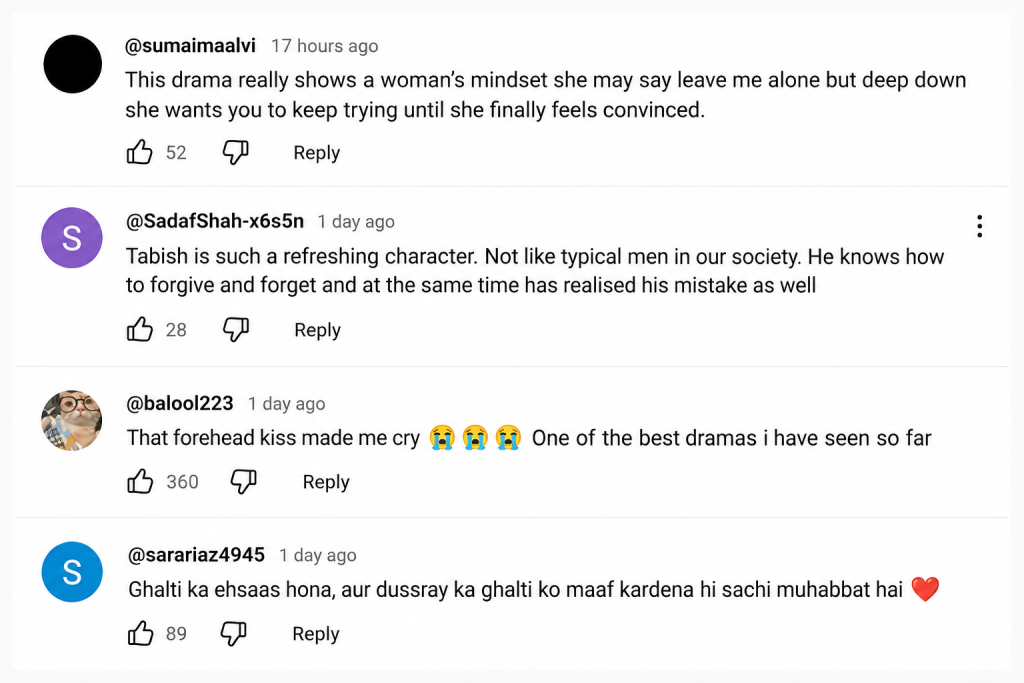
The debate also reflected different expectations from Pakistani television dramas. While some audiences prefer emotionally satisfying conclusions, others look for endings that explore the long-term consequences of a character’s choices.
The contrasting reactions show how strongly viewers connected with the characters and the issues raised throughout the drama.
What Aap Ki Izzat’s Ending Says About Love, Respect, and Dignity
The final episode of Aap Ki Izzat places forgiveness at the centre of its conclusion, but it also raises important questions about the role of respect and accountability in marriage.
Beena and Tabish’s reunion suggests that a relationship can move forward after painful experiences when both people are willing to acknowledge their mistakes.
At the same time, the debate surrounding the finale highlights the importance of recognising the emotional consequences of these mistakes.
A happy ending does not necessarily mean that every problem has disappeared. It can also represent the beginning of a new chapter in which both partners must work to rebuild trust and create a healthier relationship.
The drama leaves viewers to decide how they interpret that possibility.
For some, Beena and Tabish’s reunion represents the healing power of forgiveness. For others, it raises concerns about how much emotional responsibility a woman is expected to carry in order to preserve a marriage.
Both interpretations underline the central themes that made the drama’s conclusion so widely discussed.
View this post on Instagram
Aap Ki Izzat Ending Explained: What Happened to Beena and Tabish?
The final episode concludes with Beena and Tabish reconciling after the emotional challenges that shaped their marriage.
Their reunion, marked by a tender forehead kiss, symbolises regret, acceptance, and the possibility of a fresh start.
The ending offers closure to the couple’s relationship while leaving viewers debating whether their reconciliation feels fully earned.
The story does not show how the couple will rebuild their marriage after the drama. Instead, it ends with a sense of hope, allowing the audience to imagine what comes next.
This decision has become a major part of the conversation surrounding the finale.
FAQs
Q1. How does Aap Ki Izzat end?
A: Aap Ki Izzat ends with Beena and Tabish reconciling after a difficult period in their marriage. Their reunion offers a hopeful conclusion and suggests that they are willing to begin again.
Q2. Do Beena and Tabish get back together in Aap Ki Izzat?
A: Yes. Beena and Tabish reconcile in the final episode, bringing their troubled relationship to a hopeful conclusion.
Q3. Who plays Beena in Aap Ki Izzat?
A: Urwa Hocane plays Beena, the central female character in the drama.
Q4. Who plays Tabish in Aap Ki Izzat?
A: Ahsan Khan portrays Tabish, Beena’s husband, whose actions and changing understanding of their relationship shape much of the story.
Q5. Who wrote Aap Ki Izzat?
A: Umera Ahmed wrote Aap Ki Izzat.
Q6. Who directed Aap Ki Izzat?
A: Saife Hassan directed the drama.
Q7. What was the most emotional moment in Aap Ki Izzat’s finale?
A: One of the most emotional moments is the forehead kiss shared by Beena and Tabish during their reconciliation. The gesture symbolises regret, acceptance, and the possibility of a fresh start.
Q8. Why are viewers divided over Aap Ki Izzat’s ending?
A: Some viewers welcomed the happy ending and appreciated the message of forgiveness. Others felt that the reconciliation happened too quickly and that the drama should have explored Beena’s healing and Tabish’s accountability in greater depth.
Q9. What message does Aap Ki Izzat convey about marriage?
A: The drama explores how ego, emotional neglect, and damaged trust can affect a marriage. Its ending highlights forgiveness and reconciliation while prompting discussions about mutual respect, accountability, and emotional well-being.
Q10. Did Aap Ki Izzat have a happy ending?
A: Yes. The drama concludes with Beena and Tabish reuniting, offering a hopeful ending despite the emotional challenges they experienced throughout the story.
Stay tuned to Brandsynario for the Latest Entertainment News and updates.

 Join a Channel
 Brandsynario
 Veryfilmi