














Pakistan’s 48-run win over India A in the Asia Cup Rising Stars on 22 November was built on more than a good day with the bat. At Doha’s West End Park International Cricket Stadium, the Shaheens posted 313 and bowled India out for 265, exposing a question that has followed Pakistan cricket for years: why does the senior team struggle to produce the same level of conviction against India?
Key Takeaways
- Pakistan A made 313, with Hasan Nawaz scoring 79, Maaz Sadaqat 59 and Farhan Yousaf 56.
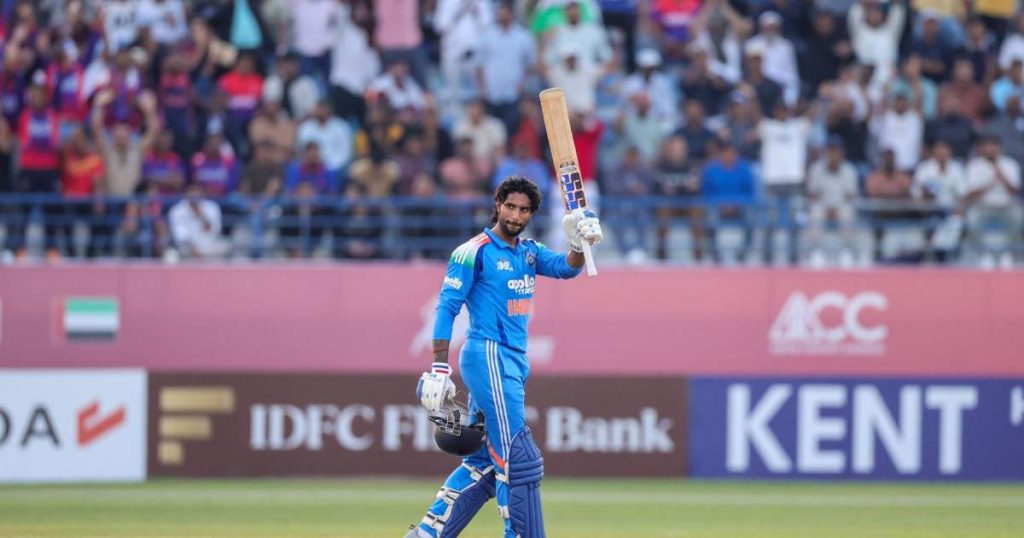
- India A were dismissed for 265. Tilak Varma made 100, while Hasan and Ali Raza took three wickets each.
- Pakistan’s senior side has won 88 of the 213 matches in the supplied all-format head-to-head tally.
A Strong Start, Then a Timely Finish
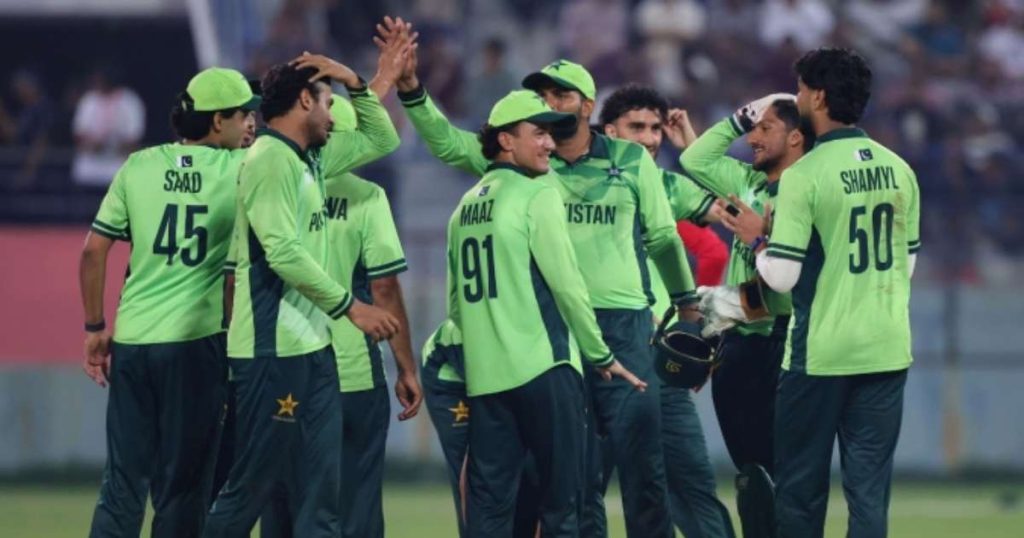
Pakistan did not wait around to settle into the innings. Shamyl Hussain and Maaz Sadaqat added 66, taking the attack to India’s new-ball bowlers. Shamyl struck boundaries off Harshit Rana and Prince Yadav, while Sadaqat found his rhythm quickly.
India’s spinners then pulled things back. Shamyl fell, Rohail Nazir departed for a duck and the scoring rate slowed. But Hasan Nawaz and Sadaqat rebuilt the innings before accelerating again. Sadaqat made 59, while Nawaz struck 79 from 82 balls.
Farhan Yousaf’s 56 from 48 deliveries proved just as useful. Pakistan had lost wickets during the final overs, but his late hitting pushed the total to 313. It was not a flawless innings. It was an innings in which different players stepped up when the situation demanded it.
India’s chase looked in trouble at 129 for six. Abhishek Sharma had already made 70 from 42 balls, but Tilak Varma kept the contest alive. His century and partnership with Shahbaz Ahmed briefly put Pakistan under pressure.
The turning point came when Pakistan stopped the flow of boundaries for 30 balls. Shahbaz fell for 56, Ali Raza dismissed Vipraj Nigam with the next delivery, and Mohammad Imran removed Harshit Rana. Tilak was eventually the last wicket to fall. Hasan finished with 3 for 45 and Ali Raza took 3 for 56.
PAK A vs. IND A: The Bigger Picture
The senior rivalry tells a rather different story. Pakistan still leads the supplied historical tally in overall wins, largely because of its record in earlier decades. Yet recent results have shifted heavily in India’s favour.
| Format | Matches | Pakistan wins | India wins |
|---|---|---|---|
| Tests | 59 | 12 | 9 |
| ODIs | 136 | 73 | 58 |
| T20Is | 18 | 3 | 15 |
| Overall | 213 | 88 | 82 |
The supplied figures count 43 matches as draws, ties or no-results. Some records classify the 2007 T20 World Cup bowl-out differently.
Pakistan’s last senior international win over India came in the 2022 Asia Cup Super Four. Since then, India has won 10 of 11 meetings, with one washed out. Defeats in the 2023 ODI World Cup, 2025 Champions Trophy and Asia Cup, and the 2026 T20 World Cup and Asian Games, have made the gap difficult to ignore.
The Problem Goes Beyond Pressure
Pakistan’s batting has often depended on a cautious start and a late acceleration. That approach leaves little room for error when early wickets fall. India’s white-ball teams, meanwhile, have become more comfortable attacking throughout an innings. Their players also arrive with extensive experience of high-scoring matches and different bowling styles.
Preparation matters too. A team needs clear plans for individual opponents, particularly against spin in the middle overs. Pakistan’s senior side has too often looked reactive when its first bowling plan fails. Frequent changes in coaches, captains and selection have also made it difficult to build a settled approach.
There is a difference between giving players freedom and leaving them without defined roles. The senior team needs both confidence and accountability. Better fielding, sharper running between the wickets and more reliable middle-order options would help close the gap.
What the Senior Side Can Take From This Win
The lesson is not that young players are automatically better. It is that a team looks more dangerous when selection matches ability, roles remain clear and players know what is expected of them.
Hasan Nawaz, Maaz Sadaqat and Farhan Yousaf showed the value of having several batters capable of changing the pace of an innings. Ali Raza’s spell also showed why Pakistan needs bowlers who can take wickets when a partnership threatens to shift a match.
For the senior side, the answer starts with continuity. Coaches and selectors need a longer-term plan, not another overhaul after a disappointing series. Batters must practise scoring against quality spin, while the bowling unit needs plans beyond early swing.
FAQs
1. Who won the match?
Pakistan A won by 48 runs.
2. Who was Player of the Match?
Hasan Nawaz, for 79 runs and three wickets.
3. When did Pakistan last beat India at senior international level?
4 September, 2022, in the Asia Cup Super Four.
Stay tuned to Brandsynario for latest Sports News and updates

 Join a Channel
 Brandsynario
 Veryfilmi