

















Nearly five decades after its launch, NASA’s Voyager 1 is preparing to cross a distance no human-made spacecraft has reached before. On 18 November, 2026, it is set to reach one light-day from Earth, approximately 16.1 billion miles away, taking the record from Pioneer 10. The achievement also means a 24-hour wait for every message travelling between the spacecraft and Earth.
Key Takeaways
- The spacecraft will reach approximately 16.1 billion miles from Earth.
- Pioneer 10 held the previous distance record from 1998.
- Its remaining instruments continue studying magnetic fields and plasma waves in interstellar space.
A Record Nearly Three Decades in the Making
A light-day is the distance light travels in 24 hours. For a spacecraft this far away, that translates into a one-way communication delay of an entire day. A command sent from Earth takes 24 hours to arrive, and scientists must wait another day for a response.
The previous record belonged to Pioneer 10, which became the most distant human-made object in 1998. The new milestone will put Voyager 1 ahead of that spacecraft, extending a record-breaking journey that began in September 1977. It also gives scientists a remarkable way to measure just how far human engineering has travelled.
From Jupiter and Saturn to Interstellar Space
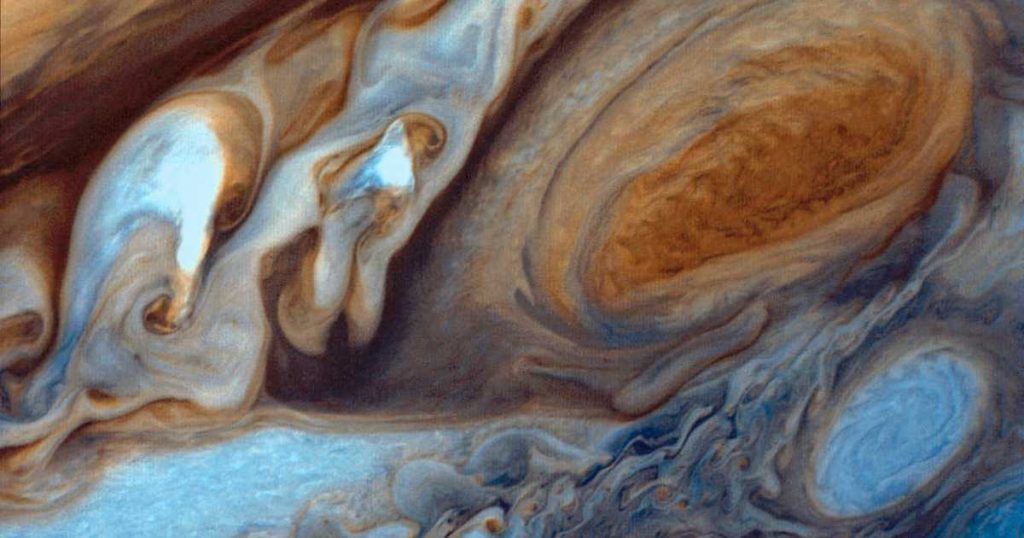
NASA launched the probe to explore the outer planets. It passed Jupiter in 1979, sending back close-up observations of the planet and its moons. A year later, it flew past Saturn, studying its rings and the moon Titan before continuing towards the edge of the solar system.
In 2012, it crossed into interstellar space, the vast region beyond the Sun’s protective bubble. Its twin, Voyager 2, followed in 2018 after visiting Jupiter, Saturn, Uranus and Neptune. The two spacecraft now travel in different directions, giving scientists measurements from separate regions of interstellar space.
What Is It Still Teaching Scientists?
Despite its age, the spacecraft continues to return information about an environment no other operating probe has explored. Its instruments have helped researchers study magnetic fields, plasma waves, dust and galactic cosmic rays. Only two instruments remain operational today: the magnetometer and the plasma wave subsystem.
That data has already challenged scientific expectations. In 2020, researchers detected a sudden increase in magnetic field intensity and electron plasma density. Both remained elevated instead of falling as scientists had expected. These findings help researchers refine their models of interstellar space and understand how material beyond our solar system behaves.
Also Read: NASA SLS Rocket Creates Huge Upper Atmosphere Hole, Affects GPS Signals
NASA’s Artemis II Rocket Tore Two Huge Holes in Earth’s Atmosphere: GPS Signals Were Affected
A Small Team Keeps the Mission Alive
Keeping a spacecraft operating for nearly 50 years takes constant work. Its plutonium-powered energy supply loses about four watts annually, forcing NASA to switch off equipment to conserve power. A small team at the Jet Propulsion Laboratory in California still monitors its systems and sends commands.
The mission also carries something beyond scientific instruments. Both Voyager probes contain a gold-plated record with greetings in 55 languages, photographs and sounds from Earth. Designed as a message to potential extraterrestrial life, it offers a snapshot of humanity in 1977. Project manager Suzanne Dodd has described the spacecraft as “a national treasure.”
The probe may eventually lose the power to communicate, but its journey will not end there. It will continue travelling through the galaxy, carrying its Golden Record long after its final signal reaches Earth.
FAQs
1. What is one light-day?
The distance light travels in 24 hours.
2. Which spacecraft held the previous distance record?
NASA’s Pioneer 10, since 1998.
3. Is the spacecraft still sending data?
Yes, two scientific instruments remain operational.
Stay tuned to Brandsynario for the latest news and updates

 Join a Channel
 Brandsynario
 Veryfilmi