















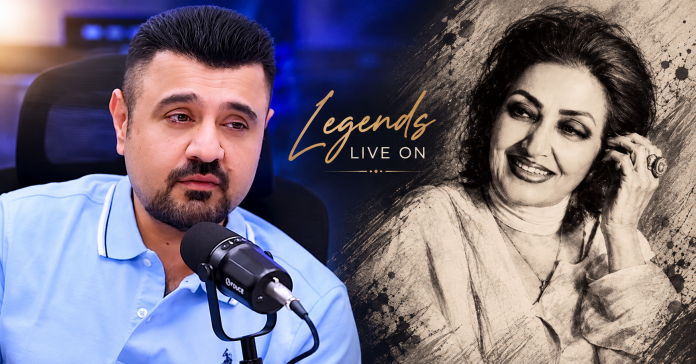

Ahmed Ali Butt has raised difficult questions about how Pakistan remembers its cultural legends after his grandmother, legendary singer Noor Jehan, reached what would have been her 100th birthday.
Key Takeaways
- Ahmed Ali Butt expressed disappointment over what he described as the lack of a major public tribute for Noor Jehan’s 100th birthday.
- Butt questioned the absence of a PTV special transmission, dedicated television shows and visible public tributes celebrating the legendary singer.
- Noor Jehan was born in 1926 and became one of the most influential voices in Pakistani music and cinema.
- Her career spanned film, playback singing, patriotic music and multiple languages, making her contribution an important part of Pakistan’s cultural history.
- Noor Jehan’s songs, including iconic milli naghmay, continue to resonate with audiences decades after their release.
- Butt also raised concerns about the documentation, copyright protection and preservation of Pakistani artists’ work.
- The discussion surrounding her centenary highlights the importance of preserving recordings, films, photographs and other cultural archives.
- Noor Jehan’s legacy continues through her music, but Butt’s post raises questions about whether Pakistan is doing enough to institutionally preserve and celebrate its cultural icons.
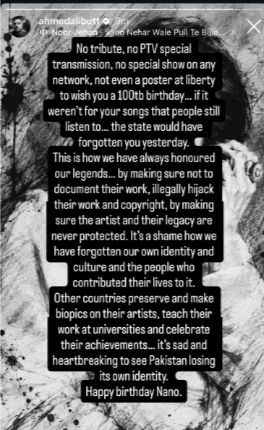
In a series of Instagram Stories, Butt expressed disappointment over what he described as the lack of a major public tribute for the Queen of Melody, arguing that the country has failed to adequately preserve and celebrate the legacy of one of its most influential artists.
According to various Pakistani sources, Noor Jehan was born Allah Wasai in Kasur on 21 September 1926. Some histories cite other dates, but 21 September 1926 is the date most commonly used in modern commemorations.
As Pakistan celebrated the 100th anniversary of her birth, renewed focus was placed on the singer’s extraordinary contribution to music, cinema, and the cultural identity of the country.
Her songs continue to reach audiences decades after their original release, making Butt’s criticism less about whether Noor Jehan is still remembered by listeners and more about how institutions preserve and publicly honour national cultural figures.
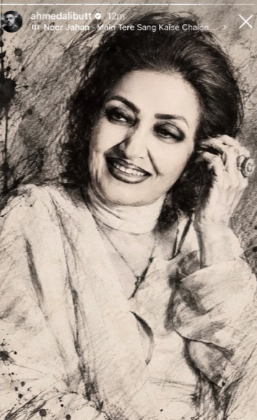
Ahmed Ali Butt Questions the Lack of a Major Noor Jehan Tribute
Ahmed Ali Butt expressed his disappointment over what he saw as a lack of significant public recognition for Noor Jehan’s 100th birthday.
In his Instagram Stories, Butt pointed out the absence of what he called a PTV special transmission, a dedicated television show or a notable public birthday tribute.
He also wondered why there was no public celebration, such as a commemorative poster, at Liberty.
His message represented a much bigger concern. The strongest reminder of Noor Jehan’s contribution, said Butt, is her songs, but he questioned whether Pakistan’s institutions have done enough to preserve the artist and her work.
He also criticised the general treatment of artists, expressing concerns about documentation, copyright protection, and the safeguarding of artists’ legacies.
Butt ended his message by wishing his grandmother a happy birthday and expressing his love for her as “Nano.”
Noor Jehan’s 100th Birthday Revives the Conversation Around Her Legacy
Noor Jehan’s centenary provides an important opportunity to look back at the extraordinary scale of her career.
She began performing as a child and later established herself as both an actress and singer. After Partition, she became one of the defining voices of Pakistan’s developing film and music industries.
Dawn has described Noor Jehan as an artist whose career spanned more than six decades. She worked across Urdu, Punjabi and Sindhi music and recorded thousands of songs throughout her career.
Her influence extended far beyond conventional film songs. During the 1960s, Noor Jehan became closely associated with patriotic music, particularly during the 1965 war. Her performances of milli naghmay became deeply embedded in the public memory of that period.
That history explains why Noor Jehan’s legacy remains larger than her discography. Her voice became part of the cultural soundtrack of Pakistan itself.
Why Noor Jehan Remains Relevant 100 Years Later
A century after her birth, Noor Jehan’s music continues to circulate across generations.
Songs such as “Mujh Se Pehli Si Muhabbat”, “Chandni Raatein”, “Sanu Nehar Wale Pul Te” and “Aye Puttar Hattan Te Nahi Wikde” remain familiar to Pakistani audiences. Dawn’s centenary coverage highlighted how her songs continue to resonate with listeners even decades after their release.
Her repertoire also demonstrated remarkable range.
Noor Jehan could move between romantic songs, ghazals, Punjabi music, devotional material and patriotic numbers without losing the distinctive quality of her voice. Her career also crossed multiple phases of South Asian entertainment, from pre-partition cinema to the development of Pakistan’s own film industry.
That versatility helped make her more than a popular singer. She became a cultural reference point.
Noor Jehan Helped Shape Pakistan’s Early Film Industry
Noor Jehan’s contribution began before Pakistan’s creation, but she played an important role in the country’s early entertainment industry after Partition.
In 1947, she migrated to Pakistan and worked as an actress and singer in films. She also directed and acted in Chan Wey, which became an important part of her post-Partition career.
In the first few years of Pakistan, the film industry faced many problems, as most of the established infrastructure was left on the other side of the newly drawn borders. Noor Jehan was one of the major artists who helped build the country’s entertainment culture during that formative period.
Her career therefore represents more than individual success. It forms part of the history of Pakistani cinema itself.
From Film Songs to Milli Naghmay, Noor Jehan Created a Cultural Legacy
One of Noor Jehan’s most enduring contributions came through patriotic music.
During the 1965 war, she recorded and performed songs that became closely associated with national morale. Her voice appeared on radio and television at a time when television was still developing as a mass medium in Pakistan.
Her patriotic repertoire included songs that remained part of public memory long after the events that inspired them.
“Aye Puttar Hattan Te Nahi Wikde” became particularly iconic. The song continued to appear in public and sporting contexts, demonstrating how Noor Jehan’s music moved beyond cinema and entered wider national culture.
This history makes the question of preservation especially significant. Much of Noor Jehan’s work does not exist simply as entertainment. It also provides a record of Pakistan’s musical, cinematic and social history.
Ahmed Ali Butt’s Criticism Goes Beyond One Birthday
Butt’s Instagram Stories did not focus only on the absence of a birthday celebration.
His criticism addressed a recurring concern about how Pakistan treats its cultural heritage. He questioned the lack of proper documentation and protection for artists and their work and argued that the country needs stronger systems for preserving its creative history.
This distinction matters.
A tribute can celebrate an artist for a day, but preservation determines whether future generations can actually access that artist’s work.
For an artist with a career spanning decades, preservation involves much more than replaying famous songs. It can include maintaining recordings, restoring films, documenting interviews, archiving photographs, protecting copyrights, cataloguing compositions and making historical material accessible to researchers and audiences.
Noor Jehan’s career provides an especially important example because her work spans several generations of South Asian media.
The Importance of Preserving Noor Jehan’s Music and Films
Noor Jehan recorded thousands of songs and worked in films across different languages and eras.
That enormous body of work creates an equally enormous preservation challenge.
Some songs remain easily accessible through digital platforms, television broadcasts and social media. Others are harder to locate. Films, interviews, photographs and historical recordings can also deteriorate or disappear if institutions do not properly archive them.
Preserving an artist’s legacy therefore requires a long-term approach.
Digital archives can help protect recordings from physical deterioration. Proper cataloguing can help researchers identify previously overlooked work. Restored films can introduce classic performances to younger audiences. Educational programmes can also place the artist’s work within the broader history of Pakistani cinema and music.
These efforts can turn nostalgia into historical preservation.
Pakistan Has Continued to Remember Noor Jehan, But Butt Wants More
Ahmed Ali Butt’s criticism should also be viewed alongside the fact that Noor Jehan has continued to receive recognition over the years.
Her music has appeared repeatedly in retrospectives, newspaper features and cultural discussions. Dawn has published multiple tributes examining her career, influence and enduring songs.
Google also previously honoured Noor Jehan with a commemorative doodle, demonstrating that her legacy has received international digital recognition.
Her 100th birthday also generated fresh coverage. Dawn published a centenary feature revisiting five of her classic songs, while The Express Tribune reported on her birth anniversary and highlighted her career, awards and contribution to music.
The debate, therefore, is not necessarily about whether Noor Jehan has been forgotten completely.
Instead, Butt’s post raises a different question: Has Pakistan done enough to preserve and publicly celebrate the legacy of an artist of her scale?
Noor Jehan’s Legacy Belongs to More Than One Family
For Ahmed Ali Butt, Noor Jehan will always be his grandmother and “Nano.” For Pakistan, however, her legacy extends far beyond her family.
She was part of the country’s earliest cultural history, helped shape Pakistani cinema and became one of its most recognisable musical voices.
Her songs crossed linguistic and generational boundaries. Her work with major poets and composers connected music with some of the most important literary and artistic figures of the region. Her patriotic songs became part of Pakistan’s collective memory, while her romantic and classical performances remained part of everyday listening culture.
That makes the preservation of her work a national cultural issue rather than simply a family concern.
What Ahmed Ali Butt’s Noor Jehan Post Has Started
Ahmed Ali Butt’s message has brought an old conversation back into public view at a particularly significant moment.
Noor Jehan’s 100th birthday is an opportunity not only to replay her most famous songs but also to ask what happens to the thousands of recordings, films, photographs, interviews and stories connected to artists who shaped Pakistan’s cultural identity.
The most meaningful tribute may not end with a birthday post or a television special.
It could involve creating better archives, protecting artistic rights, restoring old recordings and films, documenting the experiences of surviving collaborators and ensuring that young Pakistanis can study and discover the work of artists such as Noor Jehan.
A century after her birth, Noor Jehan’s voice clearly remains alive.
The question raised by Ahmed Ali Butt is whether the institutions responsible for preserving Pakistan’s cultural history are doing enough to make sure that legacy survives with it.
Noor Jehan at 100: A Legacy That Still Lives Through Her Voice
Noor Jehan died in Karachi on 23 December 2000, at the age of 74, but her music has continued to outlive her by decades.
Her voice still appears in playlists, television retrospectives, cultural programmes and conversations about Pakistan’s greatest singers.
That endurance is perhaps the clearest evidence of her importance.
Yet Ahmed Ali Butt’s emotional post adds another dimension to that legacy. Remembering Noor Jehan through her songs is one thing. Preserving the history behind those songs is another.
As Pakistan marks 100 years since the birth of its Queen of Melody, the discussion around Noor Jehan is ultimately a discussion about cultural memory itself: what the country chooses to preserve, how it documents its artists and what it leaves behind for the next generation.
And for Noor Jehan, the music has already survived.
The challenge now is making sure the history survives with it.
FAQs
Q1. Who is Noor Jehan?
Noor Jehan was a legendary Pakistani singer and actress who became one of the most influential voices in South Asian music and cinema.
Q2. What did Ahmed Ali Butt say about Noor Jehan’s 100th birthday?
Ahmed Ali Butt expressed disappointment over what he described as the lack of major public celebrations and institutional tributes for Noor Jehan’s 100th birthday.
Q3. Why did Ahmed Ali Butt criticise Pakistan’s treatment of Noor Jehan?
Butt questioned the lack of public recognition and raised broader concerns about documenting artists’ work, protecting copyrights and preserving Pakistan’s cultural heritage.
Q4. When was Noor Jehan born?
Noor Jehan was born in 1926, with 21 September commonly cited as her birth date. Some historical sources have cited 23 September.
Q5. What was Noor Jehan famous for?
Noor Jehan became famous for her work as a singer and actress. She also became particularly renowned for her patriotic songs during the 1965 war.
Q6. Why is Noor Jehan important to Pakistani culture?
Her career helped shape Pakistani cinema and music, while her songs became part of the country’s cultural and historical memory.
Q7. Did Noor Jehan only sing film songs?
No. Her repertoire included film songs, romantic music, ghazals, Punjabi songs and patriotic music.
Q8. What larger issue did Ahmed Ali Butt’s post highlight?
His post brought attention to the broader question of how Pakistan documents, protects and preserves the work of its legendary artists for future generations.
Stay tuned to Brandsynario for the Latest Entertainment News and updates.

 Join a Channel
 Brandsynario
 Veryfilmi