
















Typhoon Dolphin has begun to weaken as it moves across eastern China on Monday, August 10. The storm is bringing heavy rain and violent travel disruptions in its wake. It triggered a massive emergency response, forcing over a million residents to evacuate their homes across the region, including the financial centre of Shanghai.
Triggered by a powerful double landfall on Sunday evening, the displacement followed official warnings that prioritised public safety along the coastline.
Key Takeaways
- Massive displacement efforts saw over a million people seek safety across eastern China.
- Authorities in the coastal city of Taizhou relocated 390,000 residents before the initial impact.
- Preparations were most intense in Wenzhou, where authorities relocated more than 900,000 residents and opened over 1,000 emergency shelters.
- Typhoon Dolphin, the 13th typhoon of 2026, made its double landfall in Zhejiang Province on Sunday evening.
- Impacts at Shanghai’s Pudong and Hongqiao airports were severe, with approximately 1,300 to 1,400 flights cancelled.
- Dolphin arrived just two weeks after Typhoon Noul, the strongest storm to hit the country this year.
Double Landfall in Zhejiang
Before reaching China, the system swept through Japan’s Okinawa prefecture, where it injured six people and cut power to over 50,000 buildings. Twice in rapid succession, the storm system battered the coast on Sunday, August 9. It first touched down near the Kanmen subdistrict of Yuhuan in Zhejiang Province at approximately 5:30 p.m. At the time of impact, the storm carried maximum sustained winds of about 150 km/h. Its centre hit with significant force.
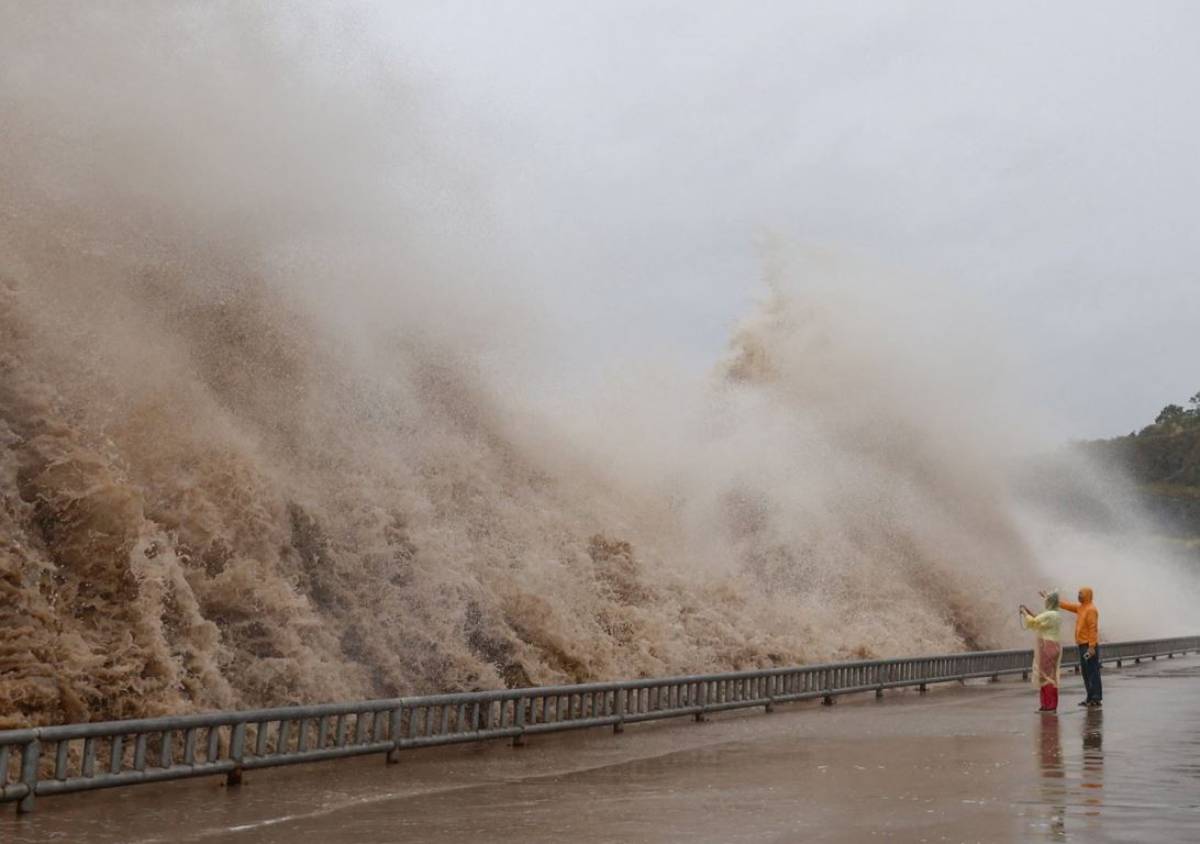
The turbulent conditions continued as the system moved steadily inland. Around 6:00 p.m., shortly after the initial strike, the typhoon made its second landfall along the coast of Leqing in Zhejiang Province. It maintained its status as a highly disruptive weather event throughout the evening.
Mass Evacuations and Safety Measures
In response to the approaching threat, authorities prioritised public safety through widespread displacement orders. Emergency crews moved more than a million people to safety. They secured shelter away from the most vulnerable coastal and low-lying areas, including districts within Shanghai.
The scale of the operation was unprecedented.
The preparations began well before the storm reached the coast. On Saturday evening, before the typhoon’s landfall, officials in Zhejiang successfully evacuated 390,000 people in the coastal city alone.
Preparations were most intense in Wenzhou, where authorities relocated more than 900,000 residents and opened over 1,000 emergency shelters. These preventative measures aimed to mitigate the risks associated with the violent winds and subsequent heavy rainfall that defined the storm’s advance.
Chaos in Shanghai and Travel Disruptions
As the typhoon brought heavy rain to eastern China on Monday, the financial hub of Shanghai faced significant logistical challenges. Impacts at Shanghai’s Pudong and Hongqiao airports were severe, with approximately 1,300 to 1,400 flights cancelled, accounting for roughly 60% of scheduled services.
Meanwhile, authorities extensively suspended local train and public transport services. The storm also disrupted global shipping, as major Chinese ports including Shanghai, Ningbo-Zhoushan, and Zhoushan suspended or adjusted operations due to high winds. By Monday morning, four metro lines halted completely due to the ongoing heavy rainfall. However, some train services to Hangzhou eventually began to recover.
Despite the widespread cancellations and transport shutdowns, some citizens took the intense weather in stride. Commenting on the situation and the flight disruptions, Chen remarked, “To us Guangdong people, this typhoon is as ordinary as having a meal and feeling the wind. It’s just part of everyday life.”
Context of a Punishing Storm Season
Typhoon Dolphin’s arrival compounds an already punishing storm season for the country. The latest system struck just two weeks after Typhoon Noul made landfall in the southern Guangdong province. Typhoon Noul was previously recorded as the strongest storm to hit China this year, leaving coastal communities with little time to recover before Dolphin’s subsequent arrival.
FAQs
1. When did Dolphin hit?
Typhoon Dolphin, the 13th typhoon of 2026, made its first landfall on Sunday, August 9, at 5:30 p.m. near Yuhuan, followed by a second landfall around 6:00 p.m. near Leqing.
2. How many were evacuated?
Displacement hit the million mark across the region, with Taizhou alone accounting for 390,000 relocations.
3. How were flights affected?
The heavy rain and strong winds severely impacted Shanghai’s Pudong and Hongqiao airports, with approximately 1,300 to 1,400 flights cancelled, alongside significant suspensions across local public transport networks.
Stay tuned to Brandsynario for latest news and updates

 Join a Channel
 Brandsynario
 Veryfilmi