
















Netflix’s The Last House turns the familiar idea of staying home into a five-year nightmare.
Starring Greta Lee and Wagner Moura, the new sci-fi thriller traps a family inside their Seattle home as mysterious creatures take control of the outside world. Here is what happens, what the ending means and whether the film is worth watching.
Key Takeaways
- The Last House is now streaming on Netflix, combining sci-fi, horror, survival thriller and post-apocalyptic elements.
- Greta Lee and Wagner Moura lead the cast as a couple trapped inside their home with their two children.
- A mysterious rainstorm seals homes across the neighbourhood, cutting families off from the outside world.
- What begins as a strangely familiar lockdown experience eventually becomes a five-year fight for survival.
- The creatures responsible appear to be mysterious beings connected to the ocean, although the film deliberately leaves their origins unclear.
- The ending hinges on an act of mercy, which finally frees the family from their home.
- The film works best as a grounded survival thriller, but its supernatural mythology and final act are considerably less convincing.
- The Last House is ultimately an entertaining Netflix night-in movie rather than a must-see apocalyptic classic.
What Is ‘The Last House’ About?
At its heart, The Last House asks a deceptively simple question: what would happen if your home suddenly became your entire world?
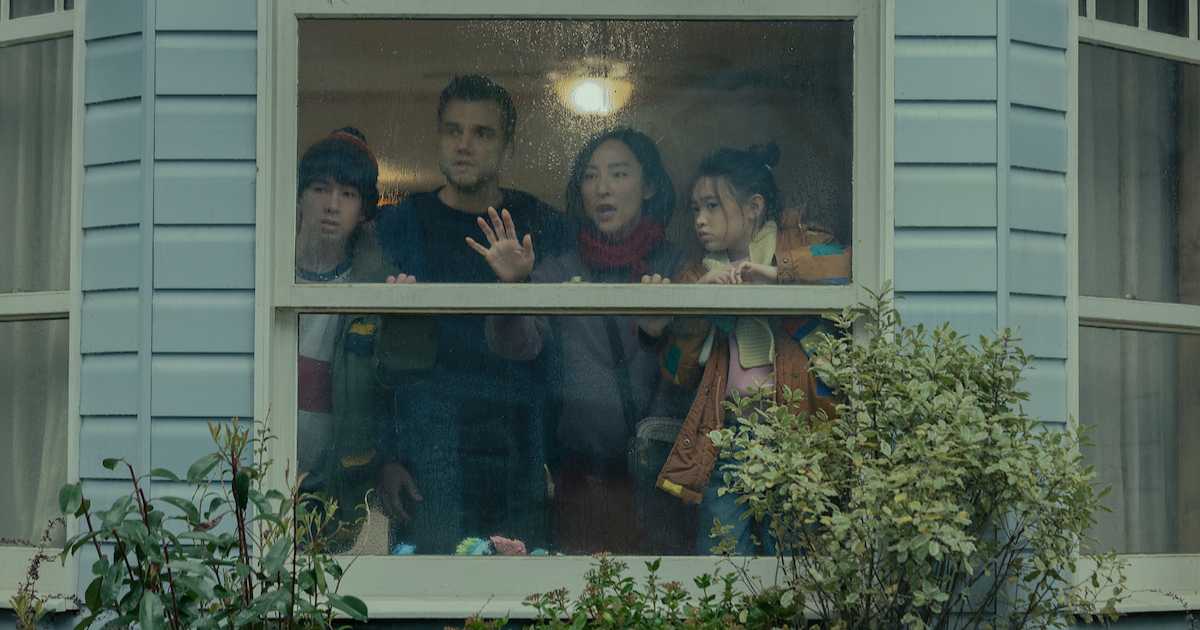
The film follows Jason and Ann Delgado and their two children after a mysterious rainstorm suddenly seals them inside their suburban home. The doors will not open. The windows cannot be broken. Communication with the outside world disappears.
And they are not alone.
Homes throughout the neighbourhood have been sealed in the same way.
Netflix officially describes the film as the story of a family trapped inside their home who must survive dwindling resources while confronting the mysterious force keeping them imprisoned. The movie was directed by Louis Leterrier and written by Matthew Robinson.
That setup immediately makes The Last House feel strangely close to the experience of Covid lockdowns.
Except this time, there is something waiting outside.
The Lockdown Starts Almost Comfortably
The early sections of the movie are arguably its strongest.
At first, Jason, Ann and their children treat their imprisonment as an inconvenience rather than an apocalypse. The family has electricity, running water and enough food to get by.
They have movies and each other as well.
And, for a while, they even seem to enjoy being disconnected from the rest of the world.
The children are forced away from their devices. Jason digs out old records. DVDs become precious entertainment. The family attempts to communicate with their neighbours across the street.
It is an oddly cosy picture of isolation.
That is precisely what makes the film’s later deterioration work.
Because the problem is not that the family immediately runs out of everything.
The problem is that they slowly run out of the future.
Five Years Inside One House?
Days become weeks.
Weeks become months.
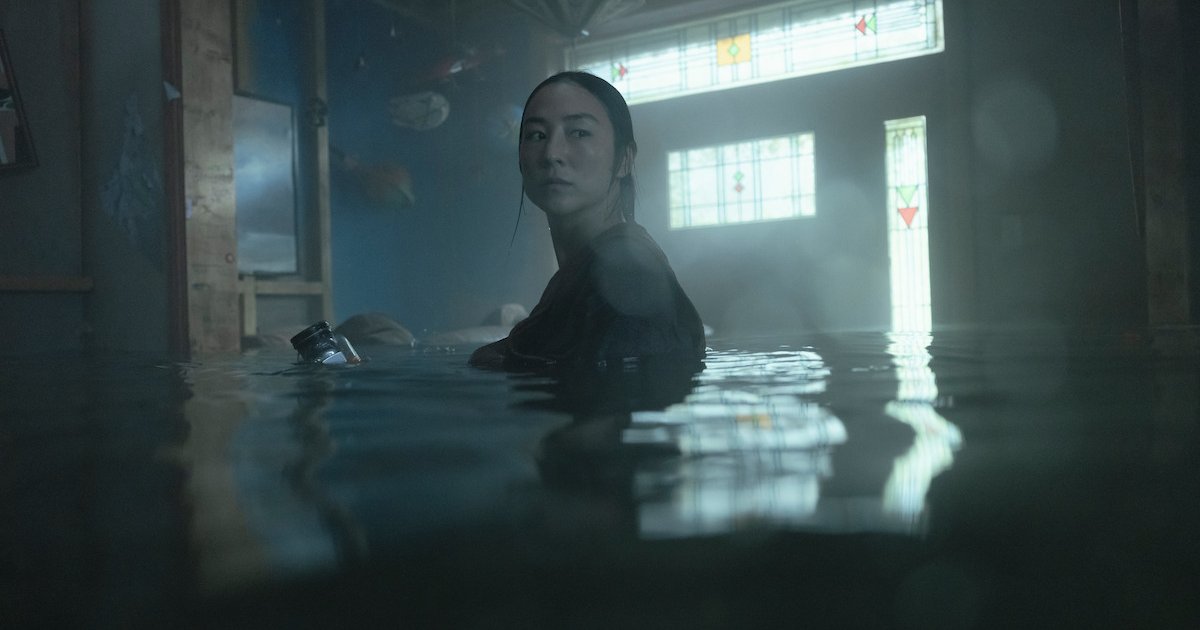
Eventually, the Delgado family spends five years inside their home.
Food becomes scarce. The house deteriorates. Their psychological state begins to unravel. Neighbours disappear one by one, leaving the family increasingly convinced that they may be among the last surviving people in their area.
The film becomes particularly bleak when the family is forced to make an agonising decision involving Cassidy, their sick dog.
It is one of the moments where The Last House stops romanticising family togetherness and confronts the ugly reality of survival.
If there is no food, survival becomes a question of what you are willing to sacrifice.
That is where the movie’s post-Covid parallels become especially uncomfortable. The pandemic showed audiences what prolonged isolation could do to routines, relationships and mental health. The Last House simply pushes that anxiety to an extreme.
Jason Turns the House Into a Survival Machine
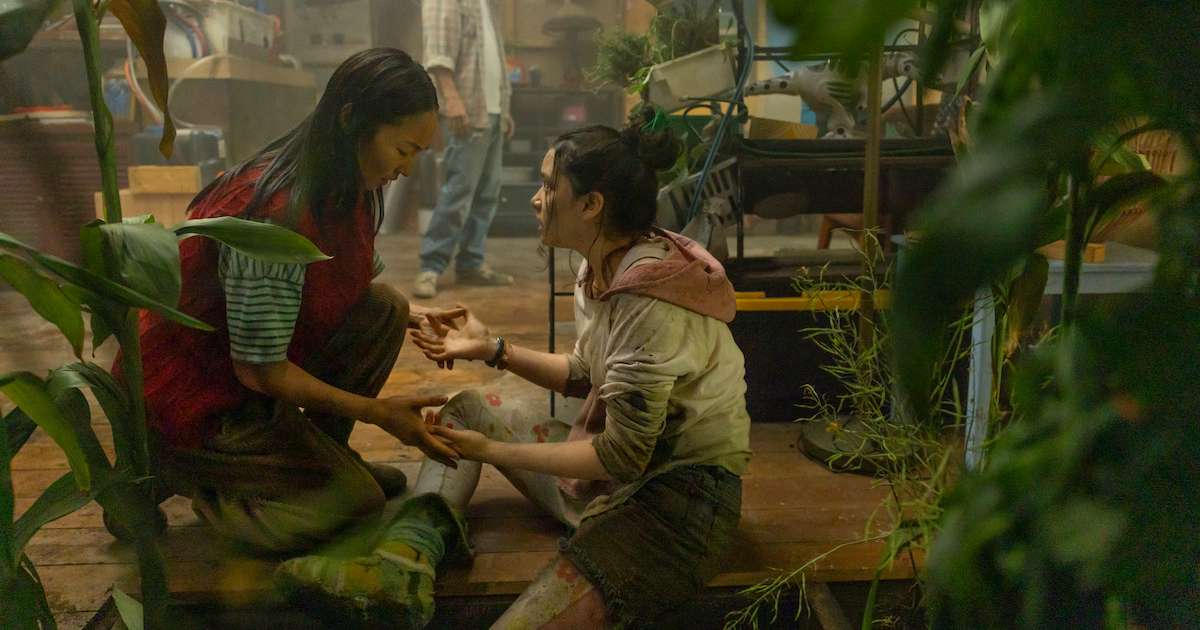
The film becomes much more interesting when Jason’s engineering background starts to matter.
Rather than magically producing survival equipment, he has to improvise.
The family learns how to preserve food, collect resources and grow vegetables inside the house. Jason even develops a way to hunt using the home’s chimney.
It also works surprisingly well on screen.
The Delgado home gradually transforms from a normal suburban property into a self-contained survival system.
The contrast is one of the film’s cleverest ideas. The same house that once represented comfort becomes a prison. Eventually, it becomes a farm, hunting ground, bunker and fortress all at once.
Home is no longer where the family lives. Home is all they have left.
Then the Creatures Reveal Themselves
For much of the film, the biggest question is what exactly is keeping everyone trapped.
The characters initially have no idea.
Government experiment?
Aliens?
Some kind of environmental catastrophe?
Eventually, the answer becomes clearer.
The force behind the lockdown appears to be a group of mysterious aquatic creatures with the ability to manipulate water.
The film hints that they may come from the unexplored depths of the ocean. Their connection to water is obvious, but their exact origins remain deliberately unexplained.
Netflix categorises the film as supernatural sci-fi, horror and post-apocalyptic survival, and that combination becomes increasingly apparent as the story progresses.
There is an intriguing idea here.
Humanity has spent centuries treating the oceans as something to conquer, exploit and pollute. What if something living beneath them finally decided humans had gone too far?
Unfortunately, The Last House never develops that idea as deeply as it could have.
The Movie Is Better Before It Explains Everything
This is where the film begins to lose some of its momentum.
The mysterious setup is genuinely compelling. The family does not know what is happening, and neither does the audience.
But once the creatures become the central focus, the movie starts asking enormous questions without providing equally satisfying answers.
Why are the creatures attacking humanity and why do they seal people inside houses?
Why can they control water and how widespread is the destruction?
The movie intentionally leaves some of these questions unanswered, but mystery only works when the unanswered questions feel purposeful.
Here, some simply feel underwritten.
The Guardian’s review reaches a similar conclusion, arguing that the film is considerably stronger when it stays focused on grounded survival than when it shifts into supernatural horror. It also criticises the creature design and the film’s final act.
Greta Lee and Wagner Moura Carry the Film
Wagner Moura gives the more convincing performance as Jason.
He plays the character as a man who gradually realises that keeping his family alive is now his only responsibility. Moura gives Jason enough confidence and vulnerability to make the character’s transformation believable.
Greta Lee has a more difficult role.
Ann is supposed to be equally important to the family’s survival, but the screenplay gives her less distinctive material. Lee has strong moments, particularly when the pressure of five years of isolation begins to take its toll, but the character occasionally feels trapped by the script rather than the house.
That is a missed opportunity.
A story about four people forced to depend entirely on one another for five years could have offered fascinating character development.
Instead, the film sometimes prioritises the next survival obstacle over the emotional consequences of the previous one.
‘The Last House’ Ending Explained
Behold, spoilers ahead. The final act finally brings the Delgado family face-to-face with one of the creatures.
By this point, they have spent years preparing for an attack.
Jason has transformed ordinary household objects into weapons and traps. When a creature finally enters the house, the family manages to capture it.
Jason is ready to kill it.
But Ruth stops him.
Instead of destroying the creature, the family chooses to release it.
That decision becomes the turning point of the entire movie.
What Happens to the Family After the Ending?
With their home destroyed and the world outside transformed, the family finds a boat and leaves.
They rename it Cassidy, after their beloved dog who died during their years of confinement.
The family then sends a radio message into the unknown, hoping somebody else survived.
Then comes the film’s final surprise.
A voice responds.
“Hello?”
The screen cuts to black.
The appearance of “Day 1” suggests that the five-year nightmare is over and a completely new chapter has begun.
The family has no idea what they will find.
There may be other survivors.
There may not be.
But for the first time in five years, they have the freedom to find out.
Is ‘The Last House’ Worth Watching?
Yes, but do not expect a masterpiece.
The Last House has a genuinely strong premise, a capable cast and several effective survival sequences.
Its strongest material comes when the film focuses on four people trying to survive inside a deteriorating house.
Its weakest material comes when it tries to explain the supernatural forces outside.
The creature mythology feels thin. Some dialogue is overly familiar. The final act does not deliver the kind of major twist the setup seems to promise.
Still, the movie remains entertaining.
It has enough tension, emotional stakes and strange ideas to make it a decent Netflix watch, particularly for viewers who enjoy films such as A Quiet Place, Signs or other contained survival thrillers.
It simply does not quite reach the heights its premise promises.
FAQs
1. Is The Last House available on Netflix?
Yes. The Last House is a 2026 Netflix sci-fi horror thriller and is currently available to stream on the platform.
2. Who stars in The Last House?
The movie stars Greta Lee and Wagner Moura, alongside Gabriel Barbosa, Emma Ho, Riley Chung and Noah Alexander Sosnowski.
3. What is The Last House about?
The movie follows a family of four who become mysteriously sealed inside their home and must survive as their food and other resources run out while an unknown force keeps them trapped.
4. How long is the family trapped inside the house?
The Delgado family survives inside their home for five years before they are finally able to leave.
5. What are the creatures in The Last House?
The film suggests that the creatures are mysterious aquatic beings connected to the ocean. Their exact origins and nature are intentionally left unclear.
6. Is The Last House based on a true story?
No. The Last House is a fictional science-fiction survival thriller written by Matthew Robinson and directed by Louis Leterrier. Netflix describes it as a supernatural sci-fi and post-apocalyptic film.
7. Is The Last House worth watching?
If you enjoy contained survival thrillers, supernatural horror and apocalyptic movies, it is worth a watch. However, viewers looking for a tightly explained mythology or a genuinely frightening creature feature may find the second half disappointing.
Stay tuned to Brandsynario for latest news and updates

 Join a Channel
 Brandsynario
 Veryfilmi