















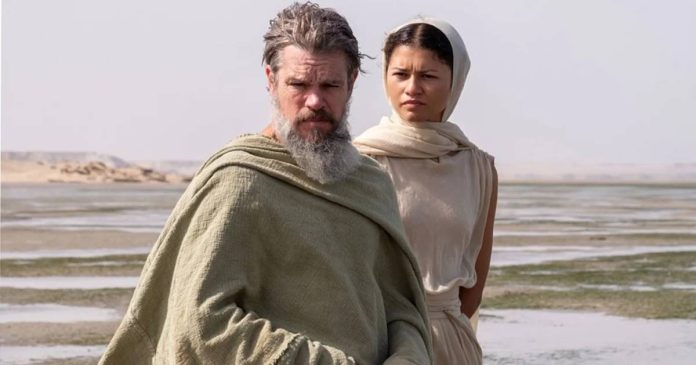

Christopher Nolan has officially sailed into the uncharted waters of epic fantasy, and the movie world is absolutely shaking. Known for his sleek sci-fi thrillers and mind-bending historical dramas, the visionary director has finally tackled the father of all adventure stories: Homer’s The Odyssey. With a star-studded cast led by Matt Damon, Tom Holland, and Zendaya, this massive IMAX 70mm spectacle hit theatres today.
Naturally, the first wave of reviews has flooded the internet. Fans and critics are desperately asking one burning question: Is this Christopher Nolan’s ultimate masterpiece? Let’s dive deep into the early reactions to find out.
The Verdict
The critical consensus is overwhelmingly positive, with the film debuting at a stellar 96% on Rotten Tomatoes. Critics are highly impressed by the sheer scale of the production. In fact, many are already calling it the peak of Nolan’s legendary career.
-
The Ultimate Masterpiece: For a large portion of critics, this film represents Nolan’s absolute peak. Mike Ryan of The Hard Pass boldly declared, “The Odyssey is Nolan’s crowning achievement.” Meanwhile, Clarisse Loughrey of the Independent called it “Nolan’s best work to date. It deserves to be the film that defines him.”
-
Staggering but Distant: However, a few critics argue that the film lacks the emotional warmth of his previous works. Nagier Chambers of Big Gold Belt Media pointed out that the movie is “easier to respect than love, a technically staggering journey that never fully sweeps you out to sea.”
While a few reviewers still rank Oppenheimer or Interstellar higher, almost everyone agrees that The Odyssey is a towering artistic triumph that demands to be seen on the biggest screen possible.
Nolan Gets Grotesque
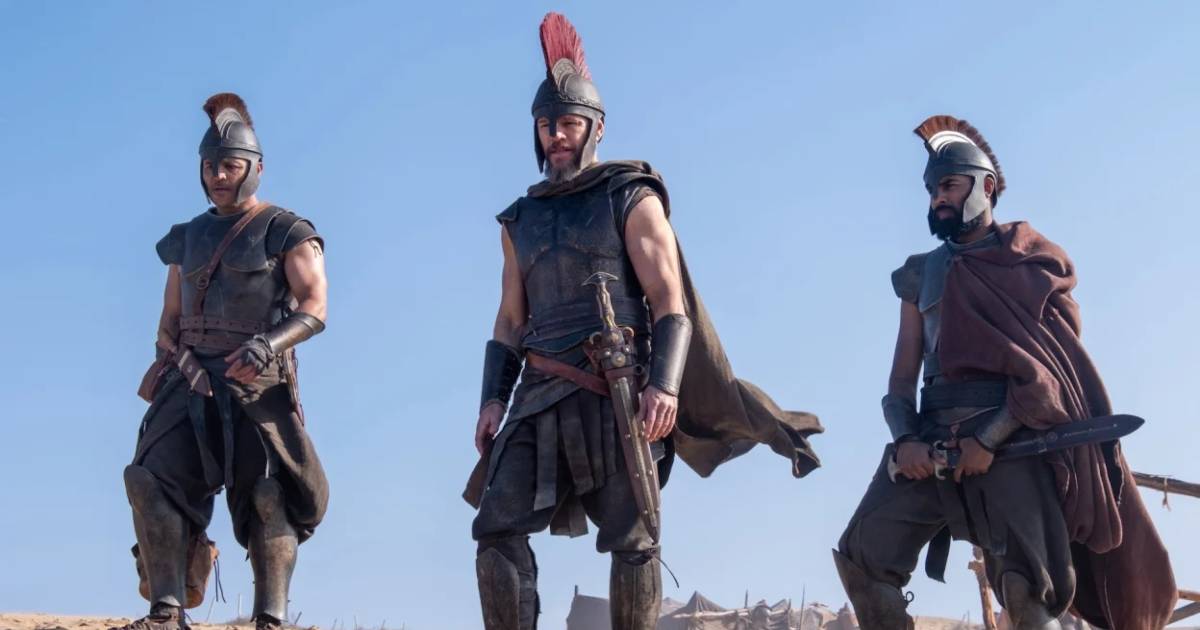
If you expected the clean, sharply tailored aesthetic of Inception or Tenet, think again. Nolan completely ditches his usual modern sleekness. Instead, he plunges the audience directly into the grimy, brutal reality of the Bronze Age. Critics are specifically highlighting the director’s sudden, surprising willingness to embrace visceral horror.

Our first major taste of this occurs during the classic encounter with the sorceress Circe, played by Samantha Morton. Belen Edwards of Mashable wrote:
“visceral body horror, unlike anything Nolan has done before. Circe wields no wand here. Instead, she transforms through sculpting, kneading, and molding men’s flesh like clay.”
Furthermore, the rest of the ancient world is just as raw. Soldiers sit trapped in filthy water inside the Trojan Horse. Demonic shades rise from dark sands in Hades to gulp down sacrificial blood. Even the legendary Cyclops Polyphemus, brought to life by Bill Irwin, is a terrifying, twisted creature that looks like it stepped out of a dark Francisco Goya painting. It is weird, wet, and spectacular.
Fixing the Woman Problem Once and For All
Historically, critics have pointed out that Nolan’s movies struggle with female representation. His female characters often end up as tragic memories or plot devices. Fortunately, The Odyssey completely shatters this trend. By utilising Emily Wilson’s acclaimed, straight-shooting translation of the text, Nolan gives the women of this myth incredible depth, agency, and complex anger.
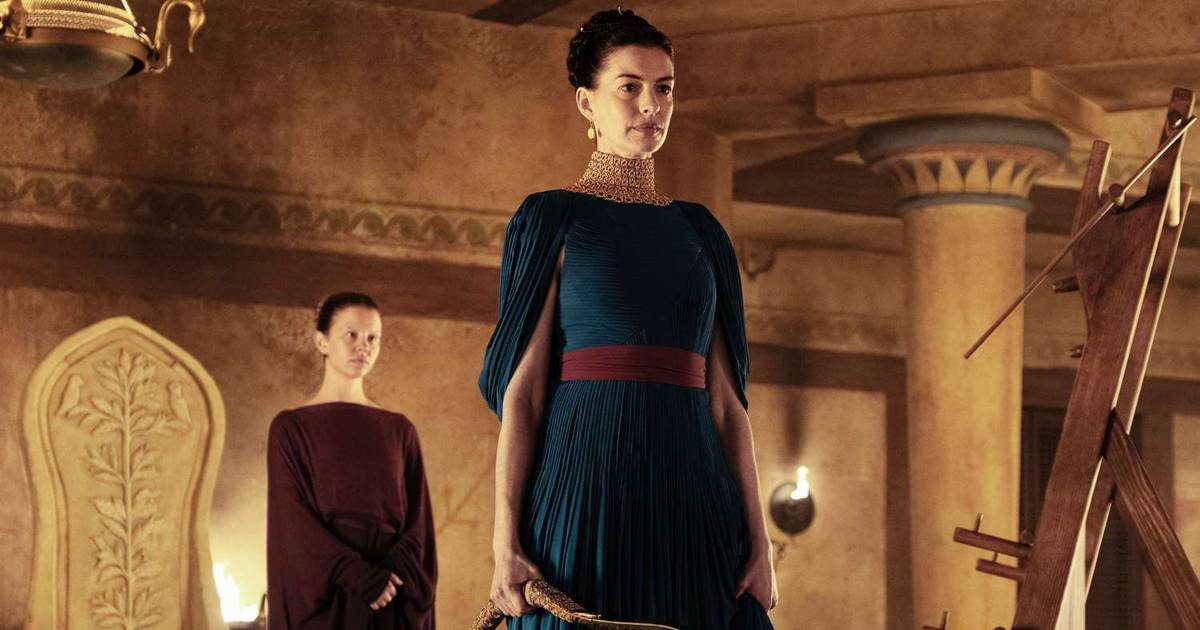
- Penelope’s Quiet Fury: Anne Hathaway delivers a show-stopping performance as Queen Penelope. Trapped in Ithaca, she must politely endure the obnoxious suitors destroying her home. Reviewers love that her eventual moment of catharsis is incredibly powerful.
- Complex, Menacing Figures: Samantha Morton is mesmerising as Circe, blending ancient magic with a quiet, simmering rage.
- Gravely Divine Presences: Zendaya as the goddess Athena and Charlize Theron as Calypso bring an otherworldly, commanding gravity to the screen.
Ultimately, these women do not linger on the sidelines. They actively drive the narrative, making this Nolan’s most mature character-driven film yet.
Streamlined Structure and Real Human Language
Nolan famously loves to fracture timelines. Critics point out that in The Odyssey, however, he keeps the storytelling surprisingly straightforward. The narrative smoothly balances two parallel timelines. We watch Telemachus (Tom Holland) and Penelope defend their home in Ithaca, while Odysseus (Matt Damon) recounts his wild journey to Calypso.
Moreover, Nolan chooses to use modern, accessible language instead of stiff, archaic poetry. There was plenty of internet chatter when trailers revealed Telemachus calling Odysseus “Dad,” but critics agree this choice works. Matt Zoller Seitz of RogerEbert.com noted that Nolan’s script takes smart liberties to unite various accounts of the myth. By keeping the language simple, Nolan ensures the epic feels incredibly human, rather than like a dusty textbook.
Technical Magic and Standout Performances
From a technical standpoint, this movie is a visual marvel. Legendary cinematographer Hoyte van Hoytema has delivered what many are calling career-best work. He captures the brilliant, impossible blue of the Mediterranean Sea, the eerie shadows of giant monsters, and breathtaking, torch-lit Greek halls.
At the centre of it all is Matt Damon, who delivers a truly spectacular performance. He brilliantly balances the different sides of Odysseus: the cunning king, the mythic warrior, and the broken, guilt-ridden father. His emotional journey gives the massive blockbuster its beating heart.
Ultimately, Christopher Nolan has taken one of the oldest stories in human history and turned it into a breathtaking, modern cinematic event. Whether you believe it is his absolute best film or just a brilliant addition to his legendary resume, The Odyssey is a massive success. It is bold, beautiful, surprisingly gritty, and deeply emotional. Make sure to book your IMAX tickets immediately, because this is a mythic cinematic voyage you absolutely cannot afford to miss.
FAQS
1. Is The Odyssey officially Christopher Nolan’s best movie?
It’s incredibly close! The movie debuted to a massive 96% on Rotten Tomatoes. While some critics still prefer Oppenheimer or Interstellar, many declare The Odyssey to be his absolute crowning achievement.
2. Do I need to know Greek mythology to understand the plot of The Odyssey?
Not at all. Nolan keeps the story linear, accessible, and surprisingly straightforward. He even uses modern language, like Telemachus calling Odysseus Dad, so audiences can easily connect with the characters without needing a history degree.
3. Should I see The Odyssey in IMAX?
Absolutely. Cinematographer Hoyte van Hoytema shot the film on IMAX 70mm. Between the sweeping ocean vistas, massive sea monsters, and giant battles, it is a spectacle custom-built for the biggest screen possible.
Stay tuned to Brandsynario for the latest news and updates.

 Join a Channel
 Brandsynario
 Veryfilmi