

















After nearly two decades of governing Gaza, Hamas has announced the dissolution of its governing body. This is one of the most significant political developments since it took control of the territory in 2007. The move does clear the path for a technocratic administration, but major questions over security and implementation remain unanswered.
Key Takeaways
- Hamas has dissolved Gaza’s Government Emergency Committee after almost 20 years in power.
- The decision paves the way for the National Committee for the Administration of Gaza (NCAG) to oversee civilian governance.
- The transition remains dependent on unresolved ceasefire commitments, including security arrangements and the committee’s entry into Gaza.
Two Decades of Control
Hamas, which has governed the enclave since defeating rival faction Fatah in 2007 following its 2006 legislative election victory, says it is stepping away from direct civilian administration.
The resignation of Mohammed al-Farra, head of the Government Emergency Committee, formalised the decision. In an official statement, he confirmed he had dissolved the committee to facilitate an administrative transition and implement previously agreed arrangements to restructure Gaza’s civilian governance.
Civilian Administration
The transition is expected to hand civilian responsibilities to the National Committee for the Administration of Gaza (NCAG), a technocratic body established under a US-backed post-war framework. The committee is led by Palestinian official Ali Shaath, who says it is ready to assume responsibility once the required resources and operational conditions are in place.
Shaath stressed that effective governance will require “a single authority, a single law with a clear mandate, and a single armed force under the authority of this single entity.” However, the committee has yet to enter Gaza, with reports indicating Israeli objections have delayed its deployment.
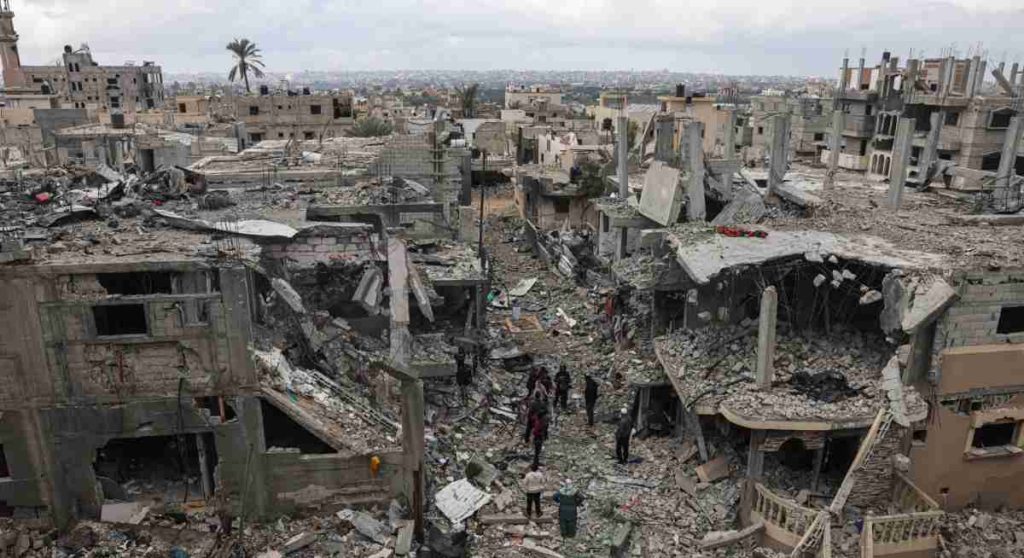
Hamas Is Stepping Back, Not Stepping Away
Although Hamas is relinquishing direct civilian governance, the group has made it clear that the decision does not amount to abandoning its broader political role.
“Hamas has taken a new step in that it will no longer be in charge of the Gaza Strip, to remove any pretexts for the occupation, which continues its aggression and war of extermination,” Hamas spokesman Hazem Qassem told AFP.
“We hope for the swift entry of the [NCAG], and Hamas affirms its readiness to hand over governmental responsibilities to the committee to ensure its success.”
The announcement is widely viewed as an attempt to move negotiations forward while demonstrating flexibility during ongoing diplomatic efforts.
The Hurdles That Lie Ahead
Despite the administrative breakthrough, the broader peace process remains fragile. Israel has repeatedly stated that it will not allow Hamas to return to governing Gaza, while also opposing an immediate transfer of authority to the Palestinian Authority, which administers parts of the occupied West Bank.
Meanwhile, negotiations remain deadlocked over two critical issues:
- The disarmament of Hamas
- The withdrawal of Israeli forces from Gaza
The Board of Peace overseeing the ceasefire framework has also insisted that all weapons eventually come under the authority of the NCAG, a demand that remains unresolved.
FAQs
1. Why did Hamas dissolve its governing body?
Hamas dissolved its governing body to facilitate the transition to the NCAG under an agreed administrative framework.
2. Who will govern Gaza next?
The National Committee for the Administration of Gaza (NCAG) is expected to oversee civilian administration in Gaza.
3. Has Hamas completely left Gaza’s political scene?
No, Hamas has stepped back from civilian governance but not its broader political role.
Stay tuned to Brandsynario for latest news and updates

 Join a Channel
 Brandsynario
 Veryfilmi