














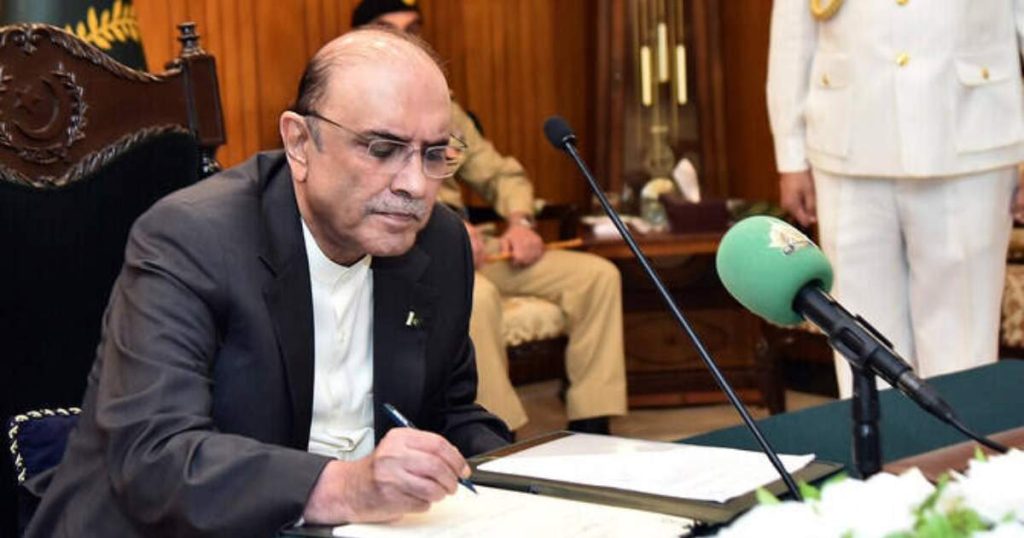
President Asif Ali Zardari has approved the Pakistan International Airlines Corporation Conversion Repeal Bill, 2026. This completes the final legal requirement for the national carrier’s transition. It removes the last procedural barrier, pushing PIA’s privatisation into its execution stage after years of stalled reform attempts.
Key Takeaways
- PIA’s privatisation will be executed soon after years of stalling.
- Both parliamentary houses have completed the process.
- The Senate passed the bill on June 10, and the National Assembly followed on June 11.
Legal Green Light Paves Way for Structural Shift
The repeal of the 2016 conversion law marks a significant policy reversal. That earlier legislation had aimed to restructure Pakistan International Airlines into a public limited company, but it remained largely ineffective in resolving financial instability.
Now, with presidential assent granted, PIA’s privatisation has crossed its final legal checkpoint. According to the Presidency, all required formalities have been fulfilled to complete the transfer process of Pakistan International Airlines Company Limited (PIACL).
Moreover, the decision aligns with long-standing reform commitments under Pakistan’s economic restructuring agenda. The shift signals a more aggressive push toward reducing the burden of loss-making state-owned enterprises.
Rs135 Billion Deal Anchors the Airline’s Future
The turning point came in December last year when a consortium led by Arif Habib Corporation Limited won a 75% stake in PIA with a Rs135 billion bid. The transaction was formally signed in January at a ceremony attended by Prime Minister Shehbaz Sharif.
Importantly, the consortium plans deep operational reforms. These include fleet expansion, restructuring of routes, and improvements in customer service standards. In addition, the group aims to acquire the remaining 25% government stake to gain full control of decision-making.
Key developments include:
- Rs135 billion winning bid for 75% shares
- 92.5% of proceeds reinvested into PIA operations
- Airline previously losing nearly Rs50 billion annually
IMF Pressure and Reform Agenda Drive Policy Momentum
The deal is also tied closely to Pakistan’s broader IMF-backed reform programme. Authorities have framed PIA’s privatisation as a landmark shift, especially as it represents one of the country’s largest divestments in nearly two decades.
Previously, the Privatisation Commission approved Fauji Fertiliser Company’s entry into the consortium in March 2026. Although Fauji Fertiliser initially exited the bidding race, it later rejoined the final structure.
Additionally, officials confirmed that 7.5% of proceeds, equal to Rs10.12 billion, will go to the federal government, while the majority will support restructuring efforts within the airline itself.
What Comes Next for PIA
With legal formalities completed, attention now shifts to execution and restructuring timelines. The consortium is expected to begin phased operational reforms, focusing on efficiency and profitability.
At the same time, employee protection commitments remain in place, with assurances that contracts will remain unchanged for at least 12 months post-transaction. This step aims to stabilise internal operations during the transition phase of PIA’s privatisation.
FAQs
1. Who approved PIA’s privatisation bill?
President Asif Ali Zardari approved PIA’s privatisation bill.
2. How much stake was sold in PIA?
A 75% stake was sold in PIA to a consortium.
3. What was the winning bid amount?
Rs135 billion was the winning bid amount for PIA.
Stay tuned to Brandsynario for latest news and updates

 Join a Channel
 Brandsynario
 Veryfilmi