















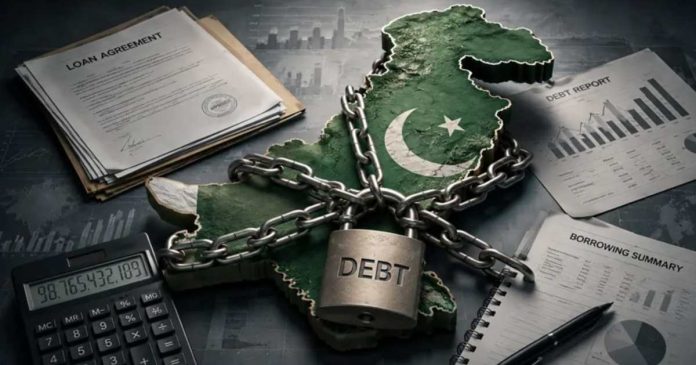

In Pakistan, public debt is no longer just an abstract macroeconomic number discussed in parliament or analysed by the IMF; it has become a direct, personal liability for every single citizen.
So, what is the exact price tag attached to being born a Pakistani today? Let’s break down the hard numbers behind the country’s skyrocketing national debt and what it means for the average household.
Key Takeaways
- Every Pakistani citizen, including newborns, now carries an average individual debt burden of Rs333,000.
- Per-capita debt jumped by approximately Rs39,000 in just a single fiscal year, marking a sharp 13% annual increase.
- Pakistan’s total public debt has officially scaled past Rs97.307 trillion, up from Rs. 89.774 trillion the previous year.
- If Pakistan were a single household earning a total income of Rs. 127, it would already owe Rs76 of that income directly to its lenders.
The Rs333,000 Per-Capita Burden
According to the latest official fiscal data, Pakistan’s total public debt has reached an unprecedented Rs97,307 billion (Rs97.3 trillion). When you divide that massive pool of liabilities across the country’s population, the math reveals that every single individual is responsible for Rs333,000 in public debt.
What makes this trend particularly alarming for economic analysts is the sheer speed at which this mountain of debt is growing. Just twelve months prior, the total public debt stood at Rs89,774 billion. In a span of only one year, the government added another Rs7,533 billion to the tally.
For the ordinary citizen, that translated to a swift 13% increase, meaning your personal share of the national debt grew by roughly Rs39,000 in a single year without you borrowing a single rupee yourself.
Debt-to-GDP Ratio
To truly comprehend how deep this financial hole is, economists evaluate the country’s Debt-to-GDP ratio, which measures what Pakistan owes against what it actually produces.
Pakistan’s total Gross Domestic Product (GDP) currently sits at approximately Rs127,000 billion. With total liabilities surpassing Rs80.5 trillion in core public debt sectors, the overall debt-to-GDP ratio has now climbed to 76%.
Why This Massive Debt Matters to You
A high per-capita debt isn’t just a metric for financial journals; it has a direct impact on the daily lifestyle and future of the public. It creates a domino effect across the economy:
1. Suffocating Public Welfare: Funds that should logically be spent on upgrading public healthcare, improving government schools, and funding social safety nets (like BISP) are instead diverted to international and domestic lenders.
2. Stagnant Infrastructure: Major development spending under programs like the Public Sector Development Programme (PSDP) faces severe cuts, leading to delayed transport links, weaker energy grids, and fewer civic projects.
3. Inflationary Pressures: To pay off these mounting structural deficits, the state frequently resorts to aggressive taxation, instantly driving up the baseline cost of living for the common man.
FAQs
1. How much debt is a baby born with in Pakistan?
Based on the latest financial figures, every child born in Pakistan inherits an immediate average public debt burden of approximately Rs333,000.
2. By how much is Pakistan’s per-capita debt increasing every year?
In the last fiscal year alone, individual per-capita debt rose by Rs39,000, marking a sharp 13% increase in just 12 months due to a Rs. 7.5 trillion expansion in total public borrowing.
3. What is Pakistan’s total public debt right now?
Pakistan’s total public debt has officially reached Rs97,307 billion (Rs97.3 trillion), climbing significantly from Rs89,774 billion recorded the previous year.
4. What is Pakistan’s current Debt-to-GDP ratio?
The country’s debt-to-GDP ratio has climbed to 76%. This means that for every Rs. 127 the national economy produces in value, Rs76 is already outstanding public debt.

 Join a Channel
 Brandsynario
 Veryfilmi