

















A decade of relative calm in the Indian Ocean has been shattered in a single week. Between April 21 and April 26, 2026, three different vessels fell to Somali pirates. This violence signals a return to a crisis many thought was over. International naval forces currently focus on conflicts in the Red Sea.
Consequently, pirate cells are exploiting this gap. This sudden surge in maritime kidnappings sends shockwaves through the global shipping industry. It raises fears of a return to the golden age of piracy.
A Week of Chaos: The Three Hijackings
The speed of these attacks caught the maritime community off guard. Each incident demonstrates a different tactic used by these resurgent groups:
The Oil Tanker Strike (April 21)
Gunmen intercepted the Honour 25, a Palau-flagged motor tanker. Six armed men boarded the vessel while it sat 30 nautical miles off the coast. They forced the crew of 17 to steer the ship into Somali territorial waters. The ship carried 18,500 barrels of oil.
The Mothership Capture (April 25)
Pirates seized a Somali-flagged fishing dhow. This move is highly strategic. Pirates use these smaller, local boats as motherships to blend in with fishing traffic. From these boats, they launch smaller skiffs to attack large cargo ships hundreds of miles away from the shore.
The Cement Carrier Siege (April 26)
The most recent victim is the Sward, a St. Kitts and Nevis-flagged vessel. It travelled from Egypt to Kenya when pirates boarded it just 6 miles from the Somali port of Garacad. By April 28, the pirate count on board grew to 20. They now use an English-speaking interpreter to demand a ransom from the ship’s owners.
The Security Vacuum
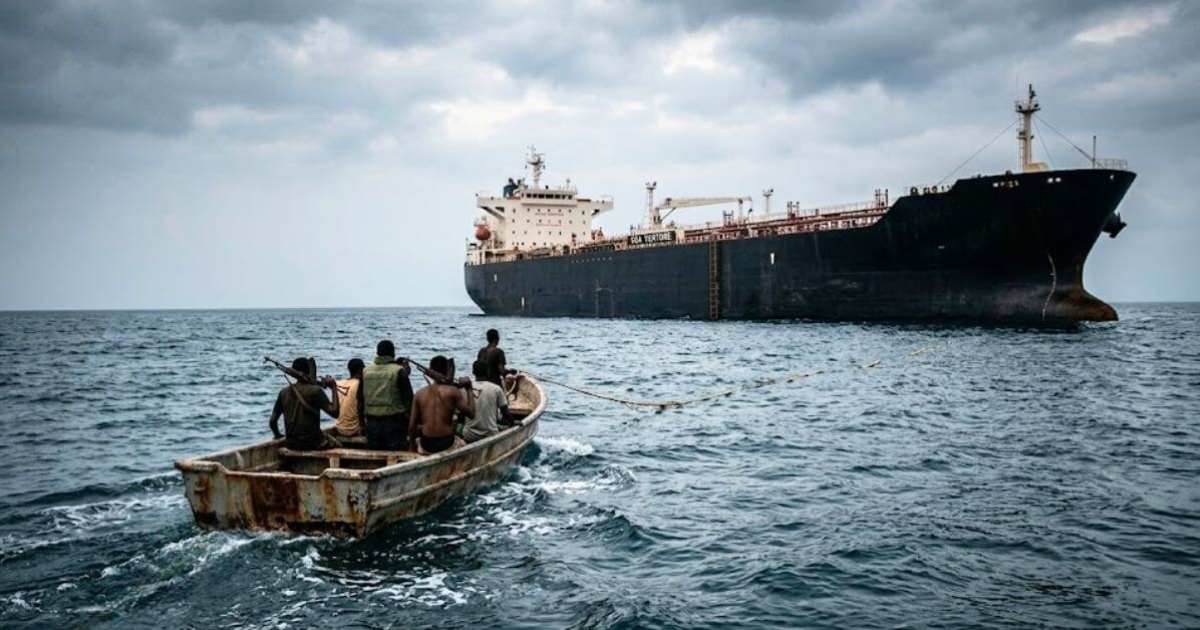
Pirates do not succeed by luck alone. They take advantage of a security vacuum in the region. Most international warships have moved north. These ships include those from the European Union’s Operation Atalanta. They are currently busy defending against Houthi rebel attacks in the Red Sea. Fewer patrols in the Somali Basin mean the coast is clear. Pirate skiffs now roam freely without fear of interception.
Organised Crime on Land
The resurgence relies on a sophisticated network on the ground. This is not just a few desperate fishermen. Recent reports show a high level of coordination:
- Pirates established a logistics chain from inland cities like Galkayo.
- Supplies move 150 miles to the coast to support the hijackers. This includes food and the stimulant khat.
- The groups use modern GPS and satellite phones. These tools help them track targets and communicate with land-based investors.
The Rising Threat to Global Trade
The United Kingdom Maritime Trade Operations (UKMTO) officially raised the threat level to Substantial. This means further attacks are highly likely. Shipping companies now face a double-threat scenario. They must worry about missiles in the Red Sea and armed boardings off the coast of Somalia. These risks drive up insurance costs. They also force ships to take longer, more expensive routes around Africa.
This sudden spike in activity proves that the threat of Somali piracy never truly disappeared; it was only dormant. These three hijackings will start a new era of maritime instability if naval coalitions do not return their focus to the Horn of Africa. The world cannot afford to look away. One of its most vital trade routes is falling back into the hands of armed gangs.
Stay tuned to Brandsynario for the latest World News and updates.

 Join a Channel
 Brandsynario
 Veryfilmi