















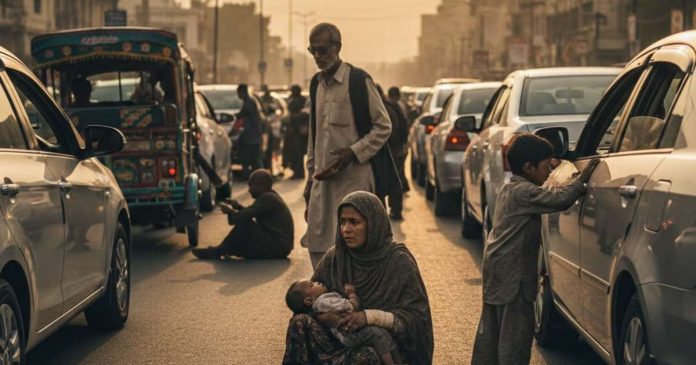

The begging culture in Karachi is a complex, organised industry that blurs the lines between genuine poverty and calculated business. Since the start of Ramadan 2025, the city has seen a massive surge of over 300,000 seasonal beggars travelling from interior Sindh and southern Punjab.
These individuals occupy every major intersection, traffic signal, and shopping mall. They use sophisticated strategies like reading the psyche of donors to maximise earnings. They often target young couples or families with children to exploit their emotional vulnerability.
The Business of Begging: Tactics and Earnings
Professional beggars in Karachi do not just ask for alms; they operate with a specific behavioural script. Their attitude shifts from extreme humility to aggression when rejected.
- Aggressive Persistence: Many beggars tap persistently on car windows or follow pedestrians for blocks.
- The Entitlement Trap: Research shows that some beggars treat alms as a debt owed to them. They may use curse words or bad prayers if the amount offered is considered too low (e.g., refusing coins and demanding “red notes” or Rs. 100).
- Deceptive Tools: Common tactics include using drug-induced sleeping infants, fake bandages, or forged medical prescriptions to gain sympathy.
-
The Stranded Script: A common sophisticated tactic involves an individual (often well-dressed or appearing middle-class) who claims to be in a vulnerable position. They typically claim they are not begging and that they are asking for help. This targets the donor’s sense of sympathy.
-
Forced Service Entrapment: Some beggars engage in unsolicited services such as wiping car windshields with dirty rags or pointing out empty parking spots. Once the service is performed, they transition from a helper to an aggressive claimant, demanding payment for work the driver never requested.
-
Religious Tailoring: During Ramadan or Friday prayers, beggars use specific linguistic expertise. They read the person: to a young couple, they pray for an obedient son; to an elderly person, they pray for long life and health. If they see someone leaving a mosque, they use phrases like, Allah will accept your prayers if you help me.
The Economic Gap: Beggar vs. Graduate
The financial contrast between a professional beggar and a hardworking graduate is startling. While a university degree requires years of investment, the street economy offers immediate, tax-free returns.
In Karachi, a professional beggar in a prime location like Shahrah-e-Faisal averages Rs. 2,000 per day, totalling Rs. 60,000 monthly. In comparison, an entry-level graduate employee often earns a starting salary of just Rs. 45,000. This means a street performer can outearn a teacher or a junior clerk by nearly 33%.
Why the Mafia Thrives
- The Ramadan Multiplier: During holy months, earnings often triple as beggars exploit the spirit of Zakat.
- Zero Deductions: Unlike graduates, beggars pay no income tax, fuel costs, or professional fees.
- Strategic Placement: Handlers drop off individuals at high-traffic zones to ensure maximum revenue per hour.
Government Initiatives and Public Responsibility
The Sindh government and law enforcement have recently ramped up efforts to curb this menace.
- Legal Crackdown: The Karachi Commissioner and Sindh High Court have ordered the arrest of handlers who manage beggar networks at traffic signals. Over 200 arrests were made in early 2025 alone.
- Awareness Campaigns: The Sindh Police actively encourages citizens to stop giving money directly on the streets. They argue that direct alms sustain the mafia and keep children out of schools.
- Rehabilitation: The government advocates for directing charity toward registered NGOs and welfare organisations like Edhi, Saylani, or Indus Hospital, which provide structured support.
How to End the Cycle
- Stop Signal Giving: Refuse to give money at traffic lights; this is the primary revenue stream for mafias.
- Verify the Need: If someone asks for food, offer to buy them a meal instead of giving cash.
- Support Education: Donate to organisations that specifically target the rehabilitation of street children.
- Report Handlers: Use police helplines to report organised groups dropping off children or disabled individuals at specific spots.
Ultimately, we must distinguish between the professional beggar and the truly destitute. A professional beggar is a performer; they have a script, a territory, and a strategy. They rely on shame and nuisance to extract money.
In contrast, someone truly in need often possesses a sense of self-respect that prevents them from harassing strangers. Research from Gallup Pakistan indicates that while 71% of people feel beggars are forced by inflation, nearly half believe they are part of a non-genuine industry.
By shifting our generosity from the street corner to verified welfare institutions, we can ensure our charity empowers the vulnerable rather than enriching the exploiter.
Stay tuned to Brandsynario for the latest news and updates

 Join a Channel
 Brandsynario
 Veryfilmi