















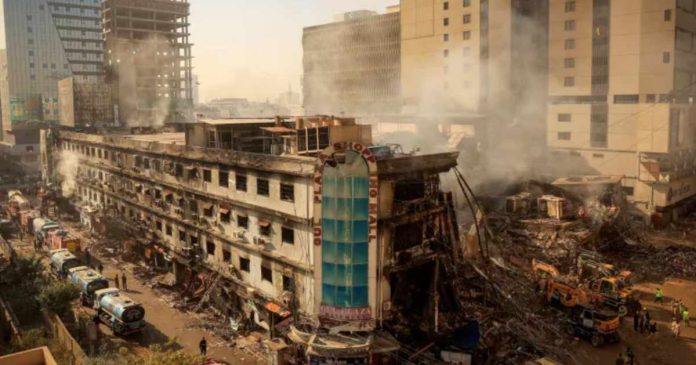

Back in the days, every year after Eid al-Fitr, many children would collect their Eidis and make their way towards the biggest shopping centre in Karachi in search of toys. This shopping centre was none other than Gul Plaza, which was more than a shopping centre.
Whether it’s shopping for crockery, household items, or toys, Gul Plaza used to have it all. Watching Gul Plaza burning down over the past weekend, every Karachiite felt deep sorrow for it; many expressed how visiting Gul Plaza played a vital role in decorating a home.
Since the fire, everyone has the same questions on their minds: How did the fire start? How come the fire spread so rapidly?
Many people have come out with their versions of what allegedly happened on the night of 18th January 2026, and none of the versions make sense of the Gul Plaza calamity.
The ‘Children with Matches’ Account
According to a shopkeeper of an artificial flowers shop, his two minor sons were playing with matches in the shop, unattended. While they were playing, they threw a lit match on the floor and left it.
The plastic materials inside the shop fueled the fire’s rapid spread. According to the shopkeeper, he attempted to extinguish the blaze, but inadequate supplies prevented him from containing it. The fire then rapidly spread and got into the electrical wiring, due to which it spread across the entire shopping centre.
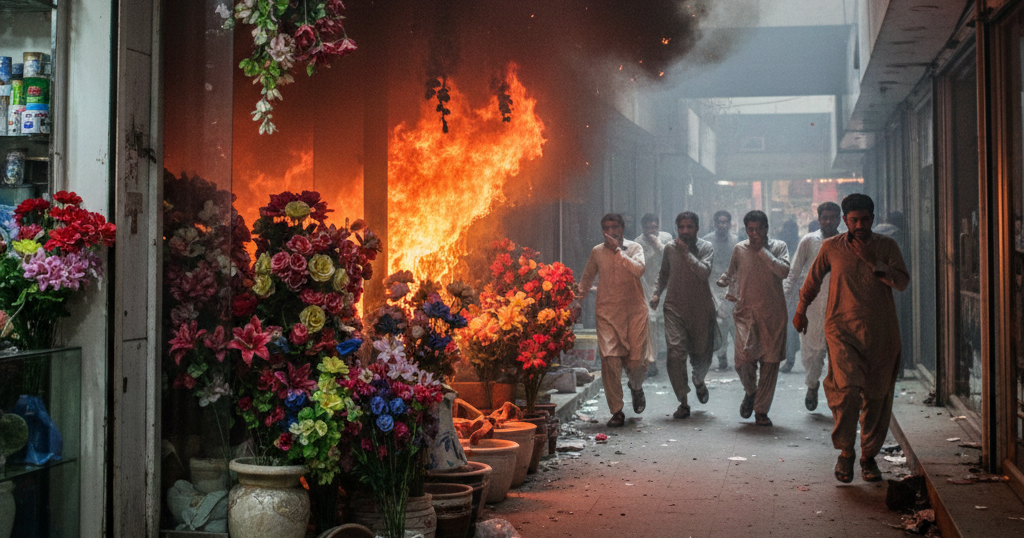
This account, however, has not been confirmed by any officials or even by the people in charge.
The Short Circuit Theory
Sindh Police Inspector General, Javed Alam Odho, assumed the fire probably started due to a short circuit. This rumour spread like wildfire on social media, as at that time, this explanation felt like the most logical one.
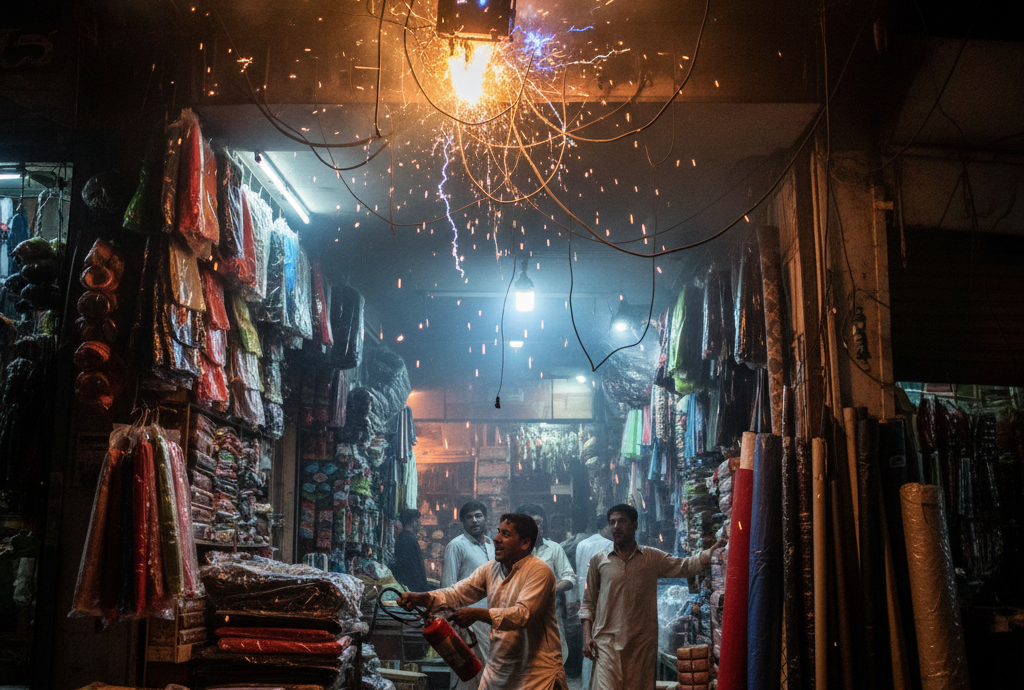
Authorities cited a critical shortage of firefighting materials at the scene as the main reason the fire escalated. They argued that the flames moved too quickly for their limited resources to manage.
This version was believable until more versions of the night’s events started to come out.
The Deliberate Arson Theory
The scale of the disaster, involving billions of rupees in losses at Karachi’s premier trade hub, triggered a wave of conspiracy theories. Online platforms became breeding grounds for unverified claims, as people quickly labelled the incident as arson or sabotage.
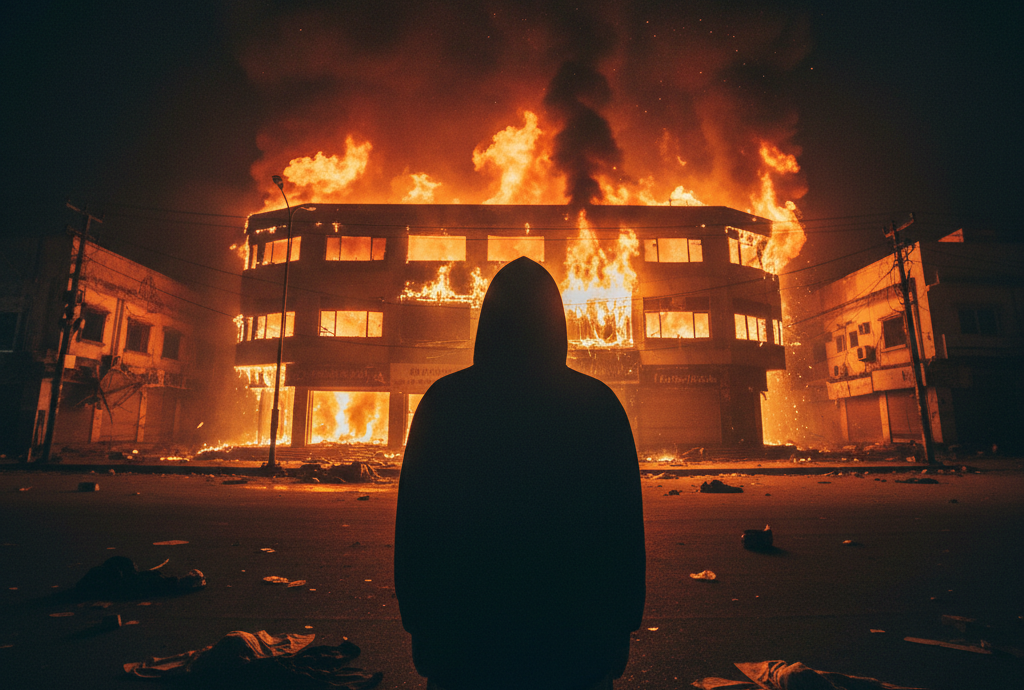
However, officials were quick to confirm that investigations didn’t find any evidence of foul play or arson.
The timing of the disaster sharpened the speculation; with the wedding season in full swing, the staggering financial ruin made the public even more suspicious of foul play.
A City in Ashes and the Cost of Silence
Ultimately, the charred remains of Gul Plaza stand as a grim monument to more than just a tragic accident; they represent a systemic failure that Karachi continues to ignore at its own peril.
While we can debunk the viral rumours of arson and sabotage, the reality is that the tragedy has left 67 families shattered and a business community in ruins, yet the most painful realisation is how preventable this “national tragedy” truly was.
We must ask why our authorities only remember fire safety protocols when the smoke is already visible from miles away. Why does the Sindh Building Control Authority (SBCA) issue “urgent” directives only after the bodies are being pulled from the rubble?
This “too little, too late” approach to governance has normalised suffering in Karachi, turning every commercial hub into a potential deathtrap. Until accountability moves beyond press conferences and compensation checks, the city will remain trapped in a cycle where we mourn the dead today, only to forget the lessons tomorrow.
Karachi’s traders and citizens deserve a city that protects their lives as much as it relies on their taxes.
Stay tuned to Brandsynario for latest news and updates

 Join a Channel
 Brandsynario
 Veryfilmi