

















Every country has a date that changes its heartbeat. For Pakistan, December 16 is one of them. Not because it sits in a textbook, but because it sits in parents’ throats.
Eleven years later, the nation still remembers the morning when children left for school with books in their hands and came back as names carved into grief.
While the world often casts us as villains to serve its propaganda and Islamophobic narratives, we must not forget that our own people were slaughtered by these same terrorists with a brutality that stripped them of all humanity.
11 Years To The 16th December APS Attack
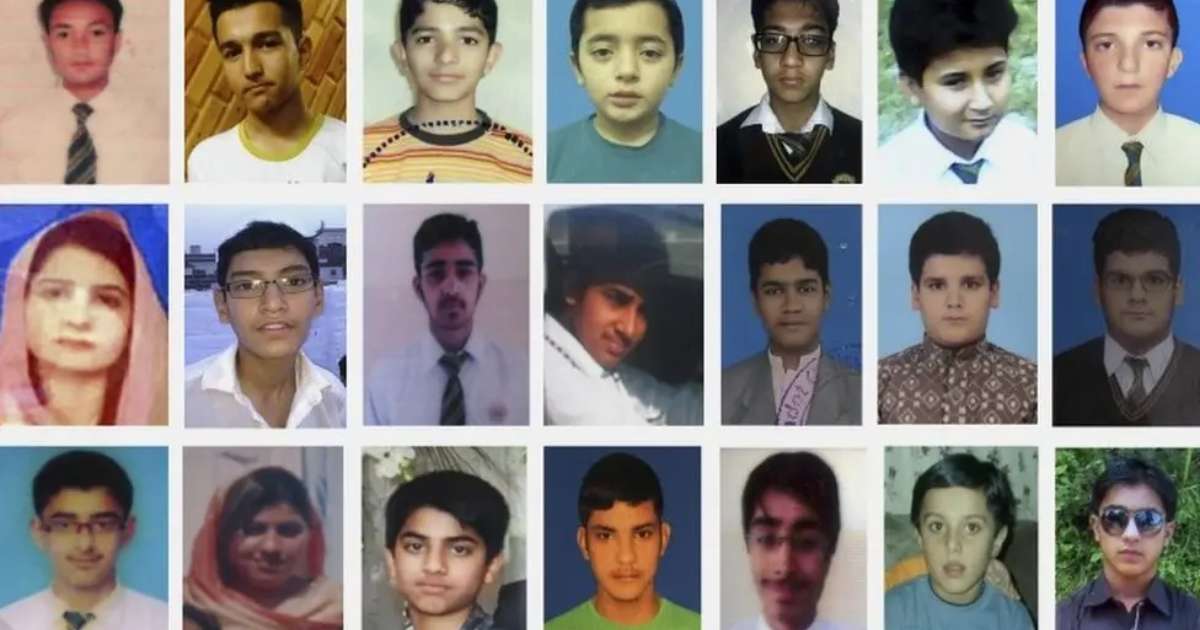
On December 16, 2014, militants stormed Army Public School on Warsak Road in Peshawar and opened fire on students and staff. One widely cited count puts the victims at 149 killed, including 132 children, with many others injured.
The cruelty of it remains hard to say out loud. Teachers and children were shot where they learned and laughed.
This year too, remembrance did not stay private. Families returned to the place that took everything from them.
Candlelight vigils have become part of how Peshawar marks this day, especially around the Shuhada monument and the Archives Library area, where parents and civil society gather each year with candles and prayers.
It is never just a ceremony. It is mothers and fathers walking the same route their children once walked, except now the destination is a memorial.
Inside APS, the Shuhada Memorial is not an abstract symbol but a roll call that the heart still answers.

APS Massacre Stories
One father’s words have echoed online for a reason: his daughter left home happily on her first day, clutching her books, and “came back wrapped in a shroud.”
Pakistan has heard versions of this sentence in many homes since 2014. It lands the same every time because it names the truth. The children did nothing except go to school.
Some survivors carry the day inside them like a second skeleton.
Ahmad Nawaz survived by playing dead. He later rebuilt his life in the UK and has spent years speaking to students about how violent ideologies target the young and the hopeful.
His story is documented in public profiles that note how he survived the APS attack and turned that survival into advocacy.
Then there are teachers who went back to the same corridors. Chemistry teacher Andaleeb Aftab hid with colleagues for hours and later learned her 16-year-old son, Huzaifa, had been killed. She described finding him laid out for identification, saying he looked as if he was “smiling.”
It is the kind of detail that breaks you because it is so human and so final.
And there are families like Muhammad Ali’s. He was a ninth-grade student and the only child of his parents. His father has spoken about how each December deepens the grief instead of easing it, how life does not return to normal, it only moves forward without the person who made it meaningful.
The Aftermath
In the aftermath, Pakistan responded with a sweeping counterterror framework. The National Action Plan was launched soon after the massacre as a state pledge to crack down on militancy and terror networks.
Years later, the legal and institutional questions did not disappear. A one-member judicial commission report, submitted to the Supreme Court, highlighted failures, including a delayed response and raised serious concerns about security and coordination.
The Supreme Court ordered the report to be made public.
Militants have long attacked education in Pakistan, especially where it represents the state, modern curricula, or girls learning freely.
Human rights reporting has documented how attacks on schools, threats against teachers, and the broader climate of fear have disrupted education for hundreds of thousands, particularly in conflict-affected regions.
A Black Day, A National Promise
Pakistan has often called December 16 a “black day.” It is an accurate phrase, but not a complete one. Because even on the darkest dates, there are people who keep choosing life. Parents who show up again. Teachers who return to teaching. Survivors who speak so that other children do not become targets.
Eleven years later, the children who never returned from school are not only mourned. They are carried. In candles. In duas. In the quiet pause every Pakistani feels when December 16 arrives.
Not as history but as a wound and as a vow.
Stay tuned to Brandsynario for latest news and updates

 Join a Channel
 Brandsynario
 Veryfilmi