

















The United States has confirmed that work on the latest Advanced Medium-Range Air-to-Air Missile (AMRAAM) contract will be carried out in Tucson, Arizona, and is expected to be completed by May 30, 2030.
According to the U.S. Department of Defence, the contract involves foreign military sales to several allied nations, including the United Kingdom, Poland, Pakistan, Germany, Finland, Australia, Romania, Qatar, Oman, South Korea, Greece, Switzerland, Portugal, Singapore, the Netherlands, the Czech Republic, Japan, Slovakia, Denmark, Canada, Belgium, Bahrain, Saudi Arabia, Italy, Norway, Spain, Kuwait, Sweden, Taiwan, Lithuania, Israel, Bulgaria, Hungary, and Turkey.
Notably, Pakistan’s inclusion marks a significant update. The May 7 version of the AMRAAM deal did not list Pakistan among the buyers, making its addition in the latest contract noteworthy.
Background: AMRAAM and Pakistan
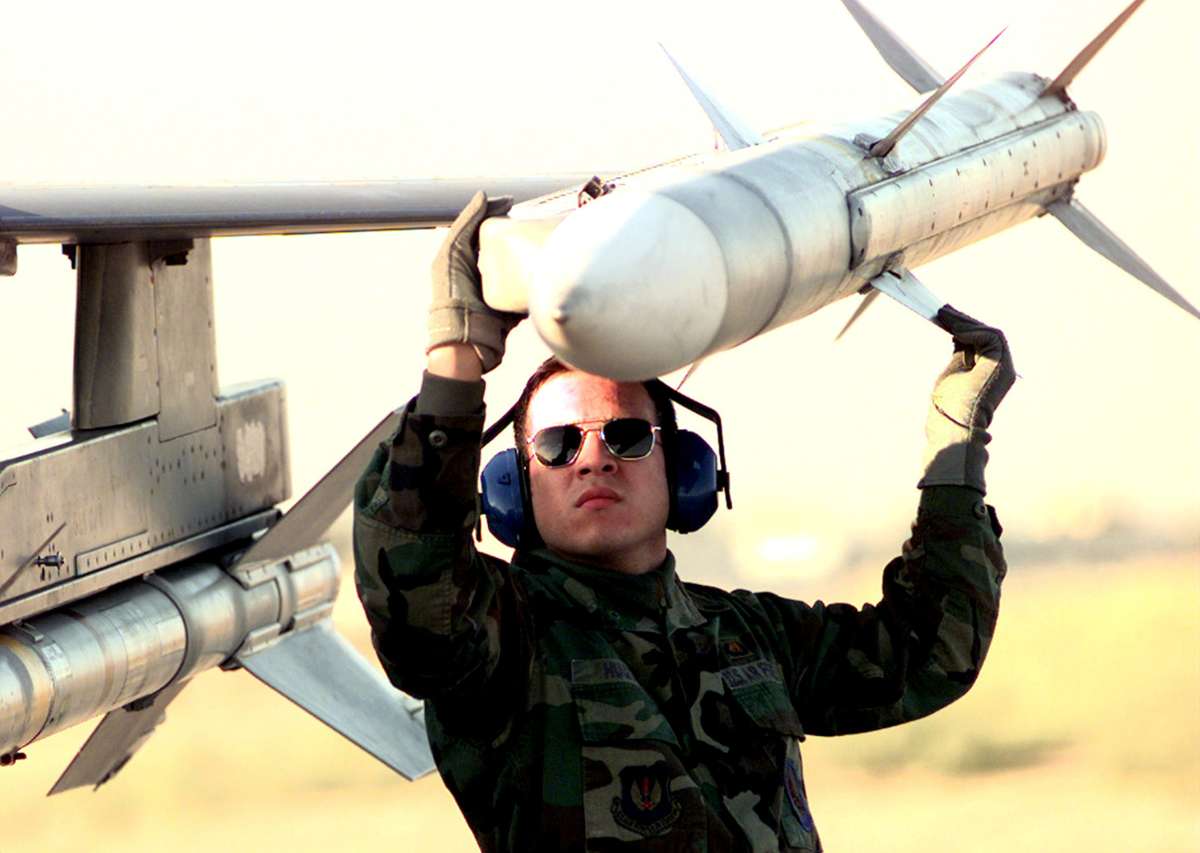
The AIM-120 AMRAAM is a beyond-visual-range air-to-air missile widely used by U.S. and NATO air forces. It is compatible with aircraft such as the F-16 Fighting Falcon, a jet that forms a key component of Pakistan’s air defence fleet.
Pakistan previously acquired 700 AMRAAM missiles in January 2007, which was then the largest international order for the weapon. The same missiles were reportedly used during Operation Swift Retort in February 2019, when the Pakistan Air Force (PAF) engaged and shot down two Indian Air Force (IAF) aircraft that had entered Pakistani airspace over Kashmir.
Strategic Context of The Deal
The new development comes as Pakistan–U.S. relations show signs of improvement after years of strained ties. The two countries appear to be re-engaging on defence and counterterrorism cooperation, with recent acknowledgments from Washington of Islamabad’s role in regional stability.
Analysts note that this arms deal could signal a renewed phase of military collaboration, potentially tied to broader strategic and economic interests in South Asia.
While the U.S. has previously restricted advanced defence exports to Pakistan, its inclusion in the AMRAAM contract indicates a shift in defence cooperation dynamics, particularly at a time when regional tensions and security realignments are reshaping partnerships across the Indo-Pacific.
Stay tuned to Brandsynario for latest news and updates

 Join a Channel
 Brandsynario
 Veryfilmi